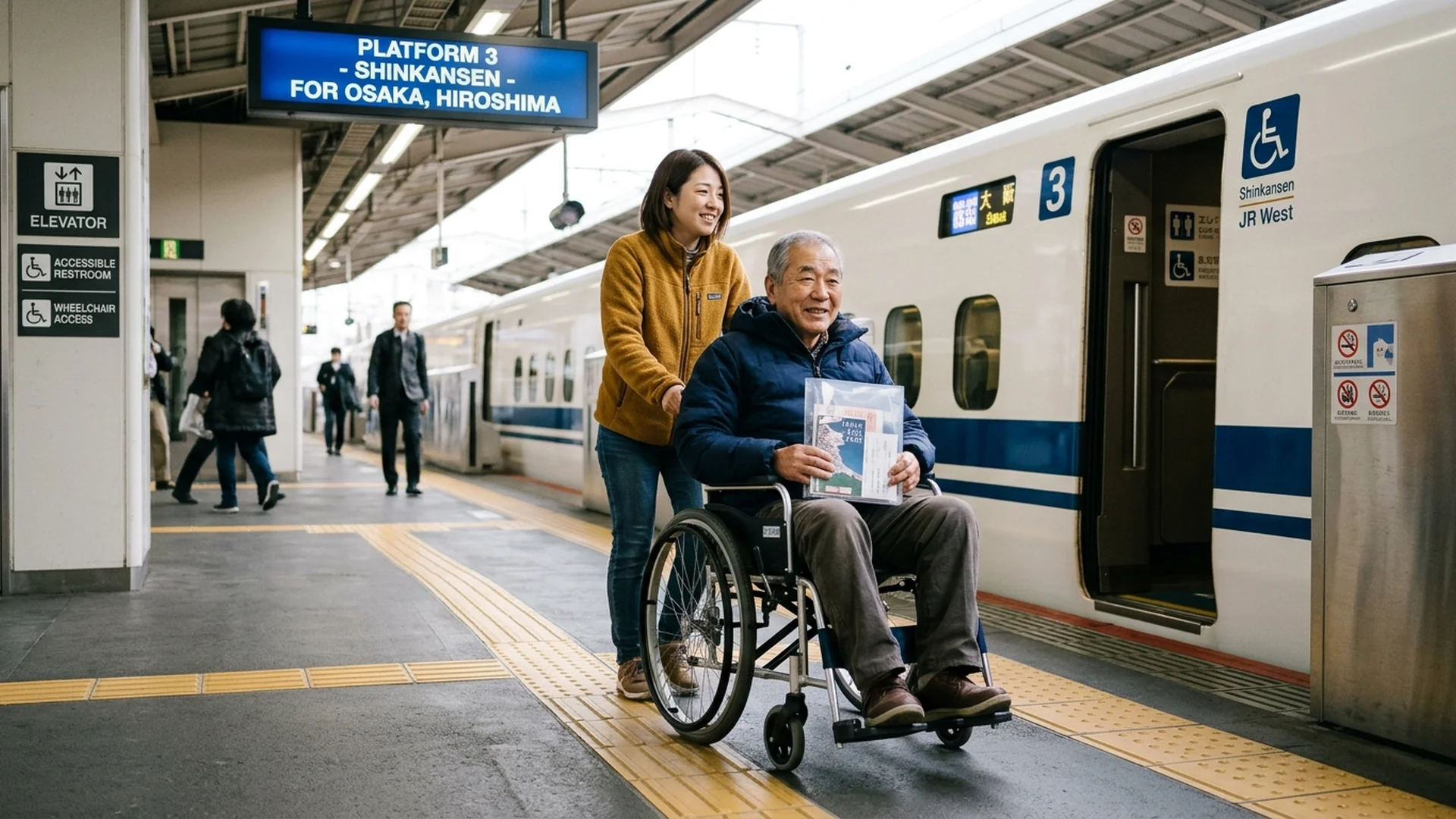
When the horizon of exploration expands without boundaries, accompanying cherished family members—whether venerable elders or wheelchair users—into the wider world ceases to be a distant dream. Japan stands as a global beacon of mindful infrastructure, beautifully demonstrating how profound human empathy can seamlessly integrate into both bustling metropolises and timeless historical sanctuaries. Beneath the polished veneer of modern transit networks and ancient architectural marvels lies an uncompromising philosophy of universal design, welcoming every rhythm of life to move forward with absolute equity and quiet dignity.
Traveling through the Land of the Rising Sun for seniors and wheelchair travelers is thus entirely free of daunting friction. Instead, it opens the door to a refined dimension of service defined by immaculate care: gentle, impeccably engineered slopes, elevators discreetly tucked within subterranean stations, and an intuitive culture of hospitality where attendants assist with a warm, respectful bow. This journal explores the intricate mechanics of Japanese barrier-free engineering to ensure your upcoming voyage with loved ones flows with grace, absolute peace of mind, and indelible memories.
Decoding Universal Design: Navigating the Rail and Transit Networks
The beating heart of accessible travel across Japan is its intricate, nation-spanning railway network. Nearly every station in major urban centers and regional hubs features prominent blue wheelchair symbols and clear universal design iconography. Entrances are universally equipped with spacious elevators capable of accommodating large mobility devices and substantial luggage with ease. The cornerstone of this seamless transit lies in communication with station staff, whose professionalism is second to none. Simply notify the attendant at the ticket wicket prior to departure; the station crew will swiftly deploy a portable bridging ramp between the platform and the train carriage, while simultaneously coordinating with your destination station to ensure a dedicated attendant is waiting to assist your smooth disembarkation. Furthermore, digital navigators such as Japan Transit Planner include filters dedicated to stairs-free routing, transforming the complexity of navigating subterranean mazes in Tokyo or Osaka into an effortless endeavor.
Experiencing World Heritage Temples Through an Accessible Lens
A traditional challenge of exploring Japan centers upon ancient shrines and venerable temples frequently perched atop verdant hills or featuring historic split-level terrain. Yet, through a dedicated commitment to cultural preservation married with inclusive hospitality, many cherished cultural sites have thoughtfully adapted their grounds. Iconic landmarks such as Kyoto’s Kiyomizu-dera and Tokyo’s Senso-ji have introduced discreet, winding slopes that bypass primary stone staircases, alongside elevators integrated delicately within historic structures to grant wheelchair travelers elevated vantage points of breathtaking scenery in complete safety. Reviewing dedicated barrier-free maps in advance for each sanctuary ensures that elders bypass unnecessary fatigue, allowing them to fully immerse themselves in the profound aesthetic serenity of Japan’s sacred heritage.
The Art of Rest: Curating Accessible Rooms in Ryokans and Hotels
No Japanese sojourn is truly complete without experiencing traditional hospitality within a classic ryokan or luxury hotel. Today, esteemed properties across the archipelago have elevated their offerings by introducing meticulously designed universal and accessible guest rooms. These sanctuaries eliminate troublesome door sills and interior steps, featuring flush flooring throughout, wide sliding bathroom doors complemented by strategically positioned grab bars, and adjustable shower seating tailored for seniors. Additionally, select ryokans offering private hot spring onsen experiences have begun introducing mineral bathing suites equipped with gentle ramps and sturdy support rails, empowering guests with physical limitations to soak away travel weariness in natural thermal waters with absolute privacy and peace of mind.