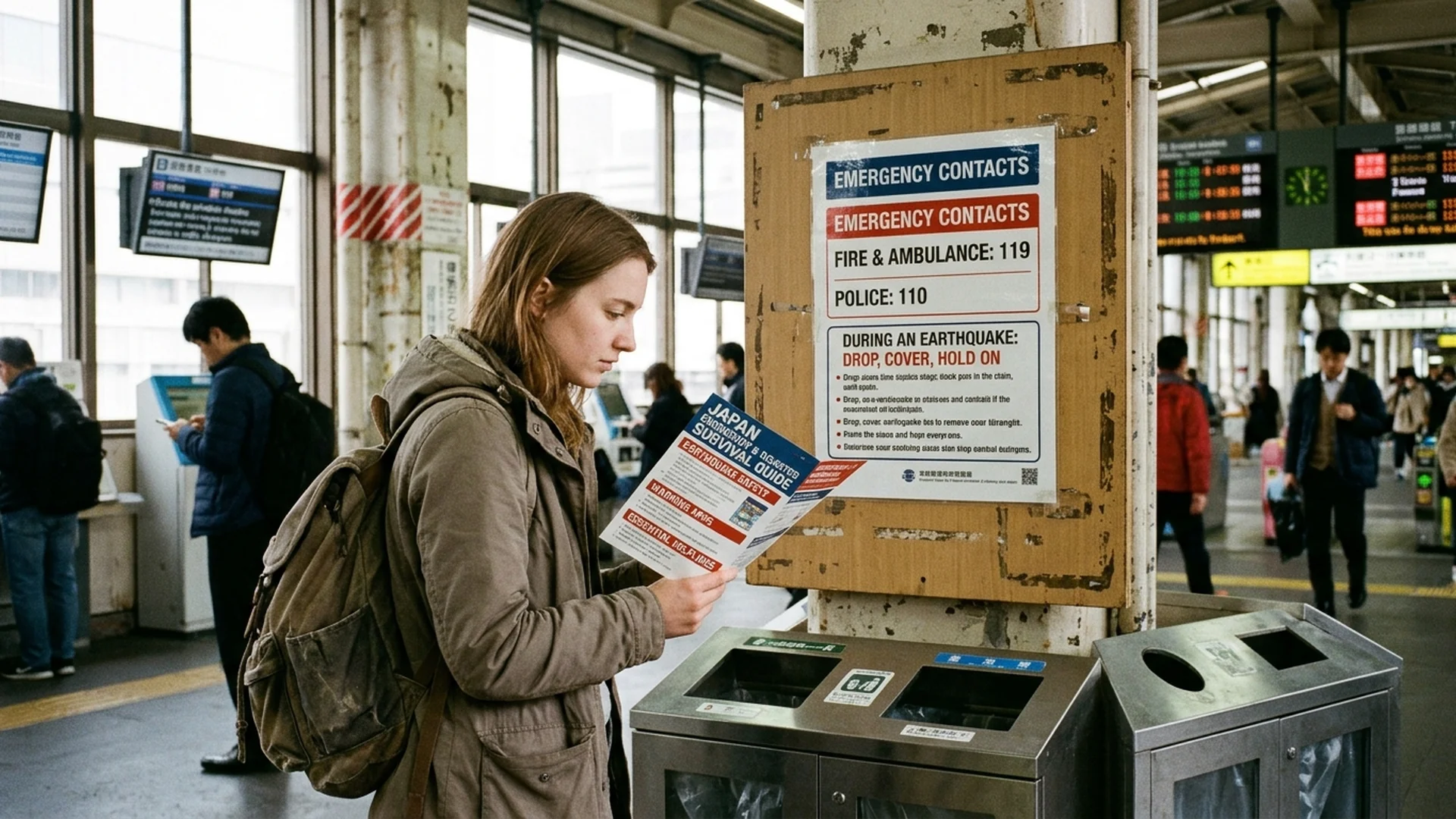
When the earth begins to tremble and the synchronized chime of emergency alerts fills the air, a fleeting second of profound stillness often precedes the chaos. Japan is a realm of exquisite cultural heritage and peerless technological innovation, yet it rests atop one of the most active tectonic fault lines on Earth. Journeys to the Land of the Rising Sun offer breathtaking encounters with autumnal foliage and ephemeral cherry blossoms, but they also invite a mindful awareness of nature’s formidable power.
For the discerning traveler, preparing for unforeseen emergencies—such as seismic events or seasonal typhoons—is not an exercise in alarmism, but an essential dimension of mindful travel. Understanding advanced early warning technologies, mastering calm procedural responses, and knowing precisely who to call in a crisis transforms apprehension into quiet confidence, ensuring safe passage through unexpected trials.
Digital Armor: Essential Warning Applications for Modern Travelers
In an era where connectivity bridges continents, your smartphone serves as the swiftest guardian against sudden natural crises. Japan maintains one of the world’s most sophisticated Earthquake Early Warning systems. Government agencies and municipal bodies have engineered specialized mobile applications specifically tailored for international visitors. The paramount application to install prior to departure is ‘Safety Tips,’ developed under the supervision of the Japan National Tourism Organization (JNTO). It delivers multi-lingual notifications regarding earthquakes, tsunamis, and severe weather warnings, complemented by emergency dialogue guides and evacuation flowcharts. Additionally, the ‘NERV Disaster Prevention’ application enjoys widespread acclaim for its extraordinary precision and real-time reporting capabilities, mapping the nearest safe havens with absolute clarity. Enabling push notifications and ensuring location services remain active upon touching down at a Japanese airport represent the foundational steps of secure exploration.
Presence of Mind: Navigating Seismic Tremors with Grace
When the ground beneath you awakens, the singular imperative is to cultivate inner stillness and assess your immediate surroundings. If you find yourself within a hotel sanctuary, seek immediate shelter beneath a sturdy table to shield yourself from falling objects, extinguish gas burners or electrical appliances if safely attainable, and resist the urge to dash blindly toward stairwells while violent shaking persists. Should you be commuting via subway or high-speed rail, secure a firm grip on overhead handholds and adhere strictly to the announcements of transit personnel; never venture onto the active railway tracks under any circumstance. For those traversing open plazas or bustling shopping districts, distance yourself from towering architectural facades, massive signage, or electrical poles. Seek refuge within wide-open public parks or civic squares, utilizing bags or garments to safeguard your head from potential falling glass.
Voices of Aid: Essential Helplines and Communication Networks
During catastrophic disasters, standard communication infrastructures can occasionally experience heavy congestion or temporary outages. Memorizing fundamental emergency digits can prove vital. Japan’s primary emergency numbers comprise 110 for urgent police intervention and 119 for fire rescue and emergency medical dispatch; both services routinely maintain English-capable dispatchers in major metropolitan centers. For comprehensive advisory support or general travel crises, visitors may access the 24-hour, 365-day ‘Japan Visitor Hotline’ operated by JNTO, which accommodates multiple languages. Furthermore, in the event of widespread cellular network disruptions, the Japanese government frequently activates a complimentary public Wi-Fi network designated as ‘00000JAPAN,’ allowing individuals to connect with loved ones or access official news feeds without charge. Traditional public payphones, identifiable by their grey or green housings, also operate without coins or cards during widespread emergencies.