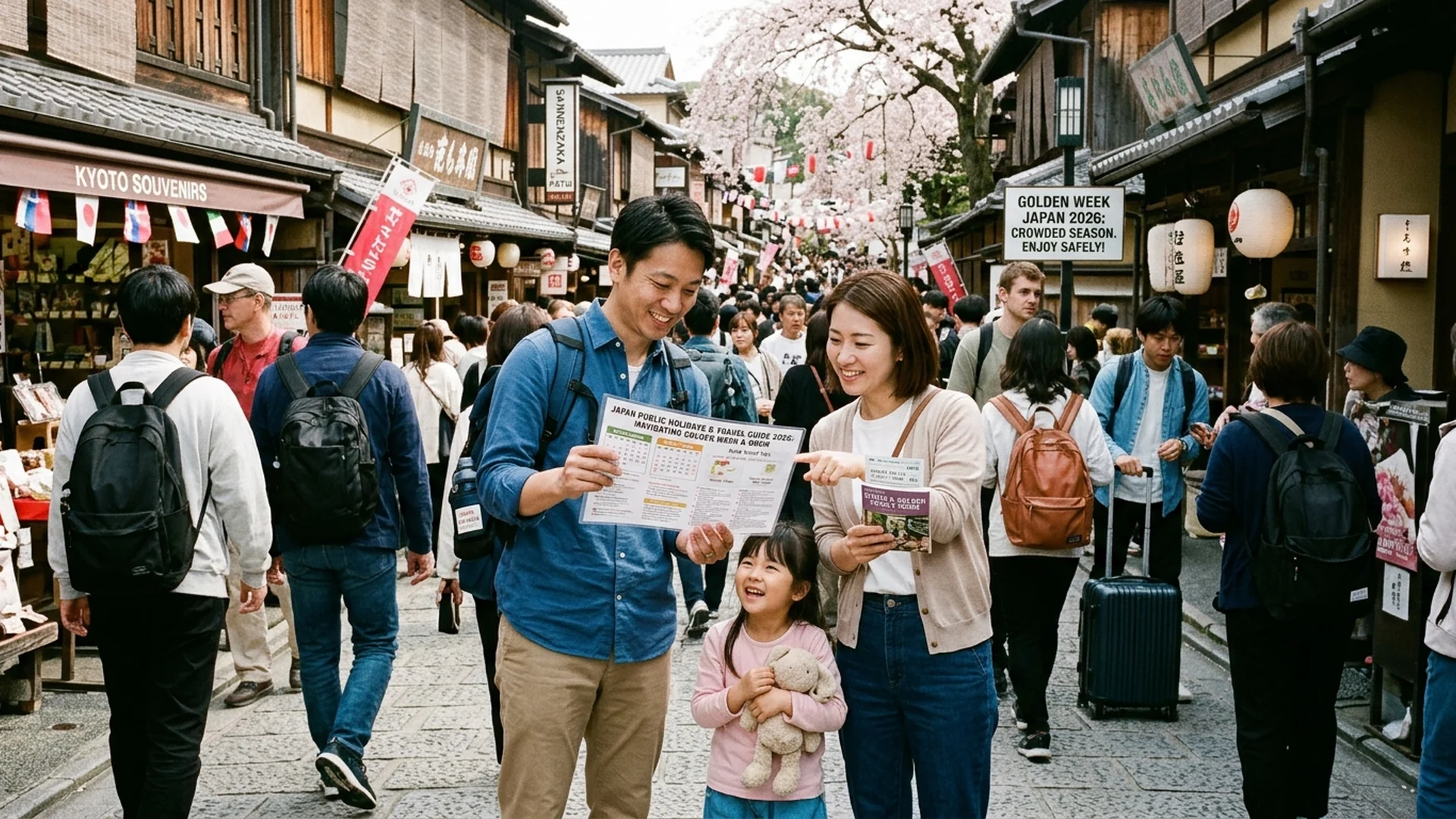
When the soft breath of spring sweeps across the Japanese archipelago, the rhythmic turning of the calendar whispers a warning that seasoned travelers know better than to ignore. The year 2026 brings not only the exquisite seasonal transformations that define the country, but also a complex tapestry of interconnected holiday periods. From the expansive expanse of Golden Week to the rare alignment of Silver Week, millions of local citizens take to the rail lines and roadways to honor traditions and seek repose, placing the nation’s vaunted travel infrastructure under immense seasonal pressure.
For the discerning international traveler, stepping into the Land of the Rising Sun during these periods without careful preparation risks converting a transcendent journey into a grueling exercise in serpentine queues and fully booked express trains. Comprehending the cadence of local holidays, cultural rhythms, and the domestic migration dynamics remains the master key to preserving the seamless aesthetic of your voyage amidst the surging tide of popular domestic travel routes.
1. Deciphering the Triad of Major Holidays: Rhythms and Travel Impacts
Across the annual Japanese calendar, three distinct seasonal crescendos push domestic travel dynamics to their absolute zenith. The sequence commences with Golden Week, running from April 29 through May 6, 2026. This cluster unites multiple national holidays—including Showa Day, Constitution Memorial Day, Greenery Day, and Children’s Day—prompting countless locals to take supplemental leave for domestic or international excursions.
Mid-August brings the Obon Festival (August 13-16). While not entirely designated as statutory national holidays, this deeply revered ancestral tradition calls families back to their prefectural roots to pay homage to departed spirits. Consequently, the urban sprawl of Tokyo falls into a serene, almost ghostly quiet as small family-run shops shutter their doors, while outbound transit corridors remain entirely overwhelmed.
The unique hallmark of 2026 is the reappearance of Silver Week in September. This rare phenomenon occurs when Respect for the Aged Day (September 21) and the Autumnal Equinox (September 23) are bridged by a special citizens’ holiday on September 22, coalescing into an unbroken five-day respite (September 19-23) that stimulates a fresh wave of autumnal leisure travel.
2. The Physical Realities of Transit Congestion and Seasonal Constraints
When these extended holidays arrive, their impact extends far beyond mere pedestrian crowding, echoing through every tier of the nation’s logistics network. Shinkansen bullet trains across nearly every trunk line routinely book out weeks in advance. Services bound for the Kansai, Kyushu, or Tohoku regions see reserved seating exhausted at startling speeds, leaving travelers dependent on unreserved carriages where lengthy platform queues stretch for hours.
Furthermore, lodging tariffs in revered cultural enclaves such as Kyoto, Hakone, or Kanazawa escalate noticeably. Concurrently, celebrated restaurants, museums, and historic sanctuaries may observe temporary closures over New Year or major festive blocks to grant staff time with their families. Navigating these windows requires deliberate flexibility and meticulous planning rather than spontaneous wandering.
3. The Art of Crowd Evasion: Turning Challenges into Regional Discoveries
The sagacious traveler invariably treats these periods as an invitation to swim against the current. If your itinerary unavoidably intersects with a major Japanese holiday block, the most sophisticated strategy involves steering clear of primary metropolitan megalopolises and iconic landmarks favored by domestic vacationers.
Rather than jostling for space within the historic alleys of Kyoto or the neon avenues of Tokyo, turn your gaze toward regional prefectures boasting equal cultural and natural splendor. Consider the quiet sanctuaries of northern Tohoku, the preserved samurai architecture of Aizu-Wakamatsu, or the pastoral simplicity of Kumamoto’s countryside. These lesser-trodden destinations not only shield you from congestion but also afford intimate engagements with local residents in settings where time unfurls at a gentler, more contemplative pace.