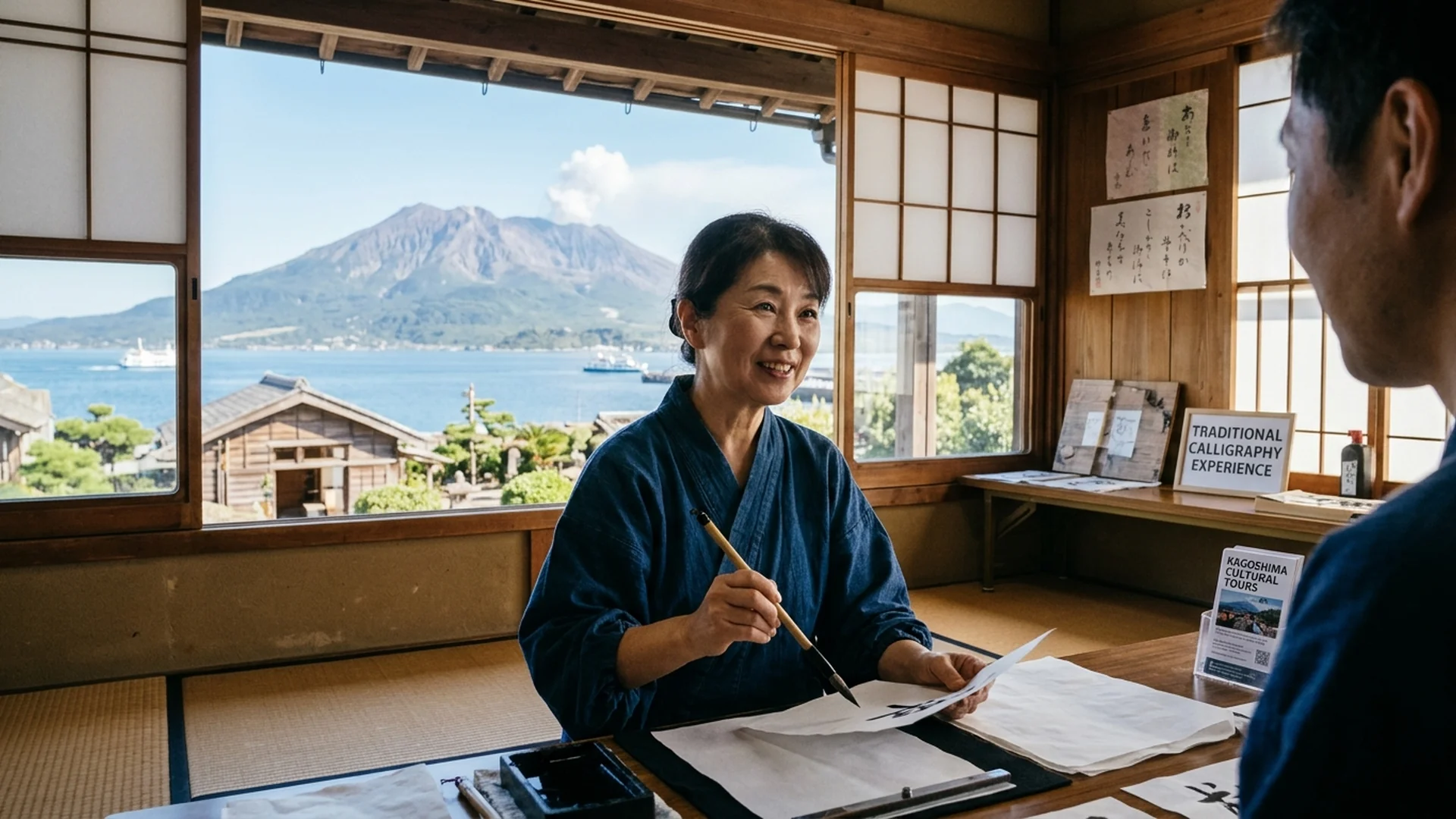
When the horizon is brushed with ribbons of white vapor drifting effortlessly above the deep indigo waters of Kinko Bay, framed by an active, breathing volcano, Kagoshima reveals itself as far more than the southernmost terminus of Kyushu. It is a breathtaking study in harmonious contrasts, where unbridled natural fury and storied history entwine so seamlessly that the region has long been heralded as the Naples of the Orient.
Stepping beyond conventional itineraries into a landscape that once served as the formidable stronghold of the influential Shimazu samurai clan, Kagoshima invites the discerning traveler to embrace a quieter, deeply spiritual rhythm of life. From sipping nuanced green tea inside ancestral daimyo gardens overlooking a volcanic caldera to admiring the brilliant refractions of handcrafted Satsuma Kiriko glassware, and savoring world-class gastronomy born of fertile earth and pristine seas, this is Southern Kyushu at its most captivating.
Shadows of Fire and Water: The Spell of Sakurajima and Kinko Bay
Across the expansive bay stands the commanding presence of Sakurajima, an andesite volcano whose plumes of ash evoke both primal raw power and serene cinematic beauty. The brief ferry crossing from the Kagoshima mainland acts almost as a meditative passage, transporting the visitor into a realm ruled by elemental forces. As the salty breeze sweeps across the deck and the volcanic silhouette looms ever larger, one senses an unmistakable magnetism unique to this corner of Japan. Walking upon obsidian-black volcanic soil and observing hardy flora adapting in real-time to the earth’s lingering warmth offers a profound reminder of humanity’s enduring reverence for nature.
Interlaced Eras: Sengan-en and the Spirit of the Shimazu Clan
Delving deeper into regional annals, Sengan-en stands as an enduring monument to the dominion of the Shimazu lords, who governed the Satsuma domain for over seven centuries. This classic daimyo estate employs the ingenious design principle of shakkei, or borrowed scenery, seamlessly integrating the distant volcanic peak and ocean bay into the garden’s own manicured canvas. Stone pathways, pristine ponds, and historic pavilions resonate with an aura of aristocratic grace. More than a mere pleasure ground, the estate served as an incubator for Japan’s early industrial modernization, nurturing artisan traditions such as Satsuma Kiriko cut glass, whose vibrant emerald and ruby hues continue to catch the light with breathtaking precision.
The Culinary Symphony of Southern Kyushu: Elevated Simplicity
Gastronomy in Kagoshima is an ode to terroir, orchestrated through exceptional ingredients nurtured by a benevolent climate. The undisputed crown jewel is Kurobuta, or Berkshire black pork, raised on sweet potatoes and natural mineral water to yield a tender texture and fine fat marbling that practically dissolves on the palate. Whether served in a delicate, crystal-clear shabu-shabu broth or as a thick, golden tonkatsu cutlet, it leaves an indelible mark on the memory. The region is equally famed for organic mountain teas cultivated under heavy morning mists, artisanal vinegars, and pristine seafood reeled straight from the powerful Kuroshio Current.