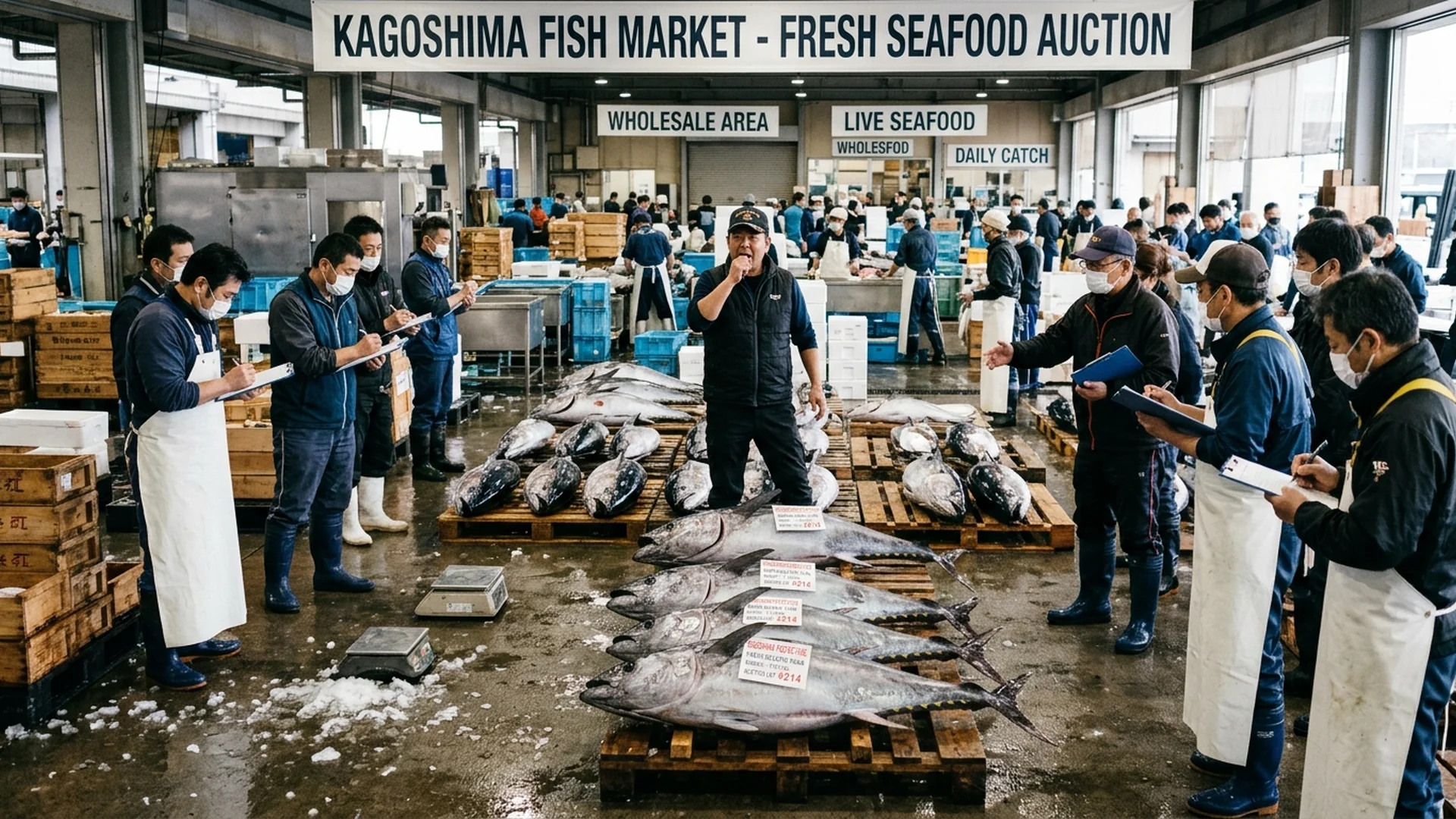
As the first morning light touches the glistening waters of Kinko Bay, casting an elegant silhouette of the timeless Sakurajima volcano against the sky, the true pulse of Kagoshima does not begin in a modern artisan café. Instead, it awakens amid the resonant calls and disciplined rhythm of the Kagoshima City Wholesale Market, where the warm Kuroshio current nurtures an unrivaled bounty in the waters of southern Kyushu.
While metropolitan Tokyo fish markets command attention through sheer scale, Kagoshima offers an intimate, deeply authentic encounter. Here, the briny aroma of the sea merges seamlessly with an uncompromising culinary heritage, inviting discerning travelers behind the scenes of world-class ingredients. Free from overwhelming crowds, visitors experience the raw energy and venerable traditions of Japanese commercial fishing in its purest form.
The Kuroshio Current: The Lifeblood of Kinko Bay
The extraordinary abundance of the Kagoshima fish market is no accident of geography; it is a masterclass in marine geology. Kinko Bay, deep and sheltered, draws nutrient-rich currents from the warm Kuroshio stream, turning the surrounding waters into an immaculate habitat for marine life. The resulting seafood boasts remarkable flavor profiles, firm textures, and a pristine fat distribution that chefs prize.
In the quiet hours before dawn, long before the city stirs, the market hall comes alive with the swift footfalls and precise hand signals of buyers and brokers. The auctioning of giant bluefin tuna and seasonal white-flesh fish unfolds with a hushed, reverent intensity. Every movement echoes generations of maritime expertise and profound respect for the sea. Observers stationed along the dedicated visitor mezzanine instantly feel the beating heart of Kyushu’s maritime economy.
From Auction Floor to Culinary Art: Waterfront Dining
Once the morning auctions conclude, a new kind of excitement begins within the surrounding market eateries. Operating essentially as expansive farm-to-table kitchens, these establishments transform the ocean’s morning harvest into culinary masterpieces within minutes. The undisputed icon of local waters is the kibinago—a tiny, translucent silver fish arranged in intricate chrysanthemum patterns and served with zesty vinegared miso or soy-sesame dips.
Kagoshima is equally celebrated for its exceptional aquaculture, particularly greater amberjack (kampachi) and yellowtail (buri). The pale pink slices offer a satisfying crunch followed by a subtle, lingering sweetness. Enjoying a lavish morning kaisen-don—a bowl piled high with raw seafood delivered straight from the vessels outside—acts as a sensory ritual that forever redefines the culinary benchmark of freshness.
The Aesthetics of Travel: Observing Maritime Traditions with Grace
Visiting a working wholesale market today extends far beyond commercial procurement; it serves as a vital cultural exchange for curious travelers. Navigating the Kagoshima fish market requires an innate understanding and deep respect for local protocols, ensuring seamless harmony with the rigorous daily routines of local fishermen.
Pristine cleanliness, profound quietude, and strict safety standards govern the trading floor. Carefully planned visitor pathways allow guests to capture memorable imagery and absorb the electric morning atmosphere without disrupting active commerce. This thoughtful design achieves an elegant balance, welcoming cultural tourism while preserving the uncompromised integrity of a working heritage site.