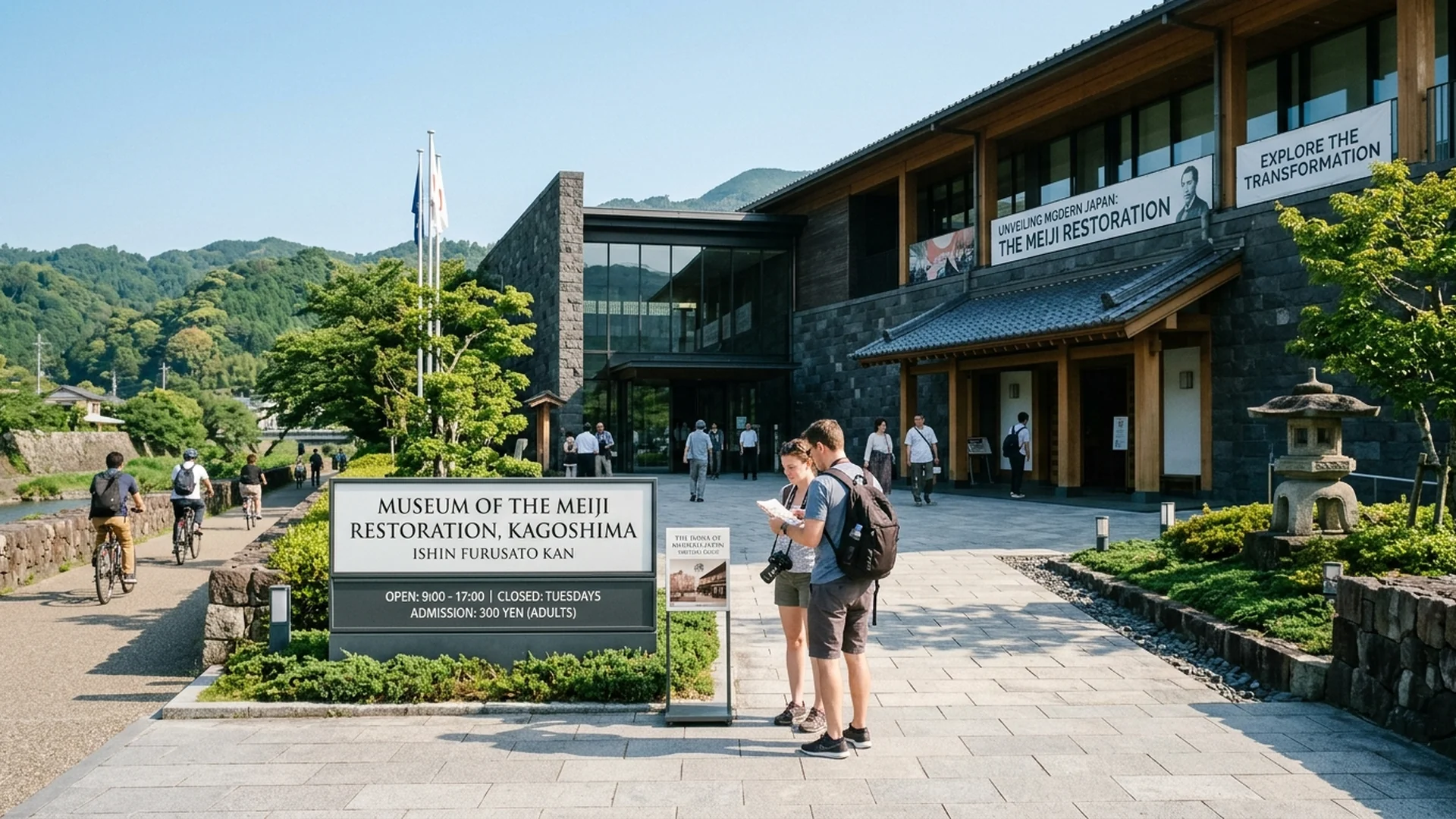
As the southern breezes of Kyushu whisper through ancient port towns, the indelible imprints of Satsuma’s revolutionary past remain etched across the volcanic landscape of Kagoshima. Once the epicenter of a proud domain that ultimately dictated the destiny of a nation, this modern city conceals a quiet sanctuary dedicated to the enduring spirit of an era in profound transition: the Museum of the Meiji Restoration, affectionately known locally as Ishin Furusatokan. Far from a conventional repository of relics and dusty manuscripts, this architectural threshold serves as a portal into the very breathing moments when legendary samurai laid down their swords to embrace the vast horizons of global modernity. Here, two towering statesmen who fundamentally reshaped the Japanese empire—Saigo Takamori and Okubo Toshimichi—began their fateful journeys. Crossing the threshold of this institution is an invitation to walk alongside the dawn of a new age, where unwavering conviction and profound personal sacrifice forged the bedrock of contemporary Japan.
The Spirit of Satsuma: The Catalyst for Unprecedented Transformation
Under the enduring stewardship of the Shimazu clan, the Satsuma domain cultivated a distinct socio-political character unlike any other in feudal Japan. The stringent local educational framework known as ‘Goju’ instilled in the youth an uncompromising sense of discipline, absolute courage, and unyielding loyalty. When the looming encroachment of Western maritime powers threatened the archipelago during the late nineteenth century, Satsuma did not retreat into isolationism. Instead, foresight prevailed; the domain recognized the imperative of mastering foreign knowledge to safeguard the homeland. This pragmatic philosophy fueled the ultimate overthrow of the Tokugawa shogunate and the grand restoration of imperial sovereignty in 1868. Visitors can vividly trace this atmospheric awakening through meticulously curated dramatic lighting, evocative soundscapes, and theatrical reconstructions within the museum’s galleries.
A Cinematic Dimension: Bridging History with Animatronic Innovation
What distinguishes the Museum of the Meiji Restoration from traditional historical repositories is its subterranean gallery, the Ishin Taikan Hall. This expansive space is thoughtfully transformed into an auditory and visual theater where advanced animatronic technology brings key historical figures to life with startling fidelity. Gestures, vocal inflections, and facial expressions recreate historic debates, most notably the ideological dialogues and eventual tragic divergence between Saigo Takamori and Okubo Toshimichi. This dynamic storytelling medium transcends mere academic exposition, enveloping the discerning traveler in the palpable tension of high-stakes political drama.
Bridges to the Wide World: The Clandestine Odyssey of the Satsuma Students
Perhaps one of the most compelling narratives housed within these walls is the daring venture of the Satsuma Students. In 1865, defying strict national isolation edicts that prohibited Japanese subjects from leaving foreign shores, the domain covertly dispatched nineteen brilliant scholars and young elites aboard British vessels bound for the United Kingdom. Tasked with mastering modern engineering, military science, and industrial arts, these pioneers returned to lay the vital infrastructural foundations of modern Japan. Archival journals, personal correspondence, and artifacts meticulously preserved in the museum serve as quiet testaments to the extraordinary limits human ambition can transcend.