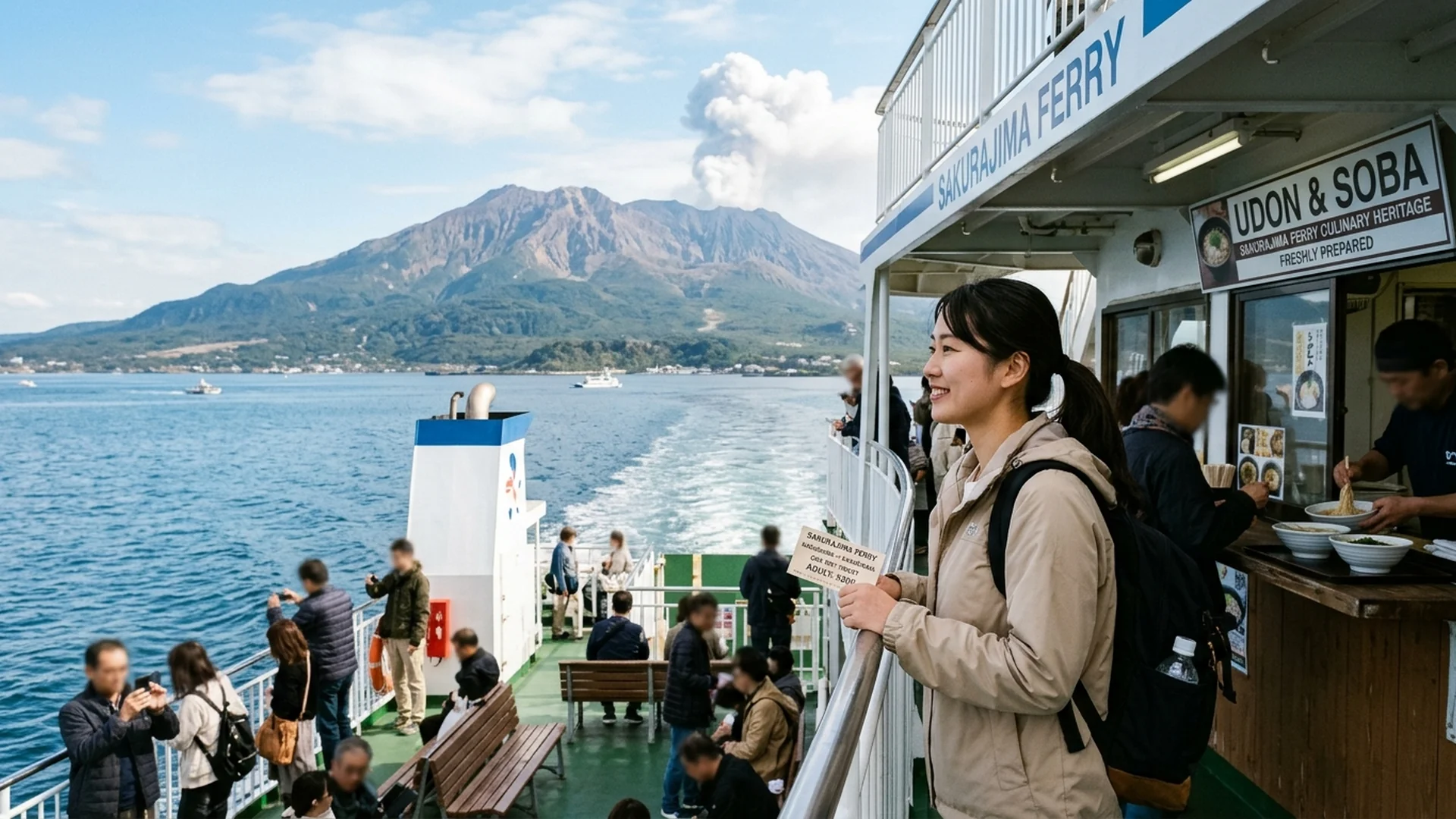
Moments before departure, Kinko Bay unfolds before the traveler like a canvas of deep indigo, framed by the quiet, enduring silhouette of Sakurajima—a living, breathing stratovolcano perpetually exhaling delicate plumes of ash into the timeless sky. For the residents of Kagoshima, the Sakurajima Ferry is far more than a maritime commuter link between the mainland and the volcanic island; it is a vital cultural artery and a floating public square that holds the very heartbeat of southern Kyushu.
As the vessel glides away from the Kagoshima terminal, a gentle engine hum merges with the rhythmic percussion of waves against the hull. The sharp, clean scent of the sea, mingling with the savory aroma of traditional dried bonito broth drifting from the ship’s galley, marks the prologue of a journey both unassuming and profoundly moving. It invites global wanderers to leave their urgency behind and yield to the winds of Kinko Bay, aligning their thoughts with a landscape deeply intertwined with the raw majesty of nature.
Kinko Bay and Sakurajima: A Canvas of History and Volcanic Force
Kinko Bay, historically known as Kagoshima Bay, is a deep calderic indentation celebrated for its rich marine ecology and dramatic topography. Yet the arresting focal point that commands every gaze is Sakurajima, a stratovolcano rising directly from the azure expanse. Once an island entirely detached from the mainland, Sakurajima was irrevocably fused to the Osumi Peninsula by a cataclysmic eruption in 1914, when rivers of molten lava reshaped the geography into the surreal landscape travelers explore today. Standing upon the deck of a ferry cutting through the emerald waters toward this geological titan evokes a profound reverence for the primeval forces quietly simmering beneath a veneer of tranquil serenity.
Culinary Heritage: The Legend of Yabukin Udon on the Waves
No crossing of Kinko Bay is complete without partaking in a cherished maritime ritual: stepping into the ship’s cozy dining counter to order a steaming bowl of Yabukin Udon. The dish presents impeccably tender noodles immersed in a rich, soul-warming dashi broth characteristic of southern Kyushu, crowned with crisp tempura flakes and fresh scallions. Slurping the savory broth amid the brisk ocean breeze on the open deck while coastal vistas drift slowly by offers a sensory delight. Connoisseurs of quiet luxury and authentic local food culture alike cherish this memory as an exquisite expression of unpretentious travel.
Opening the Gateway to the Volcanic Isle: From Lava Trails to Seaside Soaks
Upon docking at Sakurajima, an untamed and captivating island exploration begins. The initial pilgrimage leads to the Arimura Lava Lookout, perched upon the southern slopes. Here, winding footpaths meander through ancient volcanic debris and recovering botanical life, offering an intimate perspective of the brooding summit. The day finds its natural conclusion at the Yamanoshita-suisan Footbath, a hundred-meter-long seaside sanctuary fed by natural thermal waters. Soaking travel-weary feet while gazing across the bay toward the skyline of Kagoshima provides a restorative, meditative close to the excursion.