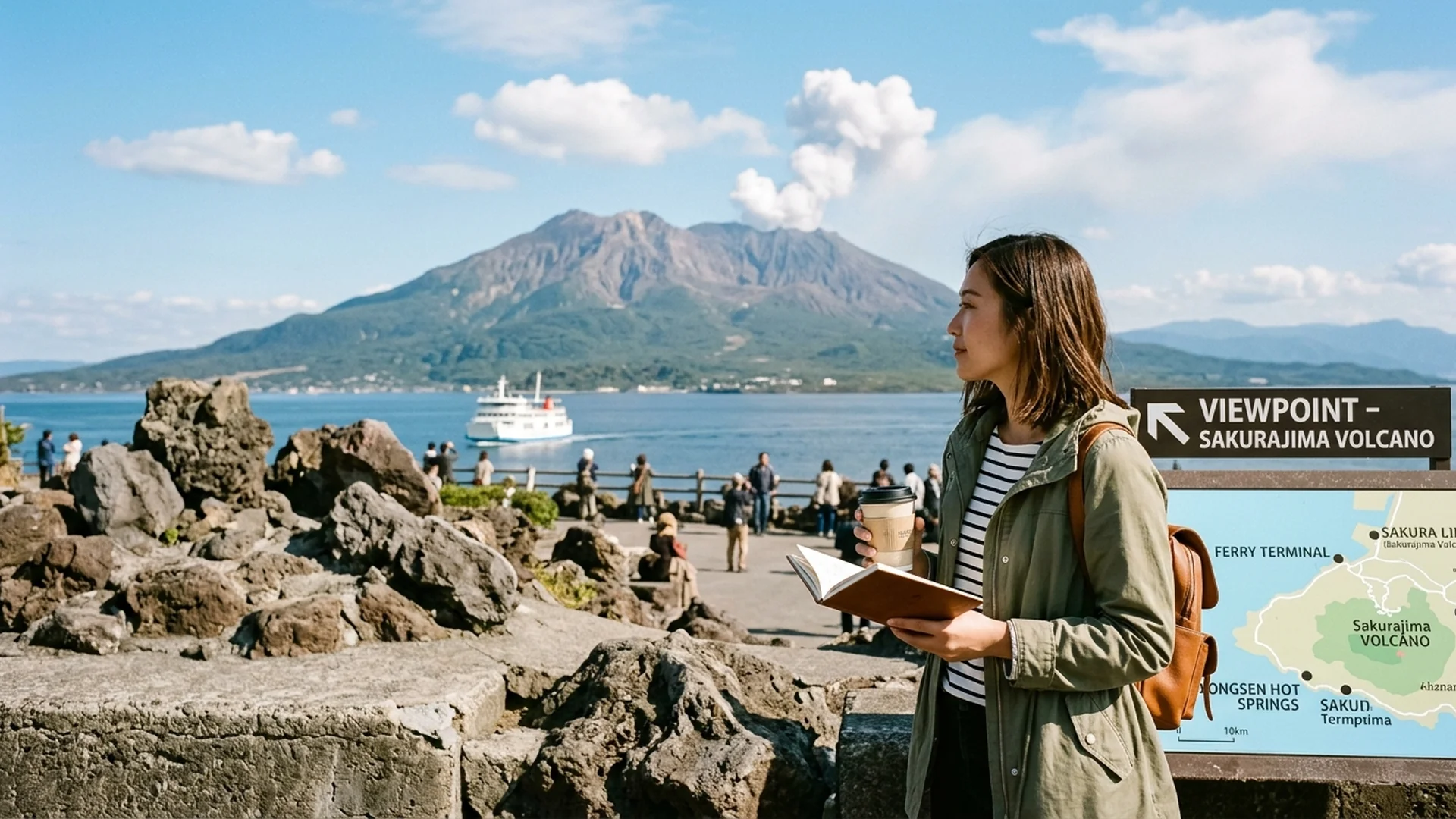
Each time a plume of white smoke unfurls against the azure sky above Kinko Bay, it feels as though the natural canvas of Southern Kyushu is being brushed by the hands of time itself. Sakurajima is far more than a mere geological curiosity breathing quietly; it is the very pulse and spirit of Kagoshima. Here, the dramatic, untamed landscape of black lava fields intertwines seamlessly with an exquisite and gentle cultural heritage.
To visit Sakurajima from the perspective of the discerning traveler is to awaken your senses to the raw elemental energies of the earth while indulging in the tranquil luxury of waterfront sanctuaries, sweeping bay vistas, and centuries-old history written deep within the volcanic ash. This destination does not merely invite passive observation through a camera lens; rather, it beckons you to stand resolutely in that fragile yet enduring equilibrium between humankind and the magnificent forces of nature that have forged a remarkably warm home.
Architecture of Time: From Isolated Island to Lava Peninsula
In centuries past, Sakurajima existed as an isolated volcanic island resting squarely in the center of Kinko Bay. That geography was radically rewritten during the historic eruption of 1914—one of the most violent cataclysms in modern Japanese history—when massive torrents of molten rock poured forth, permanently fusing the island to the Osumi Peninsula on the eastern shore. Today, the expansive stretches of jet-black lava fields, gradually reclaimed by resilient indigenous flora, form an extraordinary open-air classroom that illustrates the eternal cycle of planetary destruction and rebirth.
The passage across the bay aboard the Kagoshima-Sakurajima ferry, operating continuously around the clock, serves as a contemplative rite of passage into this realm of raw elemental power. The rhythmic thrum of the ship’s engines mingles with the calls of circling gulls, while ahead, the colossal, inverted-cone silhouette of the volcano steadily looms larger, instilling a profound reverence for nature’s sheer scale—a majesty that humanity must gracefully acknowledge and accommodate.
Yunohira Observatory and Kurokami Shrine: Chronicles Etched in Gray Earth
Ascending into the interior highlands of the volcanic massif brings one to the Yunohira Observatory. Situated approximately 373 meters above sea level, it stands as the closest public vantage point to the active Minamidake summit. Here, travelers may catch the low, resonant rumbling from deep within the earth, inhaling faint traces of sulfur while crisp alpine winds brush the skin. The panoramic sweep reveals a breathtaking 360-degree vista encompassing the deep indigo waters of the bay and the urban expanse of Kagoshima shimmering across the strait.
Another unmissable historical landmark is the Kurokami Buried Torii, where a striking vermilion stone gate remains entombed nearly to its crossbar beneath volcanic ash from the 1914 disaster. Preserved intentionally in this poignant state, it stands as a quiet monument to the ferocious caprice of the natural world and the resilient human spirit that continues to thrive amidst constant transformation.
The Aesthetics of Repose and Masterpiece Borrowed Scenery
The allure of Sakurajima extends far beyond the stark geometry of cooled lava; it is equally reflected in the meticulous artistry of human design found at Sengan-en. This historic seaside residence and garden belonged to the Shimazu clan, the powerful lords of the Satsuma Domain. The estate masterfully employs the principle of shakkei, or “borrowed scenery,” integrating Sakurajima as the majestic, living backdrop for a classical Japanese stroll garden, as though the towering volcano were an intentional extension of the estate’s private realm.
After admiring the legendary Satsuma Kiriko cut glass and tracing the footsteps of the Meiji Restoration within the historic gardens, guests can unwind by soaking their feet in a natural hot spring footbath (ashiyu) along the Kinko Bay shoreline. Gazing out toward the stoic silhouette of Sakurajima while warm mineral waters soothe the limbs offers a supreme luxury experience, blending geothermal warmth with pure ocean breezes.
Flavors of Volcanic Earth: Gastronomic Artistry of Southern Kyushu
Seemingly barren and covered in volcanic ash, the soil of Sakurajima is paradoxically rich in vital minerals that nurture legendary agricultural treasures. The Sakurajima komikan, officially recognized as the world’s smallest mandarin orange, features an exceptionally thin skin and a remarkably concentrated, sweet flavor profile. Alongside it grows the colossal Sakurajima daikon radish, renowned for its immense proportions and crisp, succulent flesh nourished by the exceptionally well-drained volcanic loam.
When these extraordinary local harvests are paired with Kagoshima’s celebrated Kurobuta (black Berkshire) pork—prized for its melt-in-the-mouth tenderness—and the freshest seafood harvested directly from Kinko Bay, dining in Southern Kyushu transcends simple nourishment. It becomes a profound cultural journey across the palate, articulating a story of abundance flourishing right at the edge of geological volatility.