Framed by the imposing silhouette of Sakurajima volcano rising majestically above the tranquil expanse of Kagoshima Bay, morning mists lightly brush the ancient landscape gardens. This breathtaking corner of Kyushu is far more than a picturesque coastal panorama; it is the cradle of a profound historical transformation that propelled Japan into the modern era. The Shoko Shuseikan Museum in Kagoshima invites the culturally curious traveler to step across the threshold of time, offering an intimate encounter with the roots of East Asian industrialization quietly preserved in stone.
At the close of the Edo period, amid the looming shadow of Western colonization across Asia, the influential Shimazu clan of the powerful Satsuma Domain displayed visionary foresight under the stewardship of Shimazu Nariakira. Rather than sealing its borders against the changing world, Satsuma chose to learn, adapt, and pioneer heavy industry right here on the shores of Kagoshima. Built in 1865, the austere dark-grey stone factory building is not merely a feat of nineteenth-century engineering; it stands as an enduring monument to intellectual courage and holds pride of place as a UNESCO World Heritage site within the Sites of Japan’s Meiji Industrial Revolution: Iron and Steel, Shipbuilding and Coal Mining.
The Satsuma Vision: From a Remote Domain to Industrial Vanguard
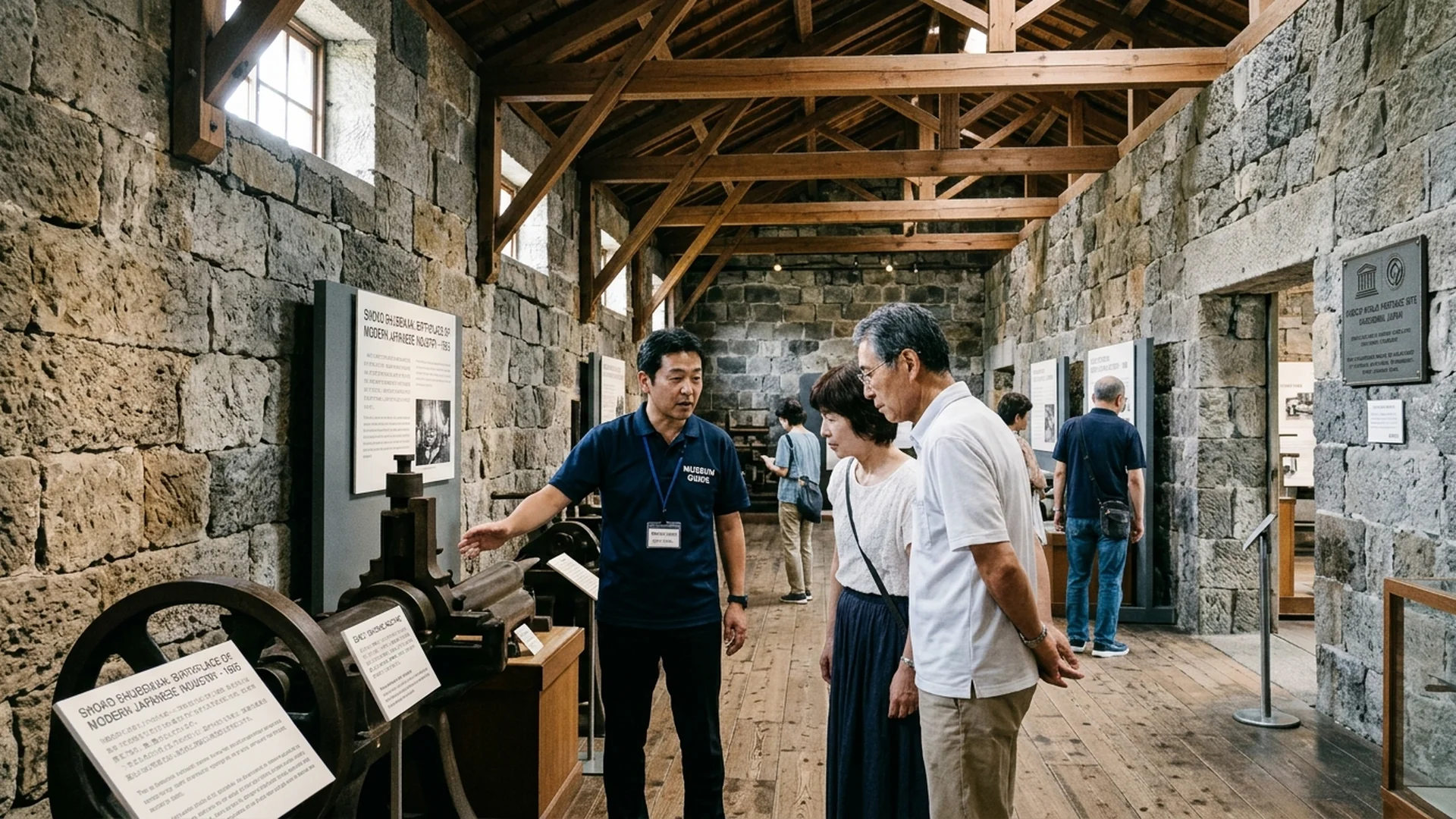
To truly comprehend the significance of the Shoko Shuseikan Museum, one must cast their mind back to the geopolitical realities of nineteenth-century Japan. Under the progressive leadership of Daimyo Shimazu Nariakira, the Satsuma Domain operated on the conviction that safeguarding the nation against external encroachment required absolute technological self-reliance. Thus, the Shuseikan enterprise was inaugurated in 1851 as an ambitious industrial complex encompassing iron smelters, shipyards, munitions works, and textile mills.
The museum building itself—originally a machinery factory—stands as a striking testament to the synthesis of traditional Japanese masonry craftsmanship with imported Western engineering. The meticulously dressed granite walls, robust timber roof framing, and subtle remnants of historic blast furnaces narrate a monumental chapter in the early transfer of Western technology to Japanese soil. These pioneering efforts ultimately established the bedrock upon which modern Japan’s industrial might was forged during the Meiji era.
An Eight-Century Treasury: The Cultural and Spiritual Wealth of the Shimazu Clan
Stepping inside the exhibition halls feels akin to traversing eight centuries of dynastic history under the stewardship of the Shimazu clan, who held paramount influence across southern Kyushu. The permanent collections house upwards of 10,000 priceless cultural assets, ranging from battle-tested samurai armor and clandestine diplomatic documents to lacquered household treasures and the sophisticated scientific and astronomical instruments utilized by Nariakira for his scholarly pursuits.
Each curated object speaks volumes not only of elite social standing and immense regional wealth, but also of a refined aesthetic sensibility running parallel to a relentless curiosity for empirical science. Observing an ancestral blade placed in intellectual proximity to nineteenth-century optical equipment offers discerning travelers a nuanced appreciation of how the clan successfully preserved aristocratic traditions while fearlessly embracing a radically expanding worldview.
The Luminous Brilliance of Satsuma Kiriko: Resurrecting a Lost Art
No exploration of Shoko Shuseikan is complete without encountering Satsuma Kiriko, a dazzling style of cut glass utterly distinct in the annals of global decorative arts. During the tenure of Shimazu Nariakira, Satsuma pioneered colored glass production inspired by Western techniques, layering vibrant hues—such as deep crimson or emerald green—over a translucent core before hand-carving intricate geometric motifs.
The defining characteristic that elevates Satsuma Kiriko to the realm of high art is boka, a delicate color gradation achieved along the borders where the colored layer transitions into clear glass, demanding supreme dexterity from the artisan. Although this remarkable craft vanished in the tumult of the Satsuma Rebellion in 1877, it was lovingly resurrected in modern times at a kiln established near the museum grounds. Encountering these antique masterpieces in person allows connoisseurs to absorb the timeless elegance of a craft brought back from the brink of oblivion.