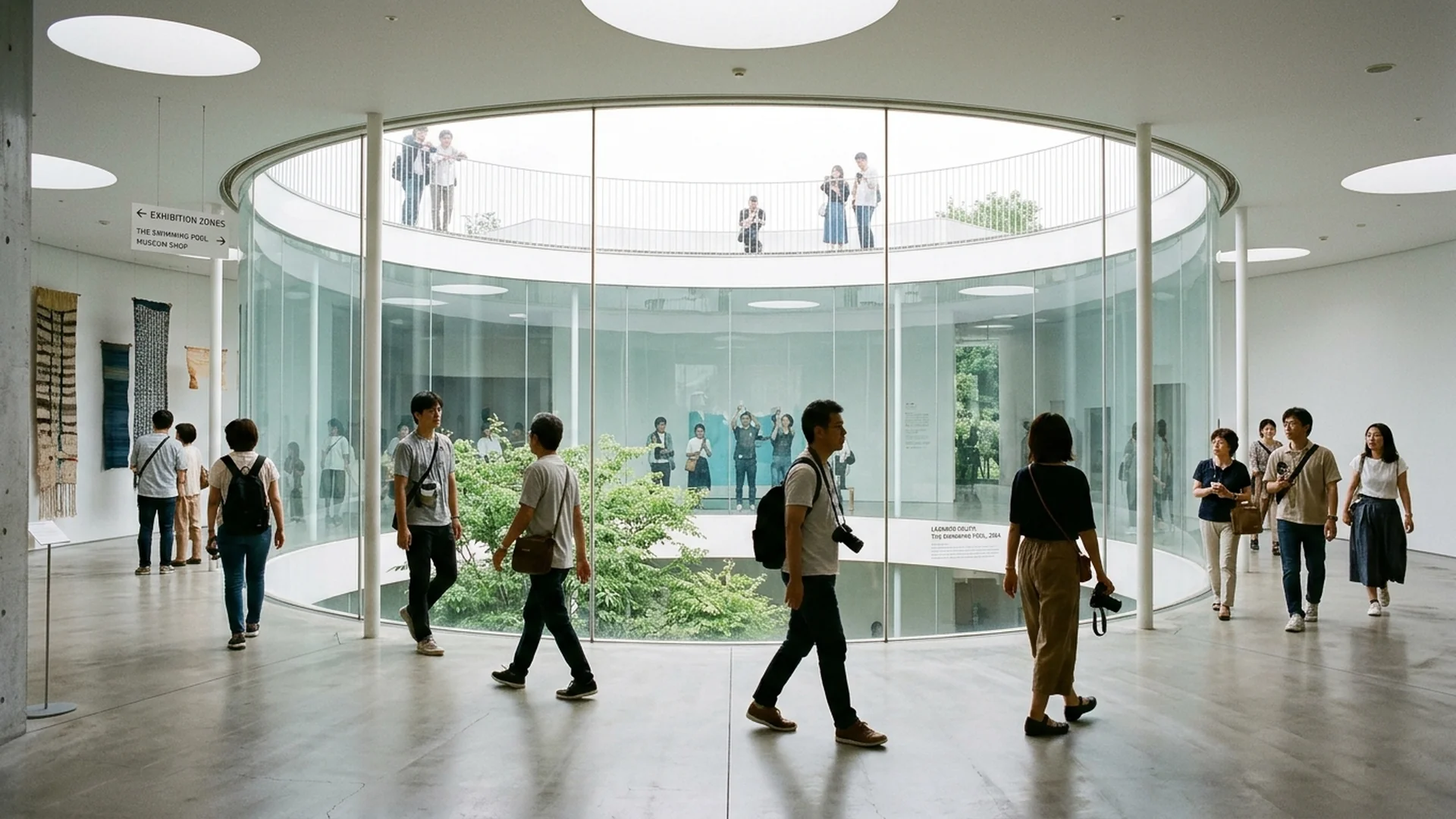
When the boundary between interior sanctuary and surrounding community dissolves through curving, diaphanous walls of glass, the very nature of experiencing art is radically transformed. At the historic heart of Kanazawa stands a masterwork of contemporary architecture that quietly challenges the conventional, introverted typology of the traditional museum. Here, there are no fixed facades or authoritative points of entry; every direction serves as an open invitation for wanderers to step freely into a dialogue with culture.
The 21st Century Museum of Contemporary Art, Kanazawa, is far more than a repository for globally celebrated installations. It is a breathing ecosystem where design, architectural philosophy, and nature gracefully converge. Since its inception, this luminous circular pavilion has woven an unforgettable aesthetic tapestry for discerning travelers from across the globe, inviting contemplation from the very first glance.
Borderline-Free Circular Architecture: A Visionary Future by SANAA
The conceptual genesis of this museum was rooted in a deliberate departure from the introspective, fortress-like nature of traditional art institutions. Architectural visionaries Kazuyo Sejima and Ryue Nishizawa of SANAA conceived an immense, single-story cylindrical structure enclosed entirely by a seamless ribbon of curved glass. The building possesses no distinct orientation, front, or back; instead, it operates as an open cultural park where visitors may drift through from any compass point. The transparent perimeter not only mirrors the shifting skies and verdant surroundings of Kanazawa, but it also effortlessly erases the threshold between the interior gallery realm and the outside world. Four internal circular courtyards pierce the footprint, drawing shifting shafts of daylight deep into the heart of the plan and orchestrating a dynamic interplay of light and shadow that transfigures the architectural experience with every passing hour.
The Swimming Pool: Optical Illusions and Timeless Human Connection
No single work of art is more synonymous with the pilgrimage to Kanazawa than ‘The Swimming Pool’, an iconic site-specific installation by Argentine artist Leandro Erlich. The piece brilliantly subverts human perception by presenting what appears from above to be a deep, shimmering pool filled with water, disturbed only by gentle ripples. Yet, descending beneath the water’s surface reveals an entirely dry, turquoise-hued chamber where visitors stand in everyday attire, gazing upward through the refractive glass ceiling at the silhouettes of onlookers peering down from the terrace. This silent, reciprocal interaction between those ‘on land’ and those ‘submerged’ transcends simple novelty, offering a profound, playful commentary on voyeurism, perspective, and communal connection through contemporary art.
Art in Symbiosis with Daily Life: Public Zones and Permanent Collections
The museum’s allure extends far beyond its rotating galleries of international contemporary art, anchored instead by a thoughtful collection of site-specific commissions integrated seamlessly into the structural blueprint. James Turrell’s ‘Blue Planet Sky’ (a Turrell Skyspace) frames an open aperture to the heavens, transforming the shifting atmospheric tones into a living canvas, while Olafur Eliasson’s ‘L’s Formula’ refracts natural illumination into dazzling chromatic spectra. Furthermore, the expansive public zones invite visitors to linger, read, or engage in quiet reflection, honoring Kanazawa’s profound heritage of uniting master craftsmanship with visionary futures. Here, art is not merely observed from a distance; it is lived, breathed, and shared as an organic extension of daily existence.