As the morning mist lifts across the ridges of the Japanese Alps, the centuries-old whispers of the Hokuriku coastline drift softly on the winter wind. Kanazawa, miraculously spared from the sweeping destructions of modern history, stands as an impeccably preserved monument to the Edo period. Far more than a mere alternative to the frantic pace of Tokyo or Kyoto, this coastal city is a living museum steeped in the aristocratic elegance of samurai warriors, legendary geisha houses, and peerless traditional arts seamlessly intertwined with contemporary refinement.
To wander Kanazawa as late-afternoon sunlight catches the dark wooden eaves of historic merchant townhouses is to slip into a gentler cadence of time. Every footfall upon polished cobblestones echoes the meticulous dedication of generations past—whether it is the rhythmic, feather-light tapping of a artisan hammering gold leaf or the profound silence of a master-crafted landscape garden. Every element speaks to the immense cultural patronage once lavished by the formidable Maeda Clan, leaving an indelible intellectual and aesthetic legacy that continues to captivate global connoisseurs.
The Aesthetics of Kenrokuen: A Poetic Symphony of Nature and Time
If the heart of Kanazawa is its artistic soul, Kenrokuen Garden is its living, breathing poetry. Translated literally as the ‘Garden of Six Sublimities’—embodying spaciousness, seclusion, artifice, antiquity, watercourses, and panoramic views—this legendary sanctuary achieves a deliberate yet utterly natural harmony. In the heart of winter, the iconic yukizuri, intricate geometric networks of ropes and bamboo poles erected to protect ancient branches from heavy snowfalls, transform the sprawling grounds into a surreal monochrome ink wash painting. Meanwhile, spring ushers in the delicate blush of cherry blossoms and stately pine boughs mirrored flawlessly across the tranquil expanse of Kasumigaike Pond, evoking a profound and restorative stillness for every traveler fortunate enough to linger.
Echoes of the Edo Era: Higashi Chaya and Nagamachi
A leisurely stroll through the Higashi Chaya district feels akin to stepping onto the meticulously staged set of a classical period drama. Two-story wooden structures featuring exquisite fine-latticed red-brown windows known as kimusuko have served as exclusive enclaves of high artistic entertainment and geisha culture since the nineteenth century. Today, these historical facades have been lovingly restored, housing intimate traditional teahouses, artisanal gold leaf boutiques, and refined matcha salons.
Crossing the city toward the Nagamachi Samurai District, earthen mustard-colored walls—known as dobei and traditionally shielded by straw rooflets during freezing months—still guard the ancestral residences of elite retainers such as the Nomura Samurai House. Within these secluded compounds lie meticulously manicured courtyard gardens, crystal-clear streams populated by gliding koi, and stately chambers adorned with ceiling paintings by masters of the Kano school, offering profound insight into an elite warrior caste that doubled as passionate patrons of the arts.
The Legacy of Gold Leaf and the Bounties of the Hokuriku Coast
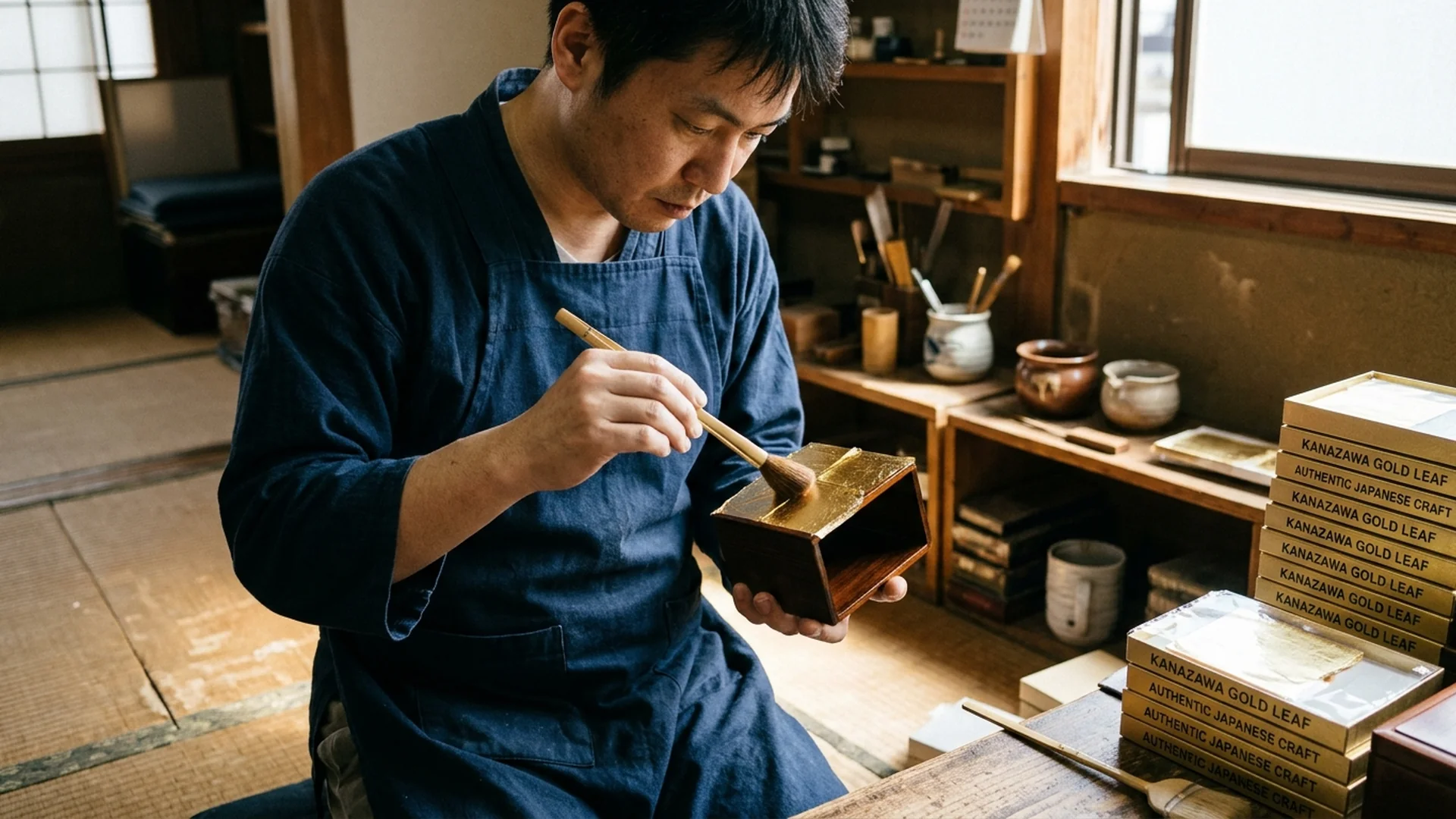
Kanazawa reigns undisputed as the epicenter of Japanese gold leaf production, commanding an extraordinary ninety-nine percent share of the national output. Known as Kanazawa Haku, this glittering heritage manifests across every facet of local life, from fine lacquerware and architectural ornamentation to opulent, gold-flecked soft-serve ice cream. Participating in a private gold-leaf gilding atelier provides an intimate, tactile connection to ancestral craftsmanship that stays with travelers long after departure.
On the culinary front, Omicho Market—affectionately hailed as the ‘Kitchen of Kanazawa’—celebrates the remarkable convergence of warm and cold oceanic currents off the Sea of Japan. Prized delicacies such as the exceptionally rich nodoguro (blackthroat seaperch) and sweet, freshly hauled zuwaisugani (snow crab) offer a transcendent gastronomic reward for discerning epicureans traveling to the region.