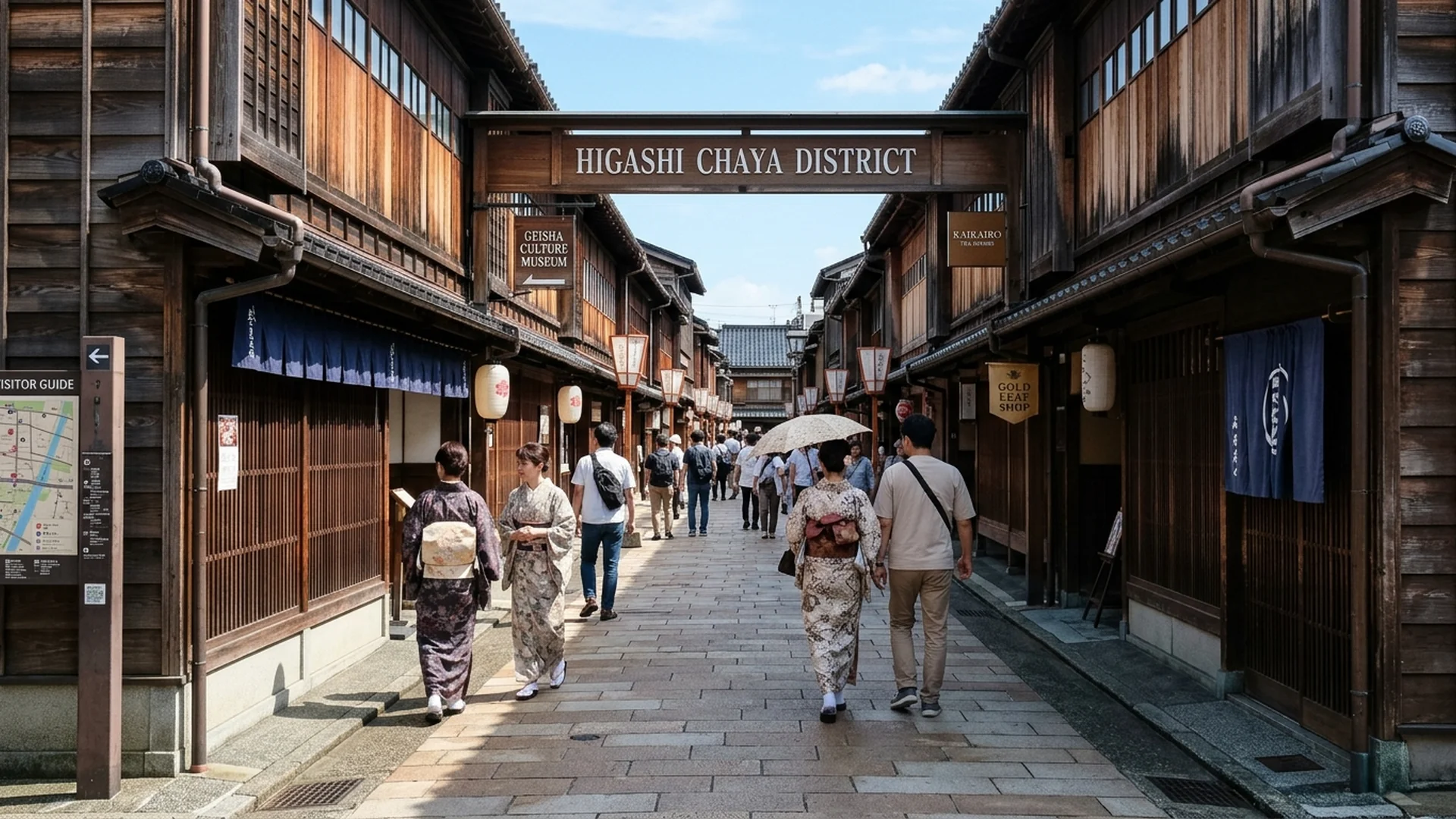
As the gentle golden light of dusk settles over the dark timber structures of historic residences, the Higashi Chaya District in Kanazawa feels suspended in time. This is far more than a standard historical quarter; it is a living museum that perfectly captures the opulent height of the chaya—or traditional teahouse—culture from the Edo period. Stepping into alleys lined with distinctive wooden lattice architecture is akin to decoding a historic expression of quiet luxury, where meticulous artistry hides within every millimetre of craftsmanship.
The soft strains of a shamisen drifting through slatted wooden windows, coupled with the legacy of geisha preserving high performing arts, elevates a visit here far beyond conventional sightseeing. It becomes a profound immersion into the spiritual and cultural soul of Kanazawa.
Kimusuko Architecture: The Art of Wooden Lattices and Edo Secrets
The defining architectural hallmark of the Higashi Chaya District is the kimusuko, an intricate assembly of fine wooden slats fitted across the upper stories of the buildings. This specific lattice design was created not merely for visual grace, but as an ingenious device for safeguarding the privacy of visitors to the teahouses in ages past. From the interior, patrons could look out clearly through the slats onto the bustling street below, yet passersby on the exterior could not peer inside. This architectural subtlety, coupled with strict two-story wooden building regulations established during the Edo period, creates a cohesive atmosphere defined by quiet dignity and refined taste.
Echoes of the Geisha: A Living Cultural Tradition at Shima and Kaikaro
Kanazawa remains one of Japan’s enduring cultural capitals, fiercely guarding its traditional spirit. Higashi Chaya was once the largest teahouse district in the city, and to this day, the music and dance of geisha continue to be passed down through generations. For those wishing to experience the beauty behind closed wooden doors, the Shima Teahouse—built in 1820 and designated as an Important Cultural Property—invites travelers to walk upon polished wooden floors, viewing reception rooms, ancient musical instruments, and precious geisha hair ornaments. Meanwhile, Kaikaro, another venerable teahouse, continues to host VVIP guests with contemporary cultural performances that seamlessly weave classical elegance into the present day.
The Gleam of Kanazawa: Kingdom of Gold Leaf and Tasteful Aesthetics
Mention Kanazawa, and kinpaku, or gold leaf, inevitably follows, as the city produces over 99 percent of Japan’s gold leaf supply. The Higashi Chaya District glows with a subtle brilliance from boutiques applying gold leaf to fine arts, cosmetics, and culinary arts. A quintessential experience involves savoring a smooth soft-serve ice cream draped in delicate, edible gold leaf that melts instantly on the tongue, or touring a tearoom entirely sheathed in glowing gold—reflecting a tradition of opulent artistry passed from imperial master artisans down to contemporary creators.