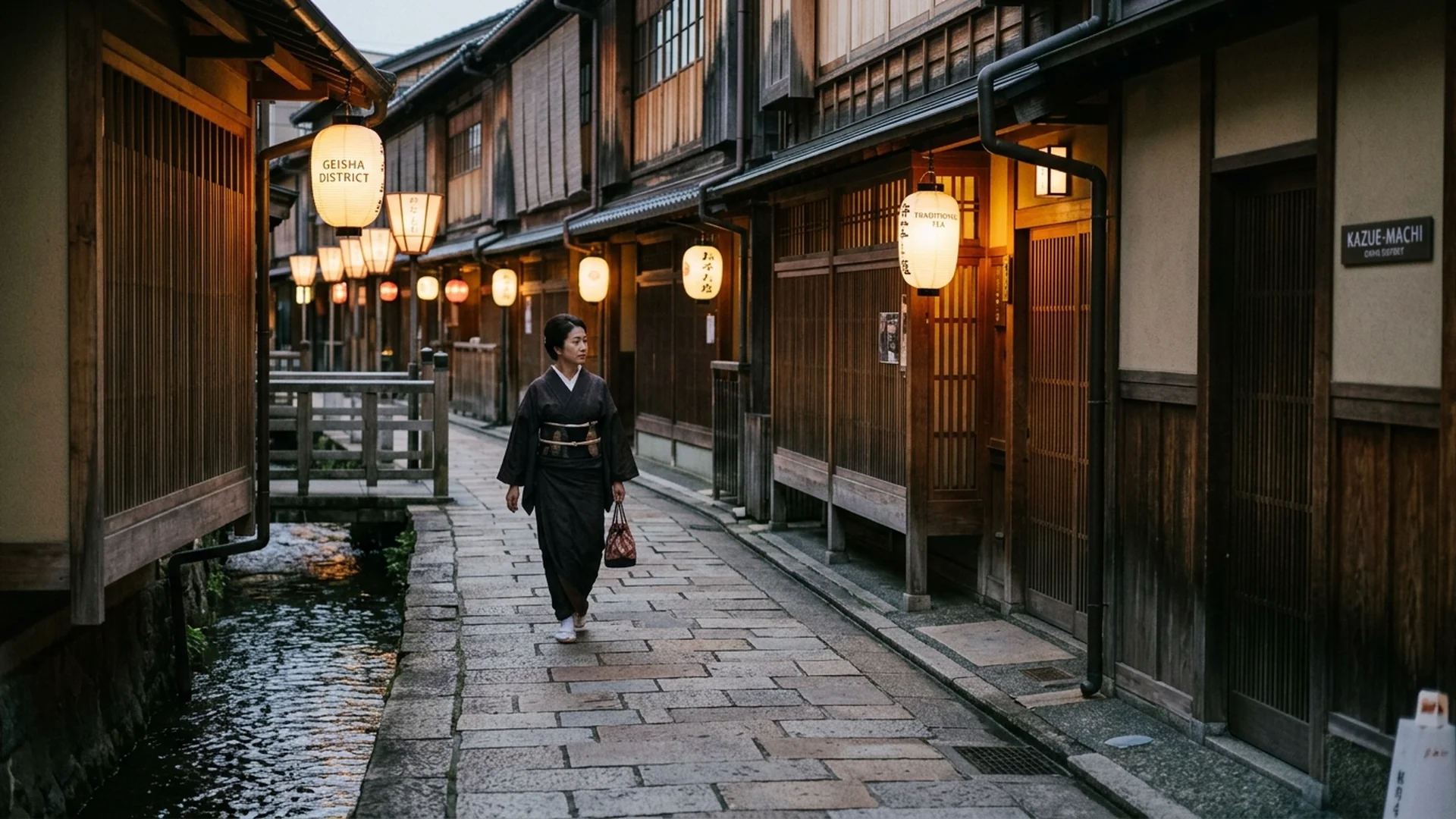
As dusk gently drapes its twilight shadows across the shimmering expanse of the Asano River, Kanazawa reveals its most profound and contemplative self. Leaving behind the bustle of the city’s primary thoroughfares, one arrives at the Kazue-machi Chaya District, where time itself seems to draw a softer breath. Dark-toned timber latticework buildings stand in quiet alignment along the water, echoing a legacy of refinement that continues to live and breathe.
The delicate notes of a shamisen drift softly through intricate kushiko wooden louvers, blending seamlessly with the warm amber glow of traditional shoji lanterns. Here, amid the tranquil murmur of the river, lies the quintessential expression of quiet luxury that discerning travelers eternally seek—an authentic encounter with unhurried beauty and preserved heritage.
Riverside Architecture and the Soul of Kazue-machi
The Kazue-machi Chaya District traces its origins to the early Edo period, established upon the gentle slopes lining the southern bank of the Asano River. Its architectural signature rests in the two-story wooden structures utilizing traditional structural techniques, fronted by refined fine-latch windows known as shima. These were thoughtfully engineered to allow those within to observe the world outside while remaining entirely shielded from the casual gaze of passersby. This subtle discretion speaks volumes about the refined lifestyle once shared between esteemed guests and the accomplished geisha of the quarter. Unlike its bustling counterpart, Higashi Chaya, Kazue-machi offers an air of seclusion and serene contemplation, inviting travelers to wander slowly and absorb the pure artistry of traditional timber craftsmanship.
The Allure of Hidden Alleys: Kuragari-zaka and Akari-zaka
Adding a layer of poetic mystery to the district are its steep, narrow stair-alleys connecting the commercial streets to the upper sanctuary of the teahouses. The journey begins along Kuragari-zaka—the ‘Darkness Slope’—a granite-paved passage flanked by ancient earthen walls and overhanging boughs that cast gentle, evocative shadows reminiscent of classic Japanese literature. Running parallel is Akari-zaka, the ‘Slope of Light,’ named in honor of the evocative writings of renowned local author Godo Kawakami. To traverse these twin alleyways is to slip effortlessly across dimensions, stepping out of the contemporary world and directly into the golden age of Showa and Edo elegance.
The Golden Hour of Twilight and the Echo of the Shamisen
Kazue-machi reaches its absolute zenith during the blue hour just before nightfall, when the darkening indigo sky contrasts sharply with the warm, amber luminescence spilling from the paper lanterns of heritage teahouses. The mirrored surface of the Asano River captures these flickering constellations, doubling the visual poetry of the scene. Listen closely against the profound evening stillness, and you may catch the faint, resonant pluck of a shamisen or the gentle rhythmic tapping of artistic rehearsals echoing from active teahouses. It is an auditory and visual masterpiece rarely encountered in our modern era.