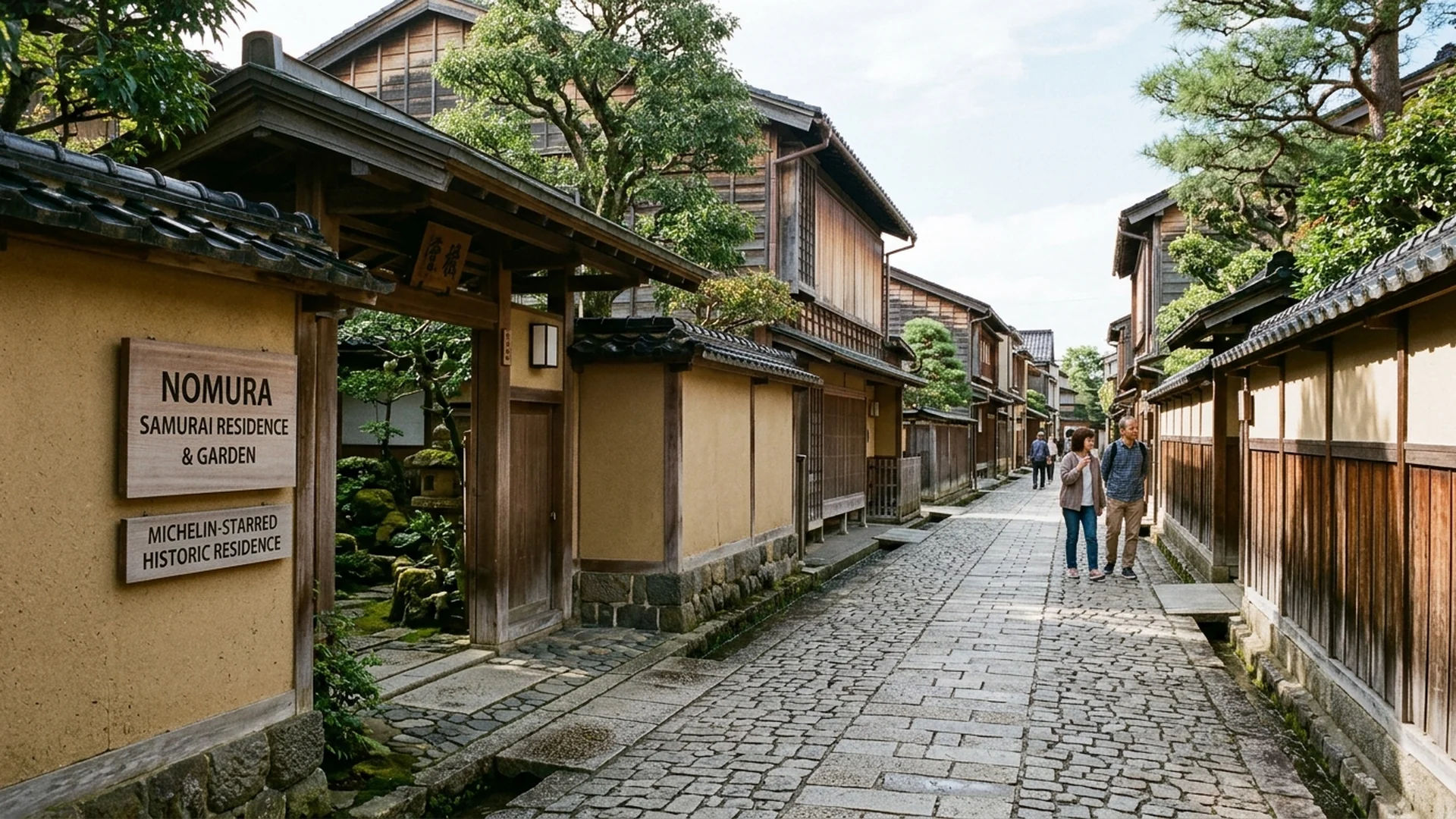
When footfalls echo softly through narrow alleyways embraced by earthen Tsuchikabe mud walls, time itself seems to hesitate. The Nagamachi Samurai District in Kanazawa is a living, breathing canvas of the Edo period, an era when high-ranking retainers of the powerful Maeda Clan once lived behind these formidable enclosures. Accompanied by the gentle murmur of the pristine Onosho Canal, which has nourished the quarter’s collective memory for centuries, this historic sanctuary invites the discerning traveler to cross the threshold of time into a world of quiet grace, unyielding discipline, and refined aesthetic mastery.
To wander through Nagamachi is far more than an exercise in architectural sightseeing; it is an immersive communion with the spirit of Bushido harmonized with exquisite local artistry. Whether observing the ingenious defensive layout of the labyrinthine lanes or surrendering to a profound stillness rarely found in the modern world, every turn reveals a timeless narrative of honor, craftsmanship, and cultural preservation.
Architecture and the Timeless Allure of Nagamachi’s Earthen Walls
Upon stepping into the Nagamachi district, one is immediately arrested by the continuous amber expanse of Tsuchikabe—historic mud walls constructed through ancient layering techniques and capped with small clay tiles to repel moisture and bitter winters. The twisting alleyways were originally engineered as a strategic military labyrinth designed to impede potential invaders and create tactical dead ends. Today, this deliberate convolution has transformed into an irresistible aesthetic charm. Each gentle bend reveals fresh vistas of venerable residences, intricately carved wooden gates, and the branches of weeping cherry trees and ancient pines spilling over the ramparts to greet passersby.
The Nomura Samurai House: Aesthetics of a Michelin Two-Star Garden
At the heart of this historic quarter stands the Nomura Samurai House (Nomura-ke), the former residence of an influential family that served the Maeda daimyo for generations. The interiors exude aristocratic wealth and refined taste through Hinoki cypress woodwork, delicate wooden screens, and reception rooms adorned with master-painted fusuma sliding doors by imperial artists. The undeniable crowning jewel, however, is the courtyard garden, honored with two Michelin stars. Masterfully composed around meandering streams, natural rock formations, century-old pruned pines, and vibrant koi gliding through crystal ponds, it offers an incomparable setting. From the polished veranda, visitors may sip freshly whisked matcha while absorbing the absolute harmony of architecture and living nature.
From Elite Retainers to Foot Soldiers: Social Stratification at the Ashigaru Museum
To fully comprehend the multifaceted social fabric of Kanazawa’s warrior class, a visit to the Ashigaru Shiryokan Museum nearby unveils the other side of the military spectrum. These modest dwellings housed ashigaru, the foot soldiers of feudal lords. While lacking the opulent embellishments and sublime gardens of the Nomura estate, their austere structures, wooden shingle roofs, and clever spatial economy reflect a pragmatic lifestyle centered on agility and frugality. Contrasting these two architectural tiers provides a comprehensive, beautifully nuanced understanding of daily life in feudal Kanazawa.
Winter Wisdom and Safeguarding the Legacy of the Past
Nagamachi possesses distinct personalities across the turning seasons, achieving a particularly haunting beauty during winter snowfall. As powdery snow blankets the tiled roofs and earthen ramparts, local residents and preservationists enact the traditional ritual of placing Komokake straw mats along the historic walls. The golden texture of the woven straw contrasting against pristine white snow and dark timber creates an iconic tableau of heritage preservation, safeguarding fragile earthen architecture from the harsh freezing temperatures through generations of shared devotion.