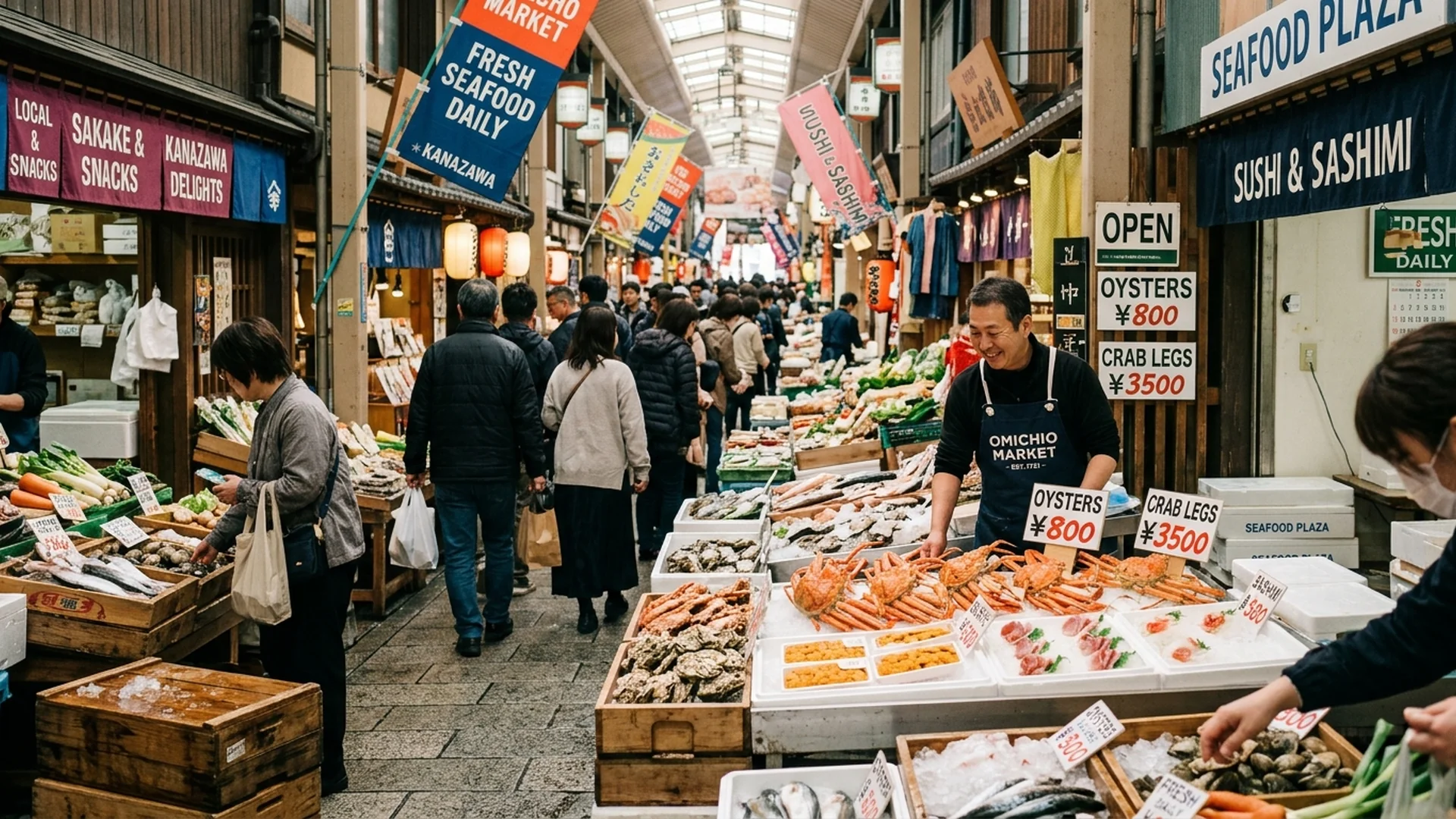
Beneath the iconic curved roofing of downtown Kanazawa, the rhythmic shouts of local vendors blend seamlessly with the faint, salty tang of the Sea of Japan—a living tableau that has pulsed with unrelenting energy since the Edo period. Omicho Market is far more than a mere municipal bazaar; it is the beating heart and soul of the city’s culinary identity, reverently known by locals as ‘Kanazawa’s Kitchen’.
This is a sanctuary of flavor where time holds no sway. Spanning over 180 narrow, bustling alleyways, the market brims with the extraordinary bounty of the Hokuriku region’s land and sea. To meander past polished displays of glistening fish, rustic green grocers, and intimate eateries releasing the warming aromas of dashi is to embark on a 300-year historical journey, where every sensory detail is heightened by the timeless refinement of traditional Japanese aesthetics.
A Legacy of Flavor: From the Edo Period to the Kitchen of Hokuriku
Originating in the 18th century, Omicho Market was established as the central marketplace for the Maeda Clan, the powerful rulers of the wealthy Kaga Domain. In those days, the district served as the convergence point for agricultural goods and marine harvests transported from the Noto Peninsula and surrounding waters. The cultural brilliance of Edo-era Kanazawa was never confined solely to gold leaf craftsmanship or exquisite ceramics; it was equally forged into a meticulous gastronomic tradition, with Omicho acting as the vital stage that sustained this abundance.
Even as eras shifted, the market adapted fluidly while carefully preserving its intimate, labyrinthine pathways. Stepping into Omicho in the crisp morning hours feels precisely like stepping backward into the authentic pulse of Kanazawa life. The sharp, practiced slide of a fishmonger’s blade, the lingering fragrance of simmering kelp broth drifting from open stalls, and the warm, generational greetings of vendors create an enduring, inimitable charm.
Seasonal Bounty: Premium Seafood and Heirloom Kaga Produce
The crowning glory of Omicho Market is its hyper-seasonal freshness, shifting in serene harmony with nature’s cycles. The icy, mineral-rich waters of the Sea of Japan imbue marine life with an exceptionally deep, clean flavor profile. Winter brings an electric anticipation with the arrival of ‘Kano-gani’ (male snow crab harvested in Ishikawa Prefecture), prized for its succulent, sweet meat, alongside ‘Kobako-gani’ (female snow crab), treasured for its intensely flavorful roe during a strictly regulated harvest window.
Beyond the sea, Omicho serves as the custodian of ‘Kaga Vegetables’—fifteen traditional heirloom varieties carefully preserved through generations, including dense, naturally sweet Kaga squash, exceptionally chewy Kaga lotus root, and Imafuku potatoes. These ingredients are far more than mere provisions; they stand as edible monuments to a profound agricultural reverence passed down across the centuries.
The Art of the Bowl: Legendary Kaisendon and Market Sushi
For the discerning culinary traveler, a pilgrimage to Omicho is incomplete without savoring a ‘Kaisendon’—a masterclass in arrangement featuring pristine seafood draped lavishly over impeccably seasoned vinegared rice. Several historic fishmongers have thoughtfully expanded their operations to include intimate dining spaces tucked directly behind their stalls, ensuring that the meltingly tender fatty tuna (maguro), colossal sweet shrimp (amaebi), shimmering golden sea urchin (uni), and ruby salmon roe (ikura) arrived straight from the morning’s fishing boats.
Partaking in a meal at a modest wooden counter, exchanging quiet pleasantries with master chefs whose knife work is nothing short of surgical, offers a profound immersion into the Japanese philosophy of ‘Ichigo Ichie’—the realization that this singular meeting, and this pure taste of the terroir, will never be replicated.