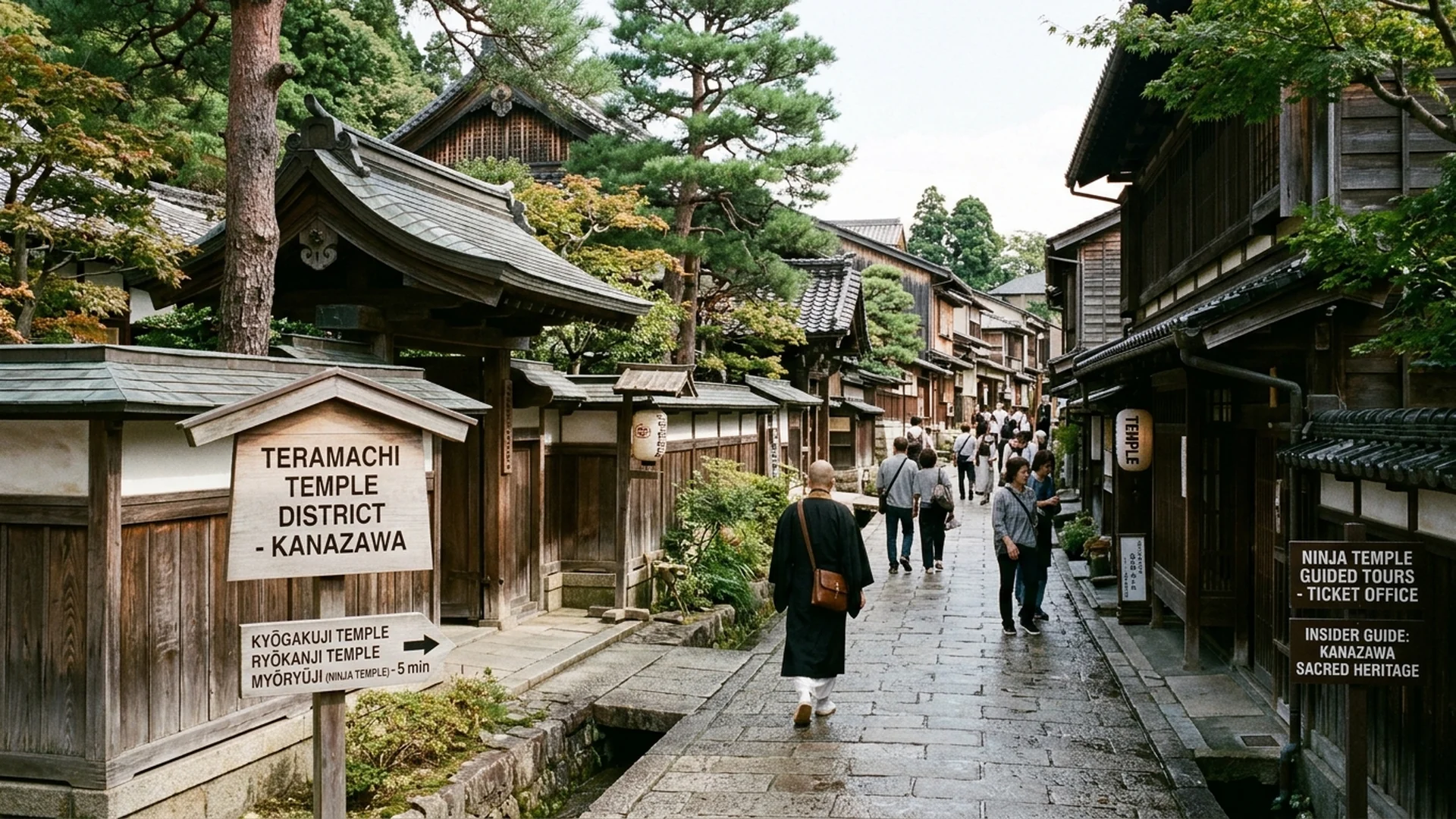
When stepping away from the gentle bustle of the Omicho market and the stately shadows of Kenrokuen Garden, Kanazawa reveals another chapter whispered through the mist of time. Amidst the serene expanse of the Teramachi Temple District, footfalls upon ancient flagstones seem to echo the hushed secrets of the Edo period. This neighborhood is far more than a mere collection of spiritual sanctuaries; it was a critical strategic pawn in the profound military and political playbook of the Maeda clan, lords of the formidable Kaga Domain.
Beneath the tranquil facade of dozens of solemn temples lies an ingenious network of defensive architecture, seamlessly fusing unwavering devotion with the pragmatic art of survival. Here, sacred geography doubles as a tactical bastion, offering discerning travelers an unhurried glimpse into Japan’s intricate historical tapestry.
Strategies of Faith: When Temples Function as Fortresses
In the Edo period, when political stability meant absolute survival, the Maeda clan orchestrated an ingenious urban planning policy by relocating over 70 temples from various sects into three primary suburban zones, with Teramachi standing as the largest along the southern flank. This deliberate concentration of sacred sites served a dual purpose far beyond spiritual worship. In the event of an invading offensive, the imposing temple walls, heavy timber gates, and labyrinthine alleys were meticulously designed to transform into defensive mazes capable of slowing and disorienting aggressors. Faith and military strategy were thus intricately woven together, leaving behind an enduring architectural legacy etched in quiet vigilance.
Decoding the Hidden Craft of the Ninja Temple (Myoryuji)
Although Myoryuji had no direct historical ties to mercenary ninja assassins, the moniker ‘Ninja Temple’ stems from its astonishing architectural complexity and tactical cleverness. Externally, the temple appears as a modest two-story wooden structure adhering to conventional Buddhist aesthetics. Yet upon crossing the threshold, the interior unfolds into a complex four-story framework containing over 23 distinct rooms and bewildering corridors. Key highlights include concealed staircases that can be instantly retracted to sever pathways, clever observation apertures carved into ceilings, and underground escape tunnels purportedly leading toward Kanazawa Castle. These ingenious mechanisms were forged to outmaneuver the stringent controls imposed by the Tokugawa shogunate, reflecting the supreme caution and brilliant ingenuity of the Kaga lords.
The Aesthetics of Quietude and the Bridge to Nishi Chaya
Strolling through Teramachi in the early morning evokes the sensation of stepping backward through the centuries. The gentle sweep of a monk clearing fallen leaves, the faint, lingering fragrance of Hinoki cypress, and the muted reflections of gray-tiled roofs against earthen walls invite deep contemplation. Just a brief stroll northward from this sacred enclave brings travelers to a striking cultural transition: the Nishi Chaya District. Here, preserved two-story vermilion wood machiya townhouses stand as enduring testaments to Kanazawa’s vibrant arts scene, characterized by traditional dance, the resonant strumming of shamisen strings, and refined cultural elegance.