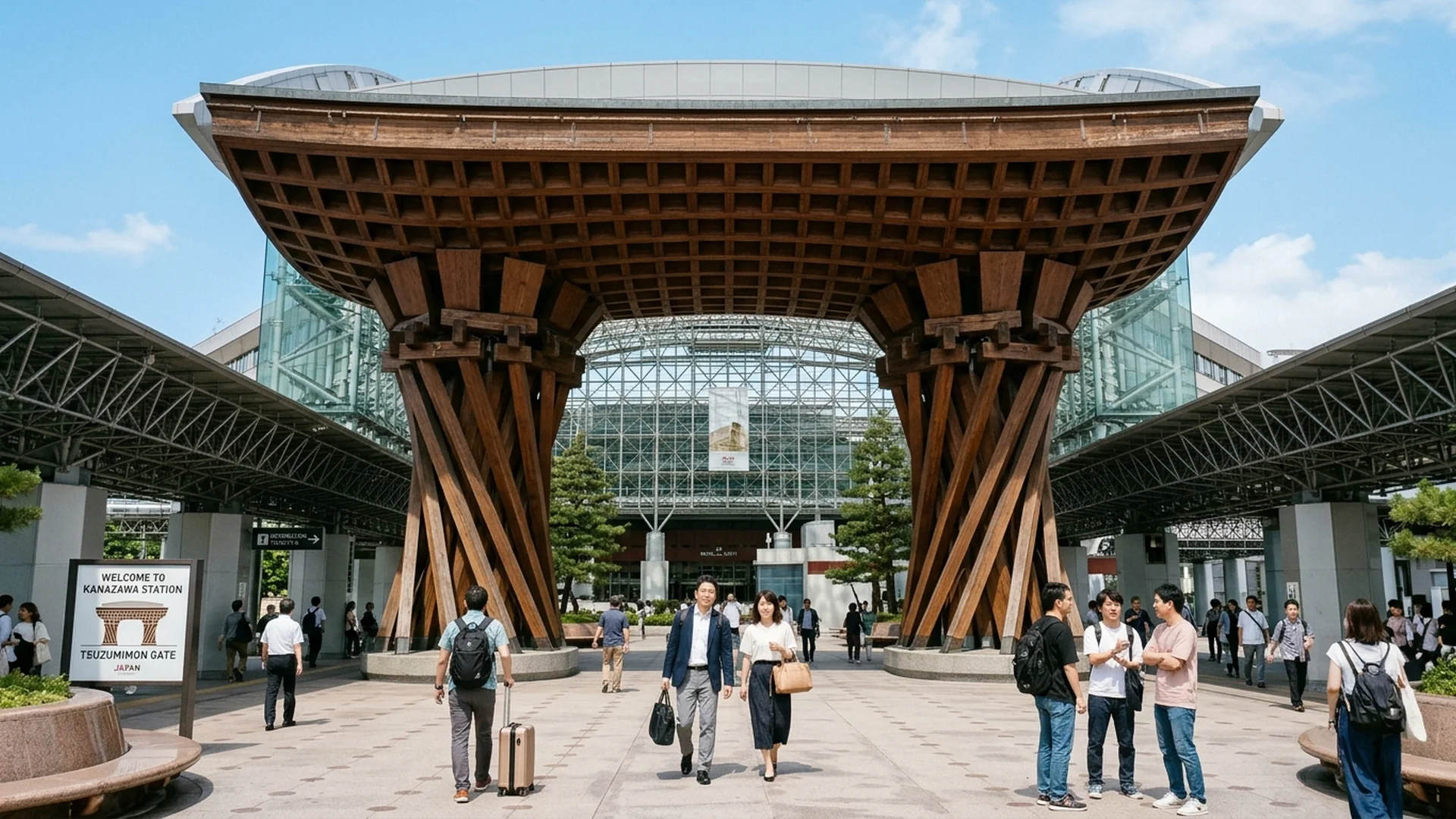
As the Hokuriku Shinkansen glides to a halt at the heart of Kanazawa in Ishikawa Prefecture, the colossal wooden portal greeting travelers on the platform does far more than demarcate a transit hub. It serves as an architectural threshold, effortlessly bridging the flourishing elegance of the Edo period with the sleek aspirations of tomorrow. The Tsuzumimon Gate is a poem inscribed in cedar and glass, capturing the profound cultural identity of the Hokuriku region and earning international acclaim as one of the world’s most breathtaking railway monuments.
Yet, the gate’s allure extends far beyond visual grandeur. Its design is steeped in contemplative philosophy, drawing inspiration from the tsuzumi—the traditional hand drum central to Noh theater, an aristocratic performing art deeply woven into Kanazawa’s historical fabric. Rendered through sweeping, symmetrical wooden pillars, this monumental form embodies strength softened by grace, inviting discerning travelers to pause and absorb its aesthetic gravity before venturing deeper into the city’s artistic sanctuaries.
Architecture of Aesthetics: When a Traditional Drum Shapes a City’s Soul
Kanazawa is a city that refuses to relinquish its historical soul, even as it embraces contemporary sophistication. Unveiled alongside the inauguration of the Hokuriku Shinkansen, the Tsuzumimon Gate instantly established itself as a commanding visual icon. Towering twin pillars of aged Japanese cedar are meticulously shaped with gentle, inward-curving arcs that emulate the waist of a traditional tsuzumi drum. This engineering feat transcends mere physical scale, evoking a rhythmic cadence akin to a ceremonial drumbeat welcoming the traveler. In the amber glow of the afternoon sun, the wood radiates a warm, golden-brown patina, revealing an extraordinary level of detail rarely witnessed in modern transportation architecture.
Motenashi Dome: A Glass and Steel Embrace for the City of Rain
Counterbalancing the ancient resonance of the wooden gate is the Motenashi Dome, an expansive, vaulted canopy of glass and tubular steel that arcs over the station plaza. Kanazawa is renowned for its frequent mist, rain, and winter snows. Responding to this climate, architects conceived the dome under the guiding philosophy of ‘Omotenashi’—the art of wholehearted, selfless hospitality—ensuring travelers arrive shielded from the elements in an atmosphere of seamless elegance. The crystalline transparency of the glass harmonizes with the intricate steel trellis overhead, flooding the open piazza with shifting patterns of natural light and shadow throughout the day.
The Play of Light and Shadow: Evening Illumination and the Passage of Time
As dusk descends, the Tsuzumimon Gate undergoes a mesmerizing nocturnal metamorphosis. A sophisticated system of architectural lighting activates, carving the sweeping contours of the cedar pillars sharply against the indigo evening sky. The soft, amber illumination fosters an intimate sense of sanctuary, wrapping arriving guests in a protective embrace. Overhead, the glass panes of the Motenashi Dome capture and reflect the shimmering luminescence of the surrounding cityscape, offering photographers and connoisseurs of slow travel an unforgettable canvas of modern urban romance.