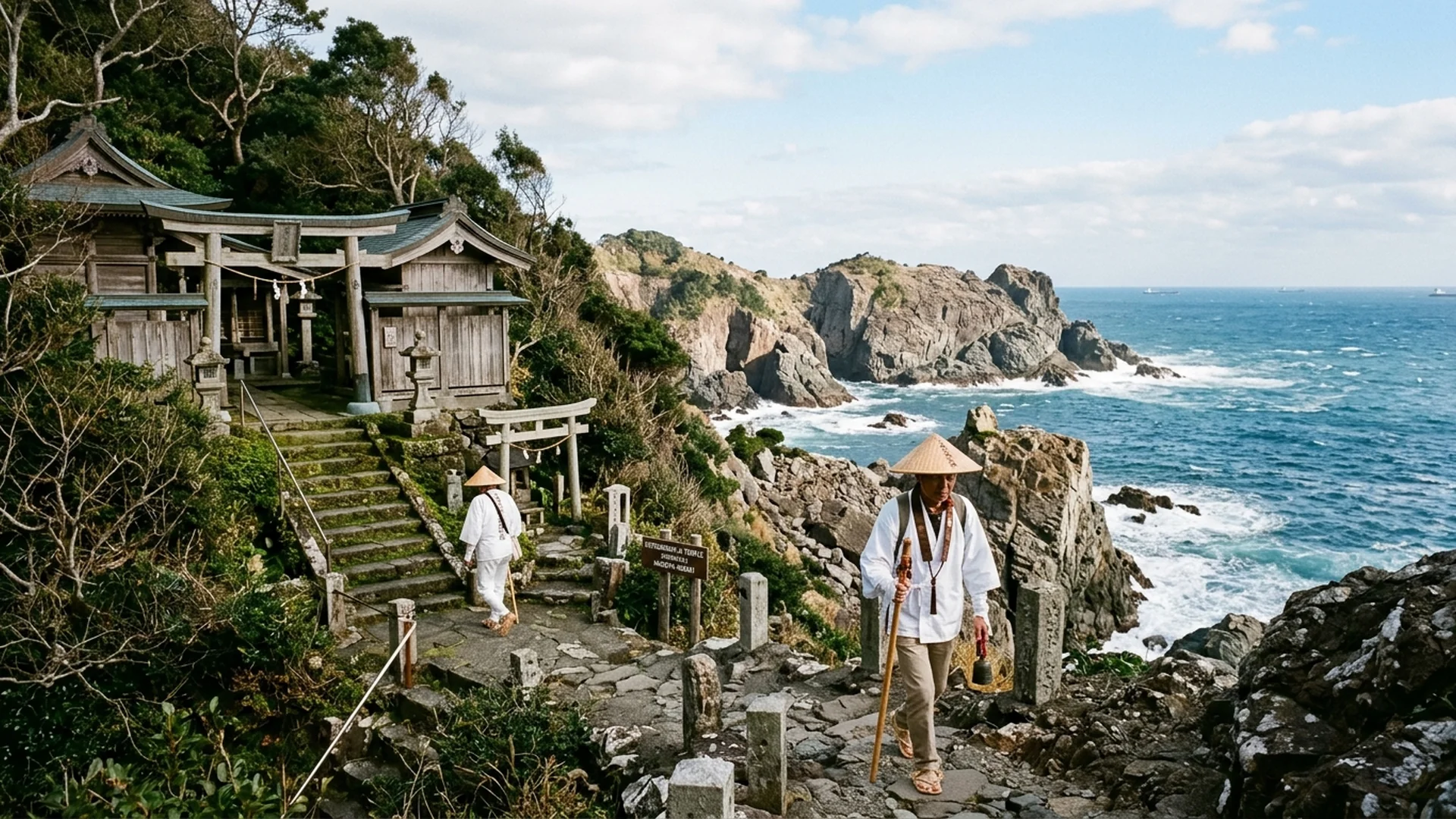
When the prevailing winds of the vast Pacific Ocean sweep across the dark stone precipices, they announce that the traveler has arrived at the southeastern extremity of Shikoku. Here at Cape Muroto, geological epochs and planetary forces have sculpted an arresting shoreline honored as a Muroto UNESCO Global Geopark. This destination transcends ordinary geographical sightseeing; it is a grand portal opening into dimensions of profound silence, deep spirituality, and the historic ascetic footsteps of Master Kukai, the legendary founder of Japan’s sacred pilgrimage routes.
Untouched by the frenetic clamor of modern metropolises, Cape Muroto communicates through the resonant thunder of breaking surf, curious rock formations born of ancient tectonic upheaval, and subtropical canopies shaped by maritime gales. For discerning travelers seeking intellectual enrichment and raw, unvarnished natural beauty, stepping onto this wind-swept headland offers an internal journey that harmonizes the human spirit with the immense grandeur of the cosmos.
Planetary Upheaval: The Living Earth Classroom of Muroto UNESCO Global Geopark
Beneath the striking aesthetics of Cape Muroto lies an invaluable geological chronicle accumulated over millions of years. Spanning more than 248 square kilometers within Muroto City, the territory holds UNESCO status as one of the few places on earth where active tectonic uplift continues to push deep-sea rock strata hundreds of meters above sea level in real time.
Along the rugged coastline, visitors encounter folded turbidites and seismic scars that function as a living, open-air museum. The sheer sea cliffs, sculpted relentlessly by salt spray and gales, reflect nature’s fierce yet balanced energy, inviting observers standing before the deep indigo horizon and pitch-black rock to contemplate the profound scale of our planet.
Voice of Sky and Sea: The Sacred Footsteps of Master Kukai at Mikurodo Cave
Beyond its scientific significance, Cape Muroto is deeply entwined with the sacred history of Japanese Buddhism. Carved by relentless wave action into the coastal cliffs lie the Mikurodo and Shinmeikutsu sea caves. According to historical lore, during the early ninth century, the young Buddhist ascetic Kukai—later revered as Kobo Daishi—chose these caverns for intensive spiritual meditation.
Local tradition holds that the expansive frame of sky and ocean visible directly from the mouth of Mikurodo Cave inspired the monk to adopt his religious name, Kukai, composed of characters denoting ‘sky’ and ‘sea’. Standing in absolute stillness within these hollowed rock chambers amid the distant echo of crashing waves yields an atmosphere of profound reverence and serene solitude rarely found in contemporary life.
The Beacon of Muroto and Culinary Heritage: Where Illumination Meets Coastal Flavor
Perched upon a forested ridge 151 meters above the crashing tide stands the immaculate white Muroto-misaki Lighthouse, erected in the 32nd year of the Meiji era (1899) to guide mariners navigating these tempestuous waters. Featuring an extraordinary first-order Fresnel lens of monumental proportions, the historic beacon remains a masterwork of maritime engineering. From the sweeping observation grounds surrounding the tower, visitors can gaze across the vast curvature of the Pacific and occasionally spot migrating whales or dolphins riding the powerful Kuroshio Current.
The bounty of this Kuroshio Current likewise shapes the distinctive culinary traditions of Kochi prefecture. Travelers exploring the region savor local delicacies such as katsuo tataki (seared bonito), traditionally roasted over straw or premium Tosa Binchotan—a smokeless, perfectly even-burning charcoal crafted from native ubame oak harvested within the geopark itself. This artisanal fuel reflects an unbroken heritage of utilizing local gifts with absolute culinary precision.