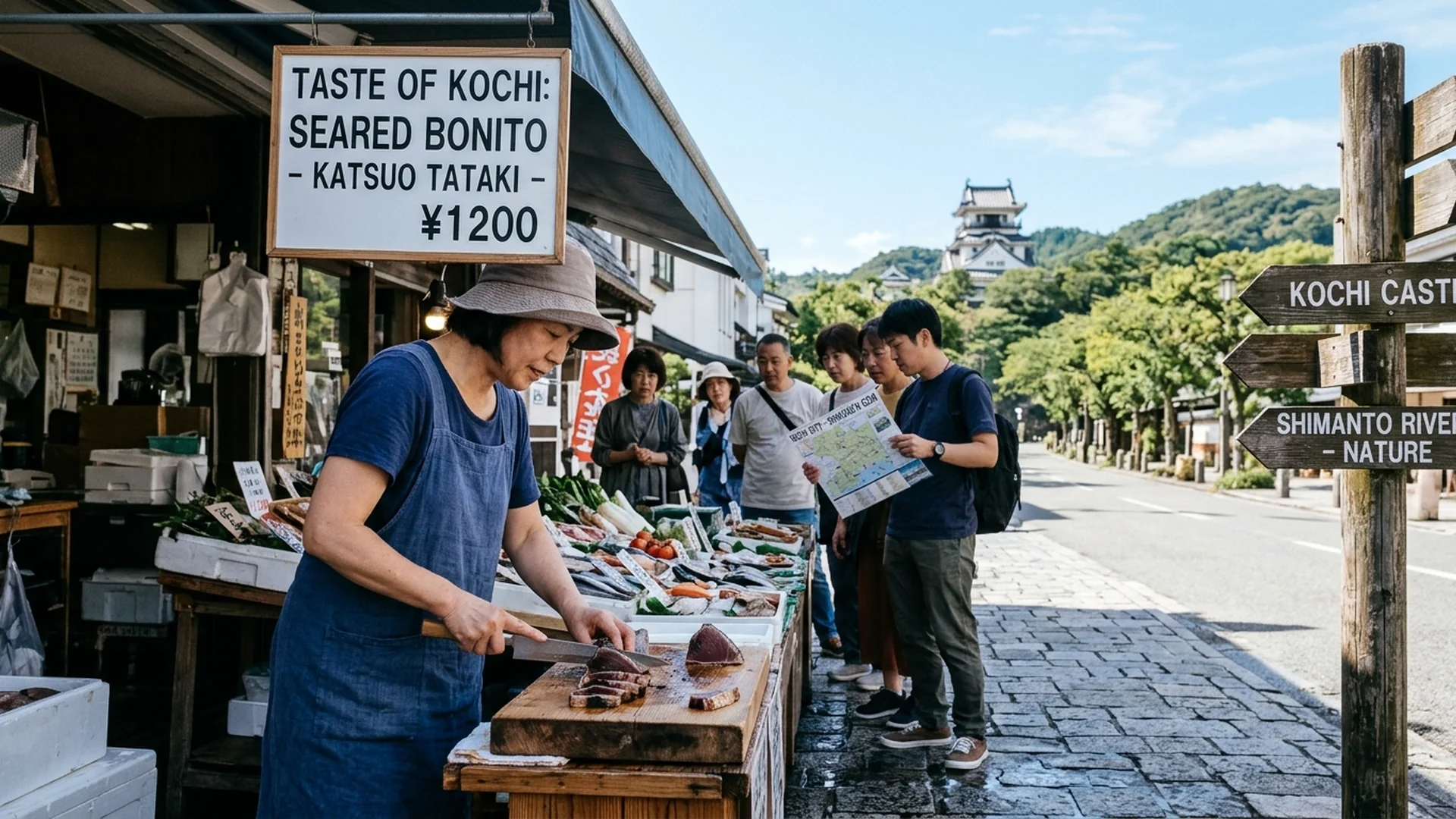
When crossing the threshold beyond Japan’s heavily trodden main islands, a portal to the ancient realm of Shikoku opens at Kochi—a dramatic landscape embraced by steep mountain ranges and the vast expanse of the Pacific Ocean. This is far more than a standard coastal port town; it is a crucible of history propelled by the indomitable spirit of Sakamoto Ryoma, the visionary samurai who helped shape modern Japan. The raw, unadorned authenticity of its traditions, untouched by aggressive commercialism, positions Kochi as an invaluable destination for discerning travelers seeking profound encounters far from the mainstream.
Visiting Kochi is akin to turning the pages of a living history book while simultaneously wandering through a pristine natural canvas. From ancient wooden architectural marvels that miraculously escaped the ravages of war, to the fragrant woodsmoke rising from straw-seared skipjack tuna in vibrant local markets, to mirror-clear turquoise rivers hidden deep within pristine gorges, every element harmonizes into an unhurried poetic journey that captivates the senses and restores the soul.
Kochi Castle: A Living Legacy of Timber and Timelessness
At the heart of Kochi stands Kochi Castle, defying the passage of centuries since its construction at the dawn of the Edo period by the visionary daimyo Yamauchi Kazutoyo. What astonishes historians and architects worldwide is that this fortification remains one of only twelve remaining castles in Japan whose primary defensive structures—the Honmaru Goten and keep—are constructed entirely from original timber, having escaped the devastation of war and major earthquakes. Walking across the time-worn wooden flooring, which responds with gentle, resonant creaks underfoot, fosters a profound physical connection to the past. From the summit of the central tower, an unbroken 360-degree panorama unfolds across the city, revealing the strategic brilliance and refined aesthetic sensibilities of Japan’s feudal architects.
The Ritual of Flavor: Katsuo no Tataki and the Vitality of Hirome Market
If the castle represents Kochi’s martial heart, its culinary soul resides within Hirome Market, an indoor bazaar where time stretches pleasantly amidst convivial communal tables. This beloved gathering place unites locals and travelers alike in an unpretentious celebration of shared dining. The definitive highlight here is witnessing the preparation of ‘Katsuo no Tataki’—fresh skipjack tuna seared directly over crackling bundles of rice straw. The intense, instantaneous flames lock in the rich sweetness of the fish while imparting an unmistakable, earthy smokiness. Served simply with sliced garlic and coarse sea salt or tart ponzu, it delivers a raw, powerful, and utterly unforgettable taste of regional pride.
The Allure of Waters: Pursuing the Purest Hues of Niyodo Blue
Venturing outward into the surrounding wilderness, the Niyodo River awaits those drawn to unblemished natural sanctuaries. Affectionately termed ‘Niyodo Blue,’ this pristine waterway exhibits mesmerizing shades of crystal-clear cobalt and emerald green, allowing observers to gaze effortlessly down through fathoms of transparent water to schools of fish swimming far below. Navigating the riverbanks or hiking deep into the tranquil recesses of Nakatsu Gorge invites a meditative communion with nature—the steady murmur of flowing currents, the rustle of foliage, and the cool mist rising from hidden cascades. It represents the quintessential Japanese art of Shinrin-yoku (forest bathing), elevated to a deeply restorative and refined experiential level.