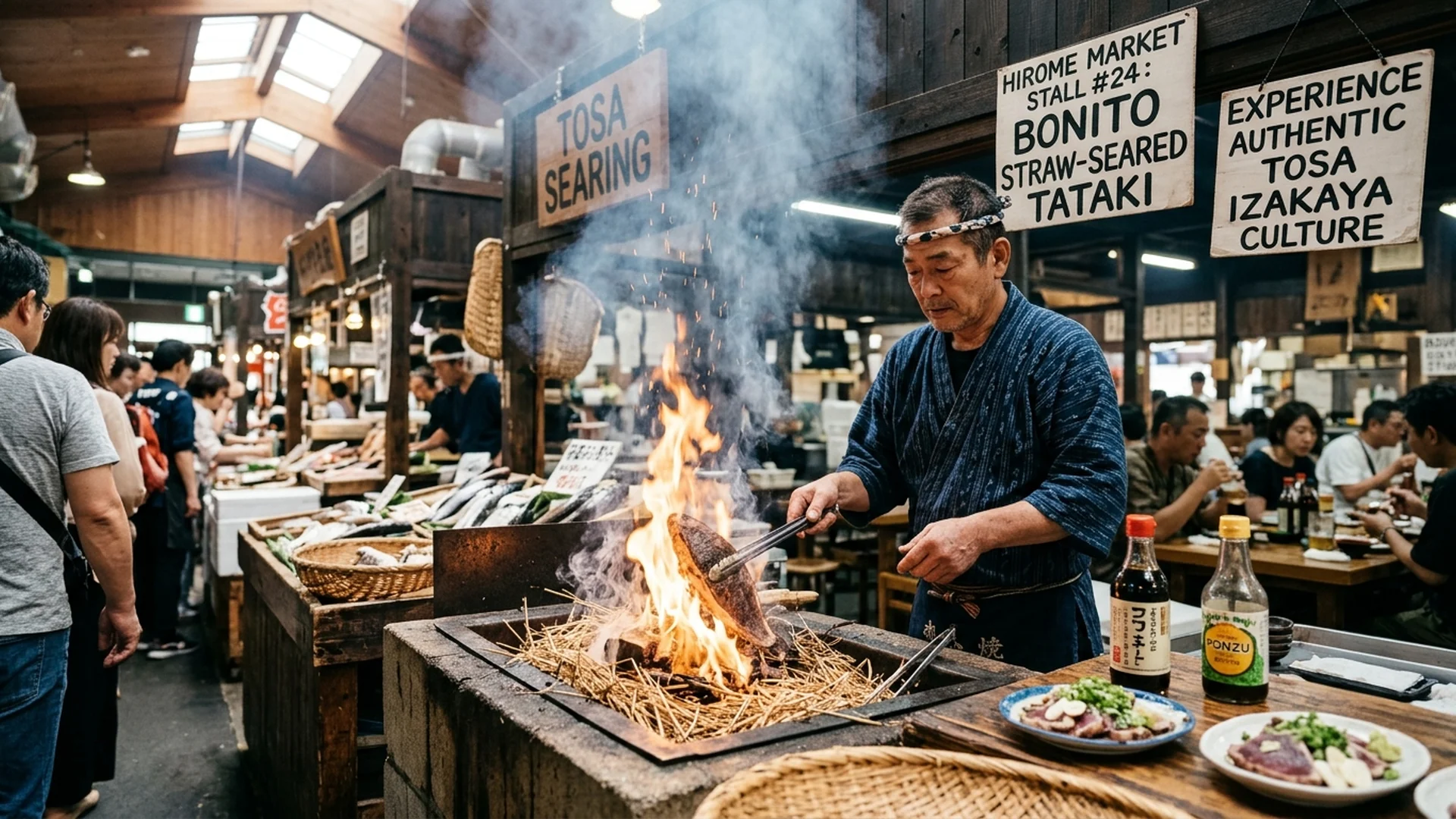
Mention a traditional produce market, and the mind typically wanders to damp concrete, hurried morning trading, and brisk encounters. Yet in the heart of Kochi city on Shikoku island, Hirome Market (Hirome Ichiba) utterly redefines the public dining space. Far more than a mere food hall, it functions as the grand living room of the city—a theatrical stage of warmth, camaraderie, and culinary passion that unfurls from midday late into the evening. The merry din of clinking sake cups, the ambient laughter echoing off wooden rafters, and the fragrant, billowing smoke of dried rice straw searing fresh bonito create an intoxicating atmosphere where travelers and locals seamlessly melt into one.
Crossing the threshold into Hirome Market is akin to stepping directly into the spirited subculture of Tosa—the historical domain of fearless samurai and visionaries like Sakamoto Ryoma, who forever reshaped the tapestry of Japan. Comprising over sixty bustling stalls crammed cheek-by-jowl, the market overflows with bounty ranging from the deep harvests of the Pacific Ocean to mountain greens and charcoal-grilled delicacies. Every corner radiates a raw, unpretentious vitality impossible to replicate in a refined fine-dining establishment. Instead, this is cultural luxury in its most authentic, grounding form.
The Spirit of Tosa: When a Market Becomes the City’s Living Room
Hirome Market was conceived from a profound desire to forge an enduring communal gathering space for local residents. Its interior unfolds like a vibrant, labyrinthine maze of commerce and connection, where diverse vendors trade shoulder-to-shoulder without dividing walls. Sprawled across the center are long, communal wooden tables inviting anyone—regardless of origin—to sit side-by-side. The true magic lies in this absence of rigid formality. Diners may wander from stall to stall, securing a plate of glistening sashimi here, a bowl of piping-hot noodles there, and a vessel of local brew from the next vendor, before uniting their finds at an open table. Witnessing corporate executives, international wanderers, and elderly Kochi natives raising cups of dry sake together perfectly encapsulates the fierce warmth and robust community ethos of Shikoku.
The Art of Fire and Straw: The Ritual of Katsuo no Tataki
To visit Hirome Market and neglect Katsuo no Tataki—straw-seared bonito—is to miss the very soul of Kochi. At the center of the market, open cooking stations allow visitors to witness the theatrical traditional searing process up close. Chefs ignite bundles of dry rice straw, sending towering sheets of golden flame roaring over the fish. This intense, instantaneous heat locks in the succulent juices of the bonito while infusing the lightly charred skin with a distinct, wood-smoke aroma.
True Tosa-style tasting bypasses heavy soy sauce and wasabi in favor of shio-tataki: coarse sea salt generously scattered over thick, ruby-red slices of fish, finished with a squeeze of fresh citrus like sudachi, paper-thin slices of raw garlic, and crisp scallions. The interplay of clean sea salt, bright acidity, rich and buttery fish, and the assertive kick of raw garlic delivers a flavor profile that is strikingly complex yet profoundly direct.
Gourmet Pairing: Navigating Regional Delicacies and Tosa Sake
Beyond seared bonito, Hirome Market serves as a treasure trove of regional delicacies from the ancient Tosa province. Plates of delicate white fish, golden river prawn tempura, and an array of seasonal mountain vegetables line the display counters. These offerings are meticulously suited to accompany Kochi’s renowned sake, celebrated for its clean, refreshing, yet uncompromising character. Local breweries specialize in producing exceptionally crisp, dry styles (karakuchi) designed to cleanse the palate of rich seafood oils and stimulate the senses. Sipping these refined brews amidst the vibrant, echoing roar of the market offers an unadulterated portal into the authentic drinking and dining traditions of Japan.