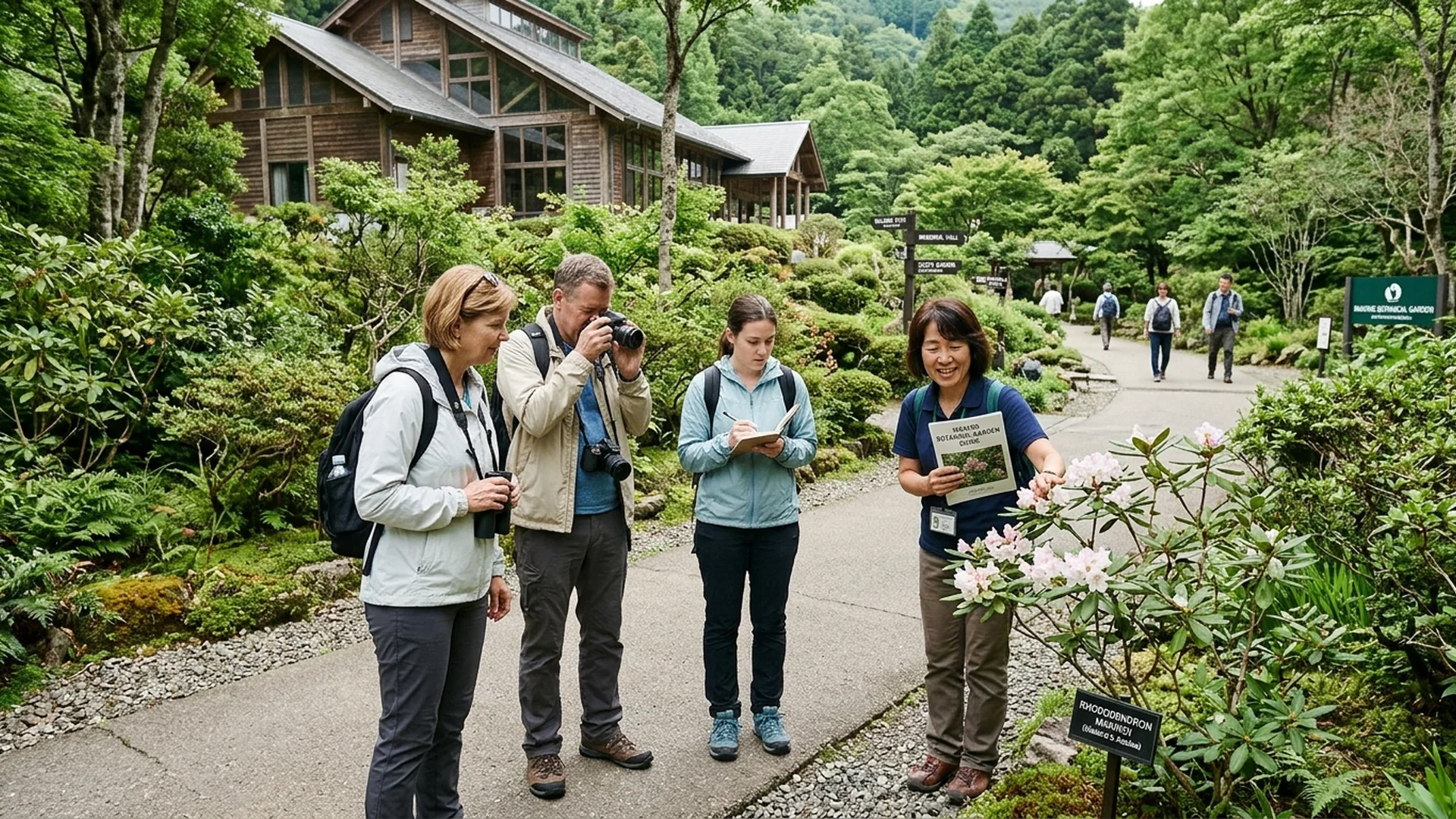
Perched upon the serene slopes of Mount Godaisan in Kochi, Shikoku, lies a sanctuary that transcends the traditional boundaries of a botanical garden. It stands instead as a living monument to lifelong devotion, scientific rigor, and poetic naturalism. The Makino Botanical Garden invites the discerning traveler, weary of the ephemeral and hurried, to step into a profound dialogue between contemporary architecture and the wild ecosystems of Japan. Here, the restless, passionate spirit of Dr. Tomitaro Makino—affectionately revered as the father of Japanese botany—breathes quietly through every veined leaf and unfolding blossom.
More than a mere repository for over three seamless thousands of plant species integrated flawlessly into the mountainous terrain, this destination offers an intellectual aesthetic refuge. Its striking pavilions, where structural glass, local timber, and diffuse natural light converge, gently draw the visitor away from the clamor of the modern world. One drifts effortlessly from sun-drenched conservatories to immersive galleries of botanical illustration, experiencing a meditative journey where science and fine art become indistinguishable.
A Legacy of Devotion: Dr. Tomitaro Makino and the Botanical Universe
The genesis of the Makino Botanical Garden traces back to an extraordinary romance between a man and the green world. Dr. Tomitaro Makino dedicated his entire existence to exploring, classifying, and chronicling Japan’s indigenous flora across a century of relentless observation. Within the sleek museum pavilions anchored in the heart of the garden, travelers encounter his original field notebooks, meticulously pressed herbarium sheets, and watercolor illustrations that marry absolute scientific precision with breathtaking artistic sensitivity. Every ink stroke on yellowed paper speaks of an intimate mindfulness, teaching observers to look upon roadside weeds with a renewed sense of profound wonder and intrinsic dignity.
Architecture and Landscape: When Native Forests Embrace Modern Design
Another hallmark of this sanctuary is its revolutionary approach to landscape architecture and spatial design. The museum complexes and sheltered walkways, envisioned by master architect Hiroshi Naito, utilize transparent glass and regional timber to invite the shifting mountain light deep into the interior while maintaining an unbroken visual dialogue with the surrounding canopy. A grand domed conservatory plays host to rare tropical flora and delicate orchids, generating the immersive ambiance of a living rainforest. Meanwhile, the outdoor grounds are meticulously curated to mirror distinct ecological zones—ranging from native woodland trails and therapeutic herb gardens to traditional Japanese landscape ponds that impart a cooling, contemplative serenity with every measured step.
Holistic Aesthetics: Bridging Shikoku’s Botanical and Spiritual Realms
A pilgrimage to the Makino Botanical Garden extends far beyond horticulture; it is an immersion into the distinct soul of Shikoku. The grounds are intimately contiguous with Chikurin-ji, the thirty-first sacred sanctuary along the revered 88-temple Shikoku pilgrimage route. Wandering between the garden paths and the temple precincts beneath ancient, moss-draped cedars creates an effortless synthesis of botany and Buddhist contemplation. It is an authentic reflection of the Japanese ethos of reverent coexistence with the natural world, where sanctuaries of learning and spaces of spiritual awakening seamlessly breathe as one.