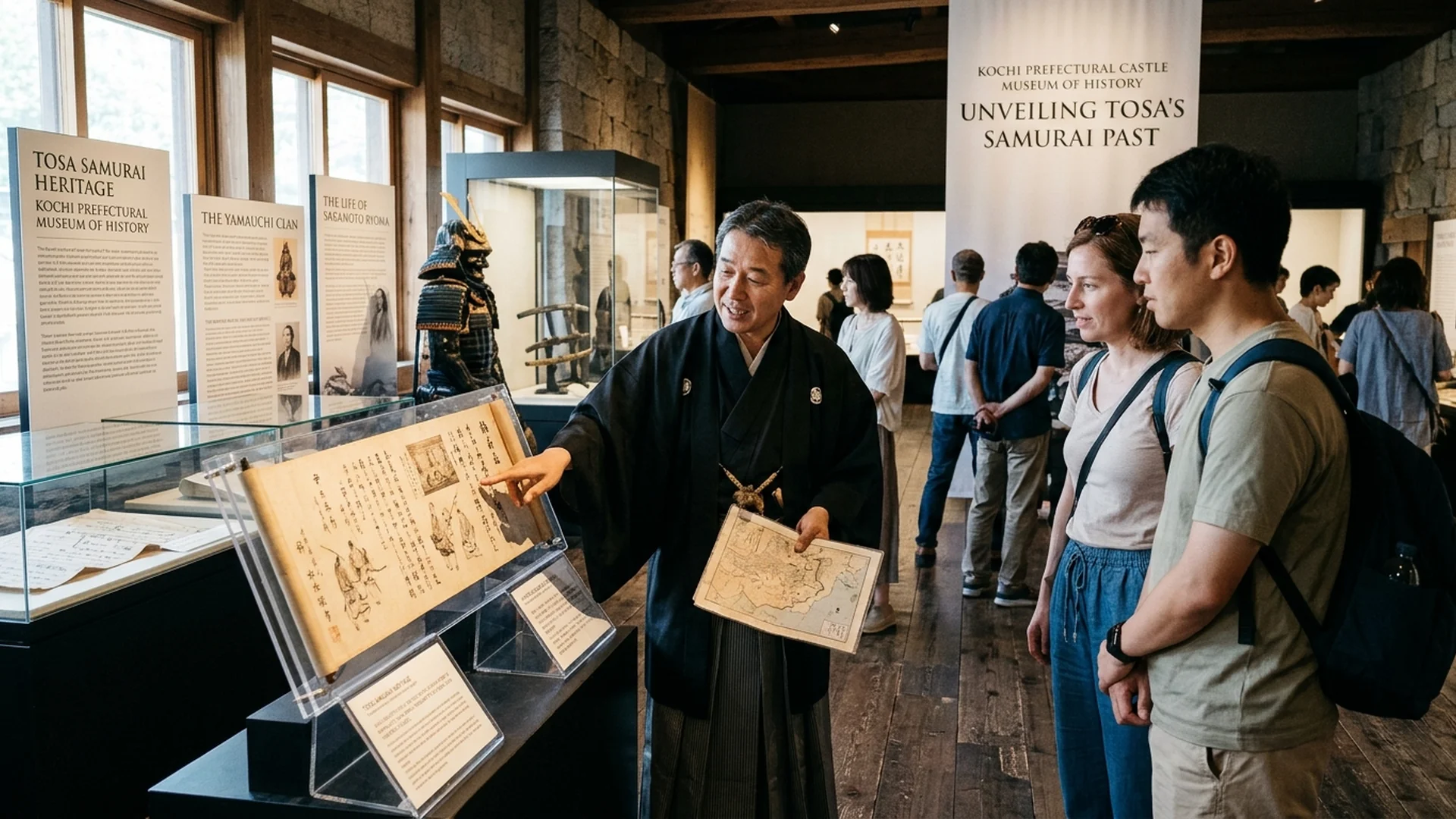
As seasonal winds sweep across the rugged landscape of Shikoku, the echoes of ancient warrior philosophy and aristocratic refinement still linger in every corner of Kochi. Beyond standard museum itineraries lies a profound portal into the prestigious history of the Yamauchi clan, who governed the historic Tosa domain for centuries. The Kochi Prefectural Museum of History does not merely archive the past; it serves as a living architectural bridge connecting the splendor of the Edo period with the contemporary elegance of a hillside fortress town.
Within these quiet galleries, over 67,000 priceless artifacts—ranging from master-crafted katana and battle-tested armor to rare diplomatic journals—narrate tales of unwavering loyalty, exquisite craftsmanship, and refined aesthetics. Seamlessly blending world-class curation with unmatched vistas of Kochi Castle, this sanctuary invites discerning travelers to experience a hidden facet of Japanese feudal history far removed from conventional tourist trails.
At the Crossroads of Time: From Tosa Domain to National Treasures
Historically renowned for its progressive political thought and fierce independence during the turbulent transition toward the Meiji Restoration, the Tosa domain birthed some of Japan’s most influential historical figures. The Kochi Prefectural Museum of History was conceived as an imperial vault designed to safeguard and interpret the invaluable legacy of the Yamauchi daimyo lords who ruled the region for over 260 years.
Upon entering the exhibition halls, visitors are immediately enveloped in the dignified ambiance of the samurai elite. The carefully curated display of personal daimyō effects, administrative chronicles recording monumental shifts in governance, and masterworks of Edo-period applied arts reveals a culture defined by exquisite taste and rigorous discipline. Each piece functions not as a static relic, but as an eloquent witness to the philosophy, honor, and artistic patronage that shaped Shikoku’s martial aristocracy.
A Modern Synthesis: Technology Meets Historical Aesthetics
Historical exploration here transcends traditional boundaries through the discreet integration of contemporary museology. For international travelers seeking deep cultural context, the museum offers sophisticated digital interpretation tools and comprehensive audio guide systems that illuminate intricate historical narratives with absolute clarity.
Furthermore, thoughtfully designed interactive zones allow visitors to appreciate the tangible reality of the samurai existence. From simulated feudal study chambers to interpretive displays examining the weight and craftsmanship of traditional armor, the exhibition design evokes a powerful sense of time travel. Subtle lighting and acoustic curation ensure that every guest feels as though they are walking quietly alongside the legendary figures of Tosa’s golden age.
An Elevated Vantage: The Panoramic Splendor of Kochi Castle
Perhaps the crowning architectural triumph of the museum is its third-floor Observation Lobby, purposefully engineered to frame the city and its crown jewel—Kochi Castle—in an entirely unique perspective. From this elevated enclave, the gaze drifts naturally over the historic Otemon Gate, one of the rare surviving original gates of a Japanese feudal stronghold that remains structurally intact today.
Beyond the gate stands the majestic wooden silhouette of the castle keep, crowning its forested hilltop through every seasonal metamorphosis. Whether framed by delicate cherry blossoms in spring or ignited by amber foliage in autumn, observing the fortress from this tranquil vantage point offers a deeply contemplative, inspiring experience for connoisseurs of Japanese architecture and historic landscapes.