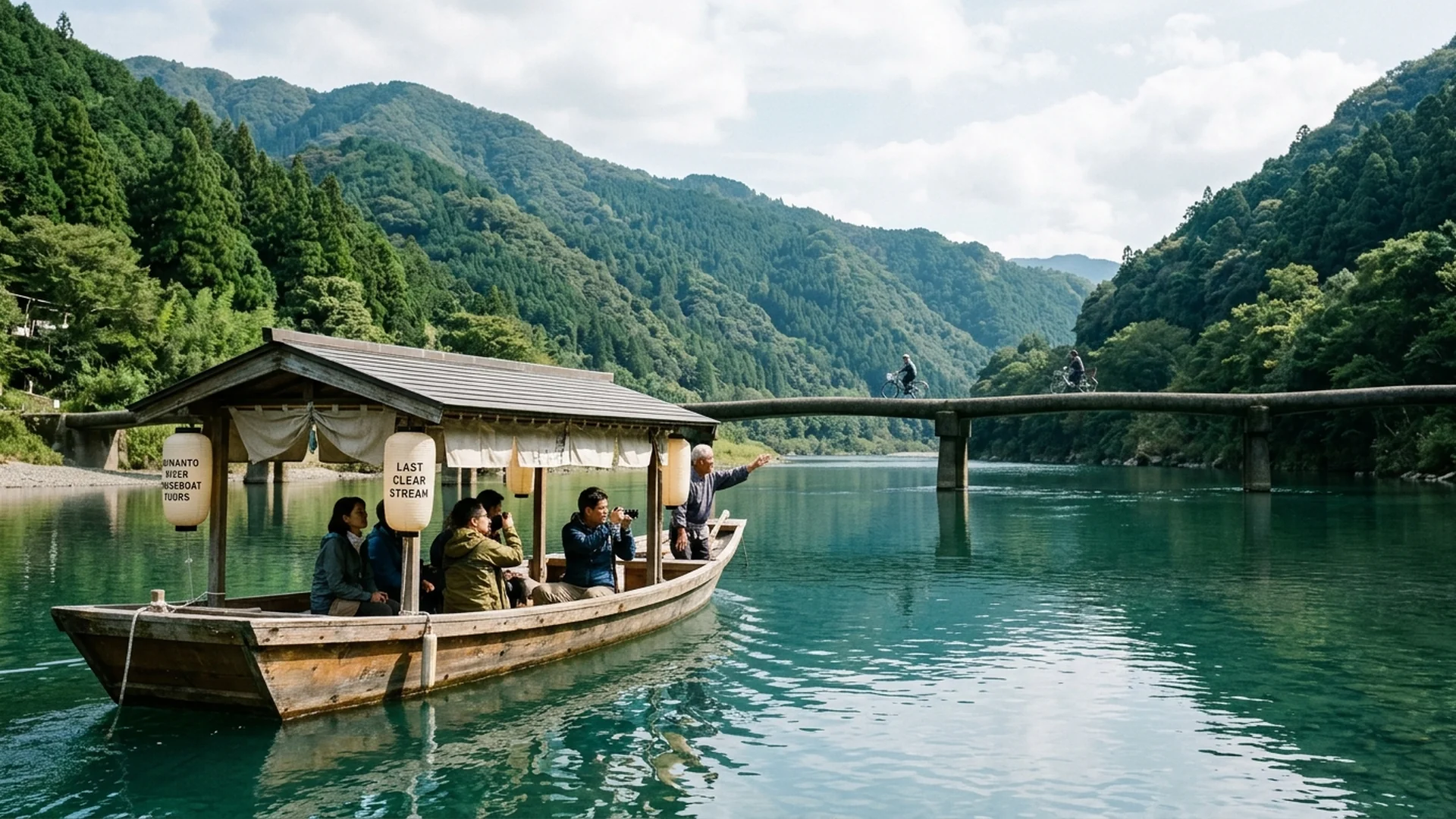
As the world’s great metropolises accelerate into perpetual motion, a quiet pocket of Japan resists the current, inviting the wind, the water, and the contemplative spirit into deep conversation. In Kochi Prefecture on Shikoku Island, the Shimanto River traces a 196-kilometer path through emerald valleys. As Japan’s longest undammed major waterway, it is far more than a geographic feature; it functions as a living cultural laboratory where humanity has chosen to yield, weaving its existence into harmony with the tides rather than attempting to conquer nature.
Journeying to the Shimanto is not an exercise in digital checklist tourism, but a pilgrimage into absolute stillness. Through ingenious vernacular architecture like railing-less bridges and crystalline waters mirroring ancient canopies, visitors encounter a rare portal to an older, unblemished Japan—raw, reverent, and ecologically pristine.
Architecture of Yielding: The Chinkabashi Bridges and Living in Concert with Nature
If the monuments of modernity are towering concrete spans that sever humanity from elemental forces, the emblems of the Shimanto basin are their exact antithesis. The Chinkabashi—more than forty submerged bridges spanning the river’s course—represent masterpieces of vernacular engineering crafted entirely without safety railings. Built deliberately low and devoid of borders, these structures are intended to vanish beneath the surface whenever heavy rains swell the river. By allowing floodwaters and drifting debris to sweep effortlessly overhead, the bridges escape destruction through absolute surrender.
The Sada Chinkabashi, the longest among them, curves in gentle accord with the surrounding hills and currents. To walk across its weathered surface in the early dawn, as mist skims the glassy water, is to stand suspended between the human realm and boundless nature. Free from the hum of engines, the only accompaniment is the murmur of the current and the call of mountain birds, testifying to a vanishing tranquility in the modern world.
The Aesthetics of Current: Yakatabune Houseboats and Low-Velocity Travel
The most complete surrender to the beauty of the Shimanto is to allow the water to dictate the pace. Embarking on a traditional Yakatabune wooden houseboat, elevated with discreet contemporary comforts, carries travelers along glass-clear bends where shoals of fish and river stones are visible meters below. As the vessel drifts in near silence, local boatmen share stories of generational fishing practices, including the ancient ‘Shibazuke’ technique of bundling submerged branches to provide sanctuary for aquatic life.
Beyond the houseboats, slow adventures such as cycling past rural paddies or paddling transparent kayaks offer a profound dimension of mindful travel. These unhurried pursuits invite visitors to absorb every sensory nuance of an environment untouched by haste.
Flavors of the Watershed: Culinary Heritage and Pristine Natural Harvests
The ecological richness of the Shimanto is mirrored in a culinary tradition revered by Michelin-starred chefs and discerning epicures alike. The river basin is the legendary habitat of Tennen Unagi, wild river eels that mature in rushing, mineral-rich currents, yielding a firm texture and deep, complex flavor entirely distinct from farmed varieties.
Alongside wild eel, seasonal delicacies include salt-grilled ayu sweetfish crisped over charcoal with tender, fragrant flesh, river shrimp, and delicate Aonori seaweed harvested from sunlit rocks. Each dish is composed with austere simplicity, honoring the inherent purity of the ingredient—the defining hallmark of traditional Japanese gastronomy bound irrevocably to the rhythms of the earth.