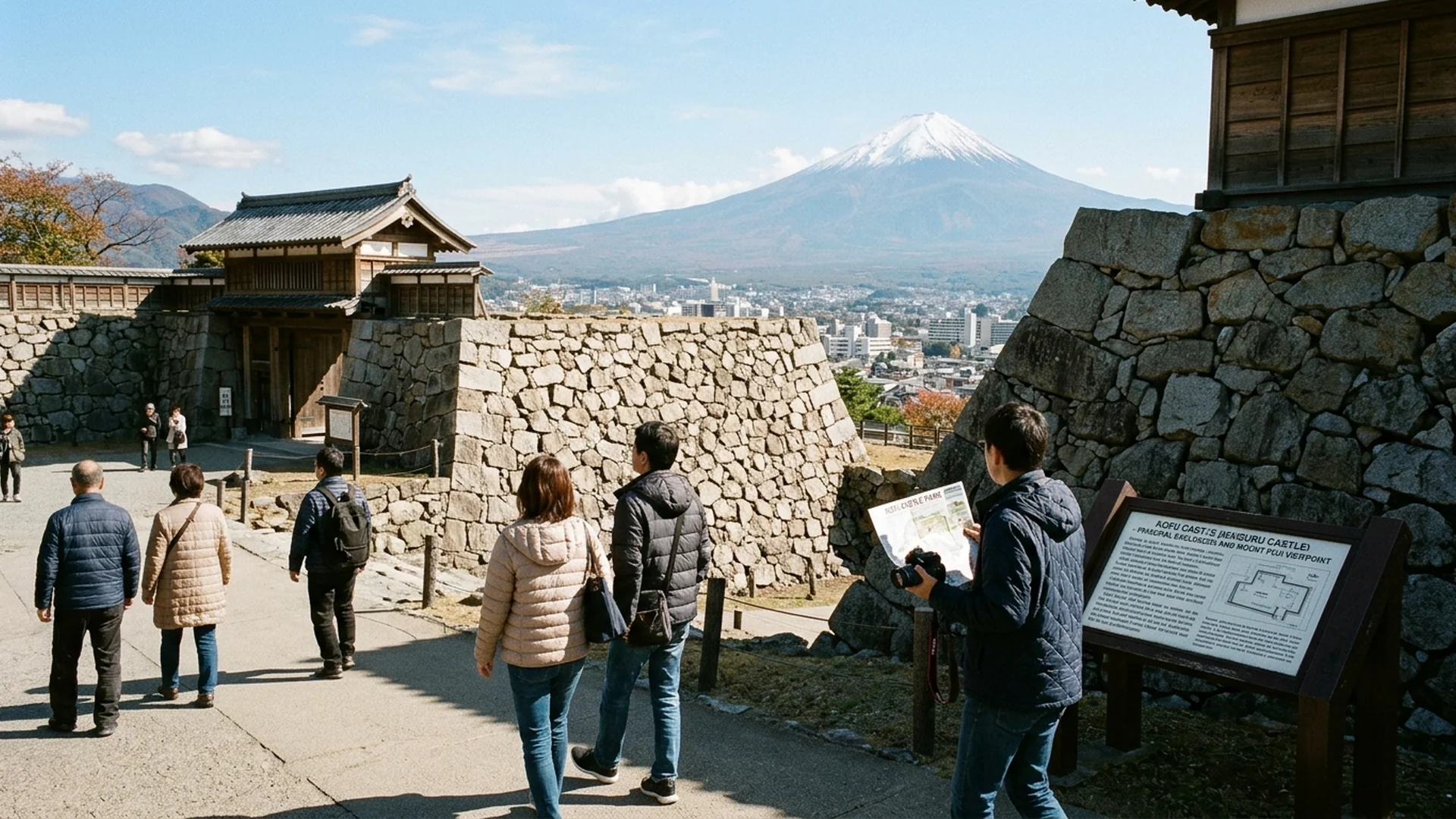
As seasonal winds sweep across the mountain-ringed basin of Yamanashi Prefecture, the echoes of the turbulent Sengoku era still resonate through the heart of Kofu. Kofu Castle, affectionately known by locals as Maizuru Castle Park, is far more than a mere collection of ancient ruins; it stands as an enduring monument to strategic ambition, meticulously forged under the sovereign command of Toyotomi Hideyoshi.
Crossing the threshold into the castle grounds feels akin to stepping across the threshold of time itself, navigating weathered ramparts and ancient moat contours. Here lies a harmonious convergence of master stonemasonry and sublime natural topography, crowned by the majestic backdrop of Mount Fuji and the rugged expanse of the Southern Alps. Join us in turning the pages of history to immerse yourself in an exclusive aesthetic journey that will forever transform your perspective of Kofu.
Hideyoshi’s Strategic Design: Echoes of Power Following the Fall of the Takeda
Though the name Takeda Shingen is eternally woven into the spiritual fabric of Kofu, the physical genesis of Kofu Castle began during a pivotal transfer of regional power to the Toyotomi clan. Following the demise of the Takeda dynasty, Hideyoshi recognized the Kofu basin as a critical geographic node for commanding vital transportation routes and neutralizing rival influence in the Kanto region. Consequently, he ordered the fortress’s construction in 1583. The architecture and spatial organization reflect a sophisticated fusion of martial defense and refined design. Although centuries have passed and original primary residential structures were lost to historic fires, the foundational integrity of the ramparts remains wonderfully preserved, silently testifying to the intense political rivalries of Japan’s medieval civil wars.
The Art of Nozura-zumi and the Revival of Ancient Timber Architecture
The most striking architectural feature of Kofu Castle is its stone walls, or ishigaki, constructed using the traditional Nozura-zumi technique. This method involves selecting unshaped natural stones and stacking them with absolute geometric intuition, relying entirely on gravity and age-old engineering balance. Certain sections soar to heights exceeding 14 meters, tracing graceful curves alongside the ancient moats that have endured for upwards of 400 years.
Beyond these magnificent ramparts, contemporary restoration initiatives have successfully revived key structures, including the Inari Yagura turret and the Kurogane Gate, returning them to their historic splendor. Travelers may step inside to experience traditional Hinoki cypress joinery, the gentle aroma of classical carpentry, and thoughtfully curated historical exhibitions that vividly conjure the era of samurai patrols along the elevated walkways.
The Tenshudai Vantage: Where Historic Basin Meets Alpine Majesty
At the highest tier of the castle keep foundation—known as the Tenshudai—awaits an uncompromising 360-degree panoramic vantage point. On crisp, clear days, the view presents the powerful, snow-dusted silhouette of Mount Fuji rising dramatically against the jagged skyline of the Southern Alps, with the rooftops of modern Kofu nestled peacefully below. The stark aesthetic contrast between ancient military stonework and majestic natural heritage evokes a profound sense of serenity, often prompting travelers to linger for hours, absorbing the meditative stillness of the landscape.
Maizuru Park Through the Seasons and Its Local Cultural Tapestry
Today, the castle precinct has blossomed into Maizuru Park, a public sanctuary that faithfully mirrors the dramatic shifts of the Japanese seasons. In spring, more than 160 cherry trees burst into delicate pink blossoms, offering a striking contrast against dark stone ramparts and distant mountain backdrops. Autumn paints the grounds in rich, warm hues of amber maple and golden ginkgo.
A visit to Kofu Castle extends effortlessly into the surrounding community. Just a short stroll away lies Koshu Yumekouji, a faithfully recreated Edo-period merchant district brimming with artisan boutiques and sophisticated tasting bars celebrating the celebrated Koshu wine vintages born from Yamanashi’s storied vineyards.