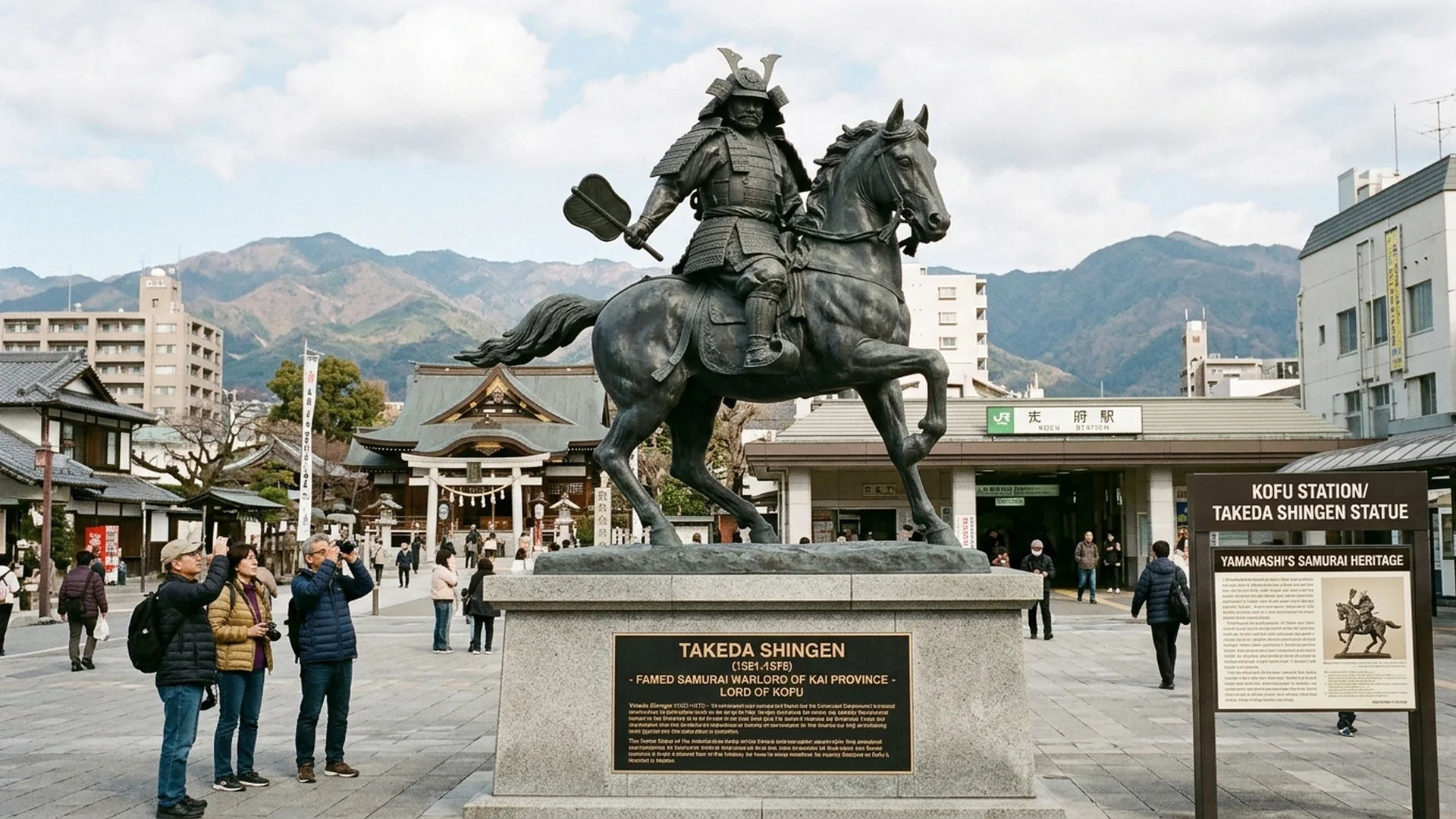
Upon stepping off the JR Kofu train in Yamanashi Prefecture, travelers are greeted not by the frantic pulse of a modern metropolis, but by the arresting silhouette of a powerful warlord clad in full samurai regalia. Seated with unshakeable resolve upon a stone plinth, his gaze is at once piercing and profoundly contemplative. The Takeda Shingen Bronze Statue is far more than a celebrated photographic waypoint for visitors; it serves as a grand portal opening directly into the glorious antiquity of the Sengoku period, an epoch when the name of the Tiger of Kai echoed across the realm of Japan.
To stand before this six-meter monument is to engage in a silent dialogue with history itself. The meticulous detailing of ancient armor, traditional coiffure, and resolute posture speaks volumes of the master bronzesmith’s craftsmanship. Crucially, this threshold marks the immaculate starting point for a deeper journey into the warrior ethos, profound spirituality, and refined aesthetics that continue to shape Kofu into a cherished cultural treasury today.
The Tiger of Kai: The Legacy Behind Kofu Station’s Bronze Monument
Takeda Shingen was far more than a military tactician of peerless genius—earning him the illustrious moniker ‘The Tiger of Kai.’ He was equally a visionary administrator and state builder. The grand bronze monument anchoring the plaza before Kofu Station was forged out of enduring civic reverence, capturing Shingen in moments of both martial campaign and quiet governance. Reclining in a commanding posture upon a folding camp stool (shogi) while clutching a military war fan (gunhai), the statue encapsulates a deep philosophical wisdom that transcended raw brute force, rooted instead in sophisticated military strategy. The surrounding plaza constantly draws devotees and history aficionados eager to absorb the lingering majesty of the Sengoku era.
From Station to Sanctuary: Takeda Shrine and Kofu Castle Ruins
Following this historical thread leads seamlessly from the bronze monument to the tranquil grounds of Takeda Shrine. Established upon the former estate of Tsutsujigasaki, the administrative heartland of the Takeda clan for three successive generations, the sanctuary is sheltered by ancient timberlands and imbued with serene solemnity. Meanwhile, Maizuru Castle Park—encompassing the remnants of Kofu Castle just moments away—offers sweeping panoramic vistas of the surrounding Japanese Alps framing the city, alongside exquisitely restored ancient stone ramparts that echo feudal architectural mastery.
The Aesthetics of Yamanashi: Koshu Wine and Mountain Flavors
Beyond its profound historical dimensions, Kofu serves as the beating heart of Japanese viticulture. Indigenous Koshu grapes, cultivated within volcanic soils and the unique microclimate of the Kofu Basin, yield exceptionally delicate, nuanced wines. Savoring a glass of chilled Koshu wine alongside regional delicacies such as hoto—flat, comforting udon noodles simmered in rich miso broth with mountain squash and seasonal vegetables—within the retro-styled lanes of Koshu Yume Koji offers an exquisite synthesis of heritage and high-end lifestyle that discerning global travelers will profoundly appreciate.