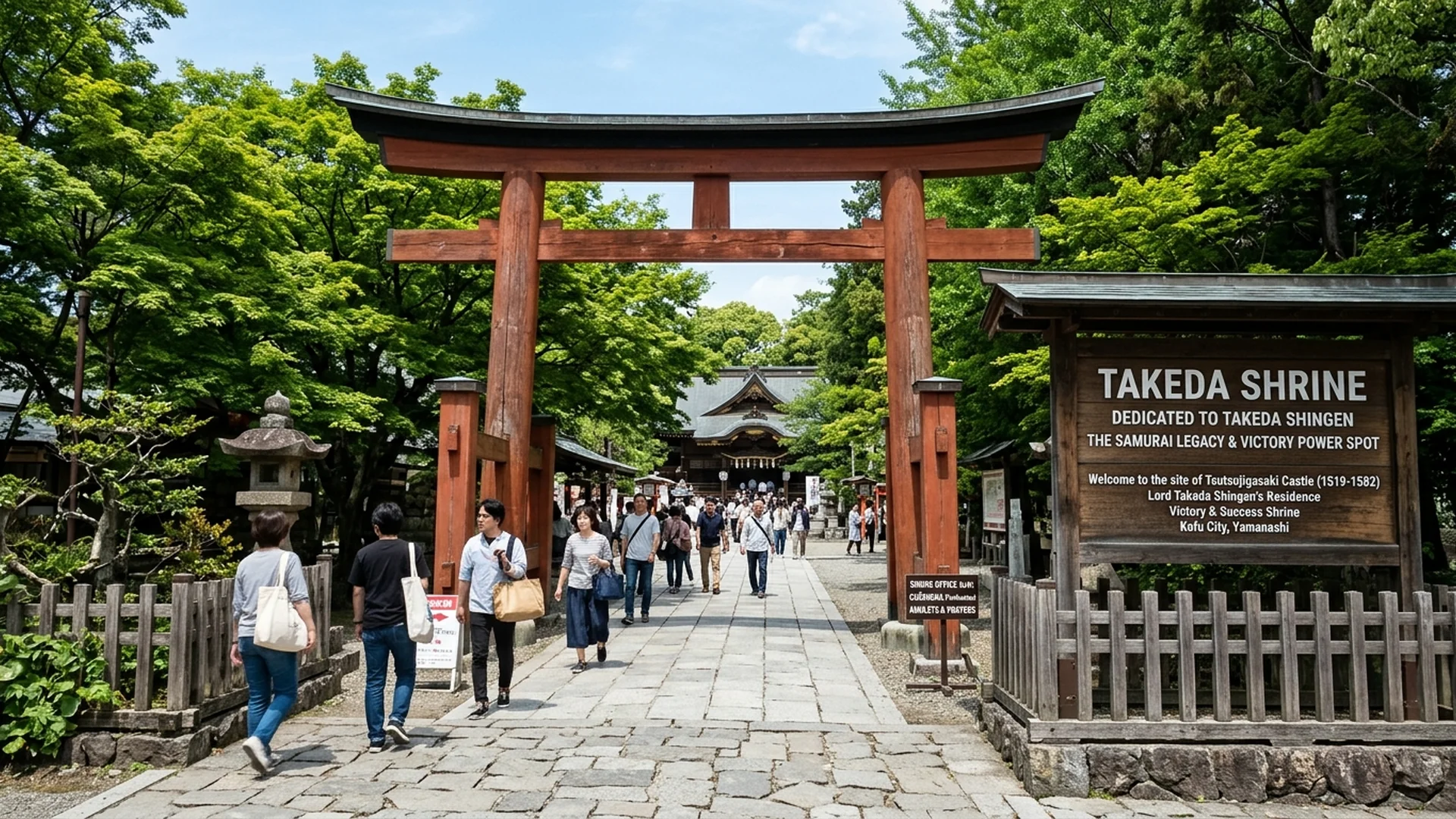
As the mountain breeze of early spring sweeps across ancient stone ramparts and tranquil moats surrounding the Tsutsujigasaki Residence, the quiet echoes of Japan’s tumultuous Sengoku period awaken. This is Takeda Shrine, a sacred sanctuary enveloped in the enduring legacy of Takeda Shingen, the formidable Tiger of Kai whose military brilliance and statecraft continue to captivate the modern imagination.
Crossing the threshold into these hallowed grounds is far more than a simple journey into the era of the elite samurai; it is an entry into a profound geopolitical power spot. Travelers and discerning leaders from across the globe journey here to absorb the resonant energy of Kachi-maki—the essence of ultimate victory—cultivating executive presence, strategic clarity, and enduring success amidst an atmosphere of profound stillness and aristocratic grace.
From Ancient Moats to Sacred Ground: Tracing the Legacy of the Takeda Clan
The existence of Takeda Shrine is no mere historical coincidence; its foundations are deeply embedded in the bedrock of the ancient Kai Province. In centuries past, this terrain served as the Tsutsujigasaki Residence. Departing from the inaccessible mountaintop fortifications favored by many contemporary daimyō, Takeda Shingen deliberately chose to position his administrative headquarters on the open plain, directly intertwined with his populace—a testament to his flexible governance and intimate connection with his subjects. Though the original residence succumbed to the ravages of time, the shrine was officially consecrated here in 1919, born from the fervent devotion and contributions of citizens and admirers wishing to enshrine Shingen’s indomitable spirit. Today, the shrine meticulously preserves the original layout, moats, earthen ramparts, and stonework, allowing discerning visitors to walk directly through a living blueprint of the master strategist’s vision.
Decoding Three Sacred Landmarks: The Convergence of Victory and Prosperity
To truly comprehend the depth of Takeda Shrine, one must seek out its three legendary spiritual touchstones. The journey begins at the Princess Well (Hime-no-Ido), a pristine natural spring believed to have supplied the water used for the newborn bath of Takeda Shingen and members of the ruling household, symbolizing purity of spirit and natural abundance.
Next lies the Three-Needle Pine (San-ko no Matsu), an arboreal rarity whose needles grow in triads rather than the conventional pairs. According to enduring folklore, preserving a fallen needle within one’s pocket acts as a magnet for financial prosperity and good fortune. Finally, the Homotsukan (Treasure Hall) serves as an intellectual vault, safeguarding priceless cultural artifacts including ancient nihonto (samurai swords), mastercrafted lacquer armor, and the iconic gunbai war fan—the tangible insignia of supreme command that still radiates an undeniable aura of authority.
The Spirit of the Tiger of Kai: A Power Spot for Modern Leaders
Takeda Shingen was far more than an exceptional tactician; he was an enlightened administrator whose philosophy remains immortalized in the maxim: ‘Men are a castle, men are stone walls, men are moats, men are foes, men are allies.’ The energetic resonance permeating these tranquil courtyards is deeply attuned to visionary leadership, meticulous long-term planning, and the art of overcoming insurmountable odds. Today, executives, entrepreneurs, and global leaders frequent this sanctuary to quietly center their intentions, praying for clarity in decision-making, resilience through volatility, and triumph over modern commercial challenges. To stand here is to draw subtle inspiration from a legendary commander who never suffered definitive defeat in his defining campaigns.