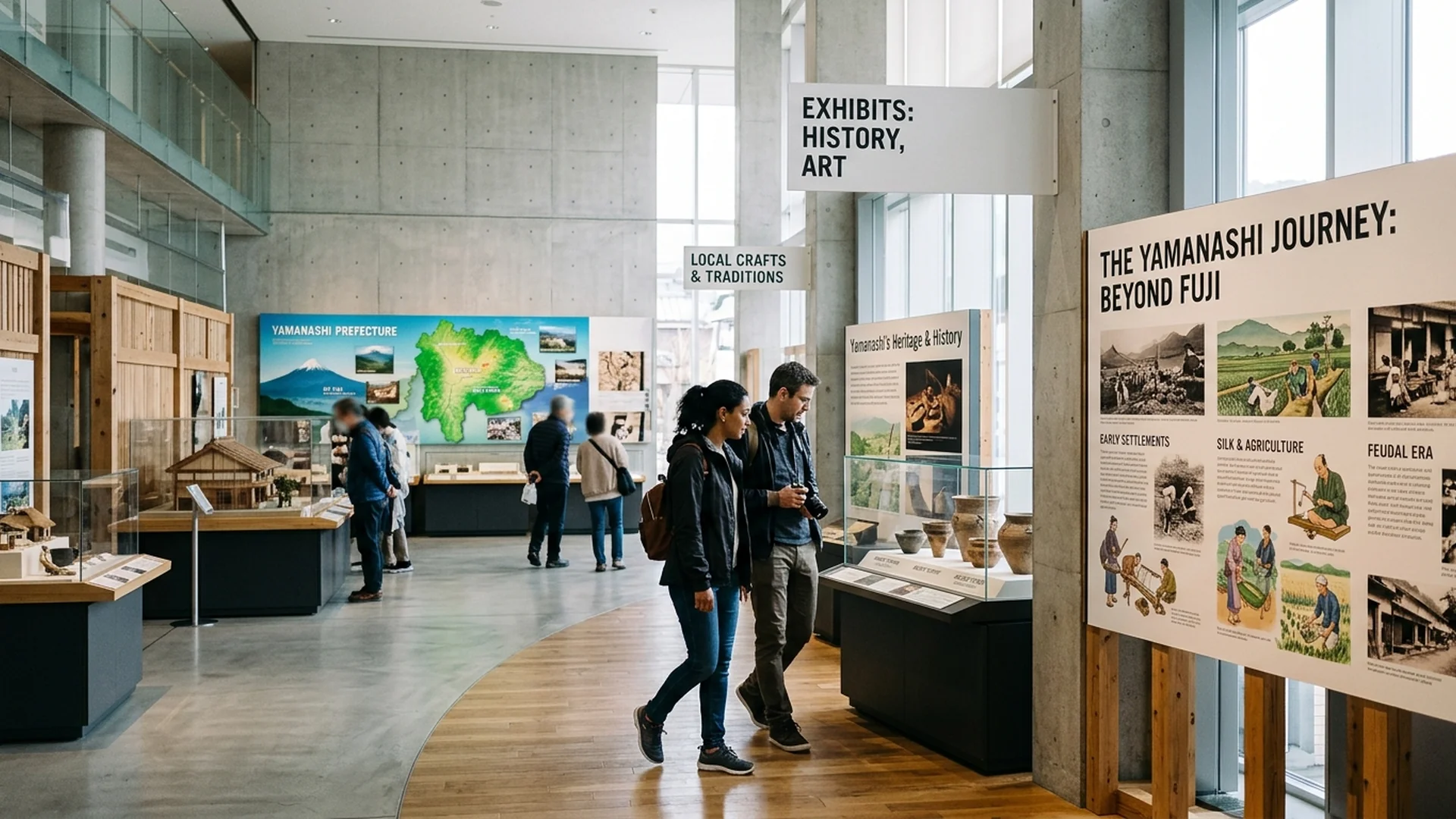
When global travelers conjure Yamanashi, the mind invariably paints the majestic silhouette of Mount Fuji crowned in immaculate snow, slicing sharply into an indigo sky. Yet beyond this world-renowned vista lies a quieter, more profound narrative—an intimate dialogue between humanity, rugged peaks, pristine waters, and ancient forests. This intricate tapestry is woven with meticulous grace inside the Yamanashi Prefectural Museum.
More than a mere repository of antiquities, this contemporary cultural sanctuary serves as an elegant bridge connecting an illustrious past with the contemplative present. It invites discerning wanderers seeking deeper meaning to immerse themselves in the true heartbeat and ancestral roots of this revered prefecture, wrapped in an atmosphere of sublime tranquility and aesthetic refinement.
Visiting this institution in the heart of Fuefuki stands as the quintessential manifestation of slow travel. Enveloped by architecture that communes seamlessly with the surrounding topography, guests encounter a multi-dimensional awakening to regional heritage through thoughtfully curated exhibitions and modern Zen gardens framed by the expansive Kofu Basin, allowing the wandering mind to pause and absorb the living history of the land at every unhurried step.
Roots Across Time: From Jomon Civilization to Mountain Wayfaring
The narrative architecture within the Yamanashi Prefectural Museum centers upon the enduring relationship between nature and humanity. The exhibition spaces transport visitors back to prehistory, revealing delicate traces of ancient civilizations through invaluable Jomon-period pottery and utilitarian artifacts. These relics silently testify that this dramatic mountainous terrain once sheltered resilient ancient societies uniquely attuned to high-altitude living and fertile river valleys.
Moving beyond antiquity, the exhibition delves deeply into the Sengoku period—the turbulent age of warring states when the legendary Takeda clan forged an indelible identity of unyielding strength across the region. It further chronicles agricultural traditions, ingenious water management systems, and historic trade routes. Every curated artifact and archival record is presented with an editorial lens that illuminates daily existence, steadfast perseverance, and folk wisdom passed across generations.
Architecture and Aesthetic Space: Where Art and Topography Converge
The museum structure itself is a masterclass in contemporary design, favoring clean architectural lines and soaring glass expanses that welcome natural illumination and sweeping outdoor vistas into the gallery experience. The interior is flawlessly zoned, featuring permanent exhibition halls, rotating showcases, and interactive experiential zones that invite visitors of all backgrounds to engage directly with history through tactile models and intuitive multimedia interpretations.
The exterior grounds are defined by meticulously pruned modern Japanese gardens that dissolve seamlessly into the pastoral landscape of Fuefuki. Strolling these gravel pathways amidst crisp mountain air or gentle dappled sunlight nurtures an atmosphere of profound stillness, offering a meditative sanctuary for those seeking respite from the frantic velocity of modern metropolises.
Weaving the Journey: Connecting Cultural Heritage to Regional Pleasures
An excursion to the Yamanashi Prefectural Museum serves as the cornerstone for a refined, multi-layered itinerary. Strategically positioned within a culturally rich corridor, the museum is situated moments away from the celebrated thermal waters of Isawa Onsen, renowned for crystal-clear mineral springs and authentic ryokan hospitality designed to soothe weary limbs after a day of gallery exploration.
Just beyond lies the celebrated agricultural tapestry of Katsunuma, home to historic family-run vineyards and boutique wineries. Discerning travelers may easily dedicate an afternoon to understanding Japanese viticulture while savoring terroir-driven vintages that distill the very essence of Yamanashi’s soil and climate into a glass, creating a harmonious synthesis of history, culture, and epicurean artistry.