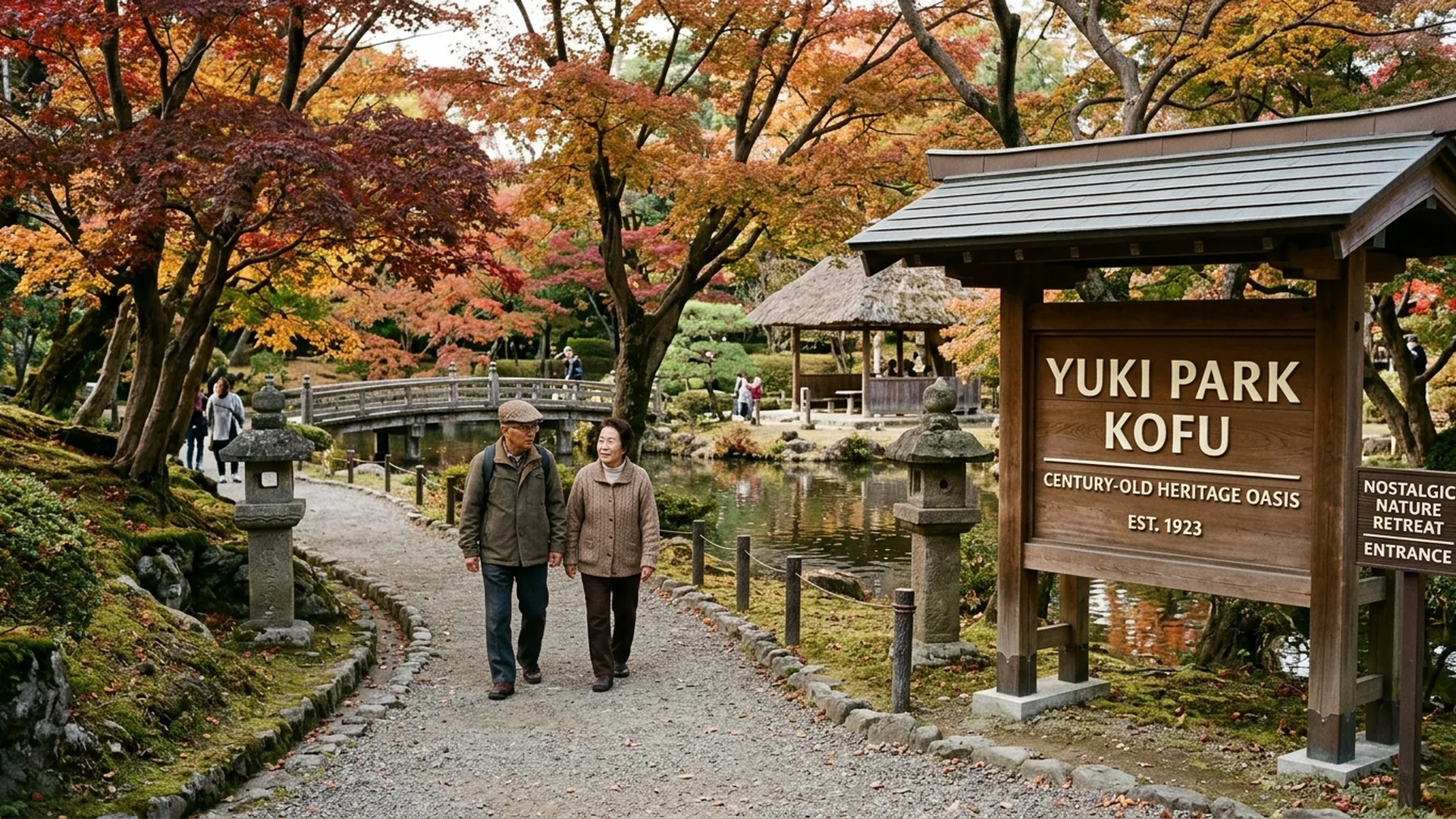
Step beyond the metropolitan rush into a realm where time decelerates by half a beat. At Yuki Park in Kofu, Yamanashi, the whispered echoes of over a century of history drift gently across pristine waters and through the rustling canopy. This verdant enclave is far more than a mere municipal green space; it is a living museum preserving the atmospheric memory of bygone eras, the vestiges of ancient civilizations, and a contemplative spirit of leisure handed down through generations.
As soft morning light catches the natural waterways, birdsong blends with classical architectural elements that evoke the unmistakable nostalgia of the Showa era. Yuki Park invites discerning travelers to divest themselves of modern urgency and plunge into profound quietude—where every unhurried stride is a journey back to the graceful roots and authentic essence of historic Kai Province.
Century-Old Roots: From Ancient Buddhist Sanctuary to Memorial Park
The narrative of Yuki Park is intricately woven into the annals of Kofu’s history. Long before it became a landscaped retreat, this verdant parcel formed the sacred precincts of Ichirenji Temple—an ancient sanctuary that held immense religious and political significance during Japan’s tumultuous feudal wars. The subterranean echoes of this spiritual foundation still anchor the sprawling roots of the ancient trees that stand sentinel over the grounds today.
With the dawn of 1919, a visionary civic initiative transformed this hallowed earth into a public sanctuary of enduring renown. This seamless fusion of monastic tranquility and early 20th-century landscape design established Yuki Park as a cultural landmark, notable for housing one of Japan’s earliest municipal zoos, which has quietly cultivated joy and wonder for families across more than a century of changing seasons.
Showa-Era Aesthetics: Architecture, Nature, and Timeless Quietude
Strolling through Yuki Park is akin to turning the translucent pages of a living vintage photograph album. The air is permeated with the gentle nostalgia of the Showa era: arched stone bridges spanning crystalline canals, classical wooden rest pavilions, and magnificent mature trees that shift their foliage in a brilliant pageant of seasonal colors. Every element is arranged according to Japanese aesthetic principles that prioritize apparent simplicity over ornate display, yielding profound emotional resonance.
The soft murmur of flowing water and the delicate reflections of cherry blossoms or maples upon the surface create a sanctuary of stillness seldom found in commercialized destinations. Here, travelers are encouraged to occupy a time-worn wooden bench, surrendering to quiet contemplation while observing the unhurried rhythms of local residents taking their morning stroll—a true embodiment of the slow-travel ethos.