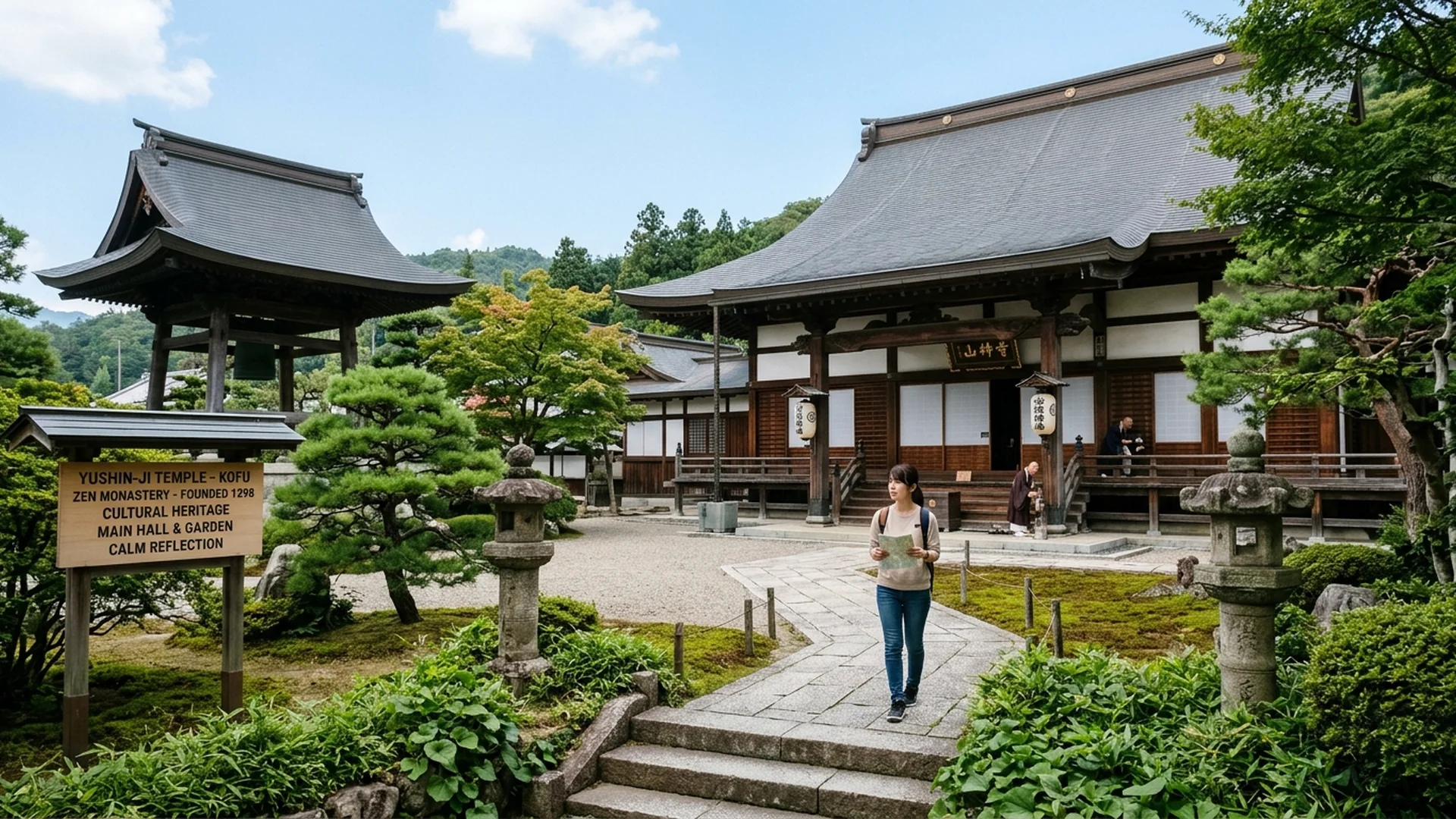
As the morning mist lifts over the undulating mountain ranges of Yamanashi Prefecture, the soft, resonant chime of an ancient bronze bell at Yushin-ji Temple seems to gently invite the traveler to step beyond the relentless pace of the modern world and enter a dimension where time moves with deliberate grace. Kofu, a city so often remembered through the legendary exploits of the formidable samurai Takeda Shingen, actually harbors a profound spiritual resonance preserved quietly within its historic sanctuaries.
To journey to Yushin-ji Temple is far more than a conventional sightseeing excursion; it is an inward pilgrimage. Here, ancient timber architecture bears silent witness to the passage of centuries, while meticulously maintained Zen gardens invite profound contemplation. Every measured step across pristine gravel paths and moss-flecked stone pavers reflects the exquisite attention to detail characteristic of Zen Buddhist philosophy—a tradition where apparent simplicity conceals boundless, unstated meaning.
Roots in the Tides of Time: Historical Heritage in the Embrace of Kofu
While Kofu is celebrated as the historic heartland of Yamanashi and a vital nexus of the Kanto region, beneath the turbulent narratives of the Sengoku period lies a deeper, enduring anchor: sanctuaries like Yushin-ji. Choosing to visit this venerable temple is akin to turning the pages of an unfolding architectural chronicle that has weathered the shifting tides of history. Fine-grained timber structures, meticulously restored with profound reverence for original construction methods, embody ancient architectural wisdom that allows human dwellings to exist in seamless harmony with the surrounding topography.
The Aesthetics of Silence: Architecture and Stone Gardens That Speak Without Words
The defining enchantment of Yushin-ji Temple for the art-apprecating traveler lies in the immaculate synthesis of its wooden halls and surrounding landscapes. Intricately carved wooden detailing, executed according to classical doctrines, pays quiet homage to nature and sacred philosophy. Meanwhile, the dry landscape and courtyard areas are composed according to classical Zen garden principles, favoring potent minimalism. Stones, gravel, and carefully chosen foliage are arranged with deliberate restraint, compelling the visitor to pause, center the mind, and let go of scattered thoughts amidst the breath of the natural world.
The Art of Slow Travel: Immersive Intellectual Elegance and Tangible Beauty
High-net-worth mindful travel finds its truest expression at Yushin-ji, where the luxury of time is paramount. Sitting quietly upon a weathered wooden veranda to watch slanting sunlight filter through ancient boughs, or observing the exquisite joinery of centuries-old eaves, provides an intimacy unavailable in commercialized destinations. Here, silence is never mere emptiness; rather, it is a fertile sanctuary allowing the inner self to rest, recalibrate, and gently expand.