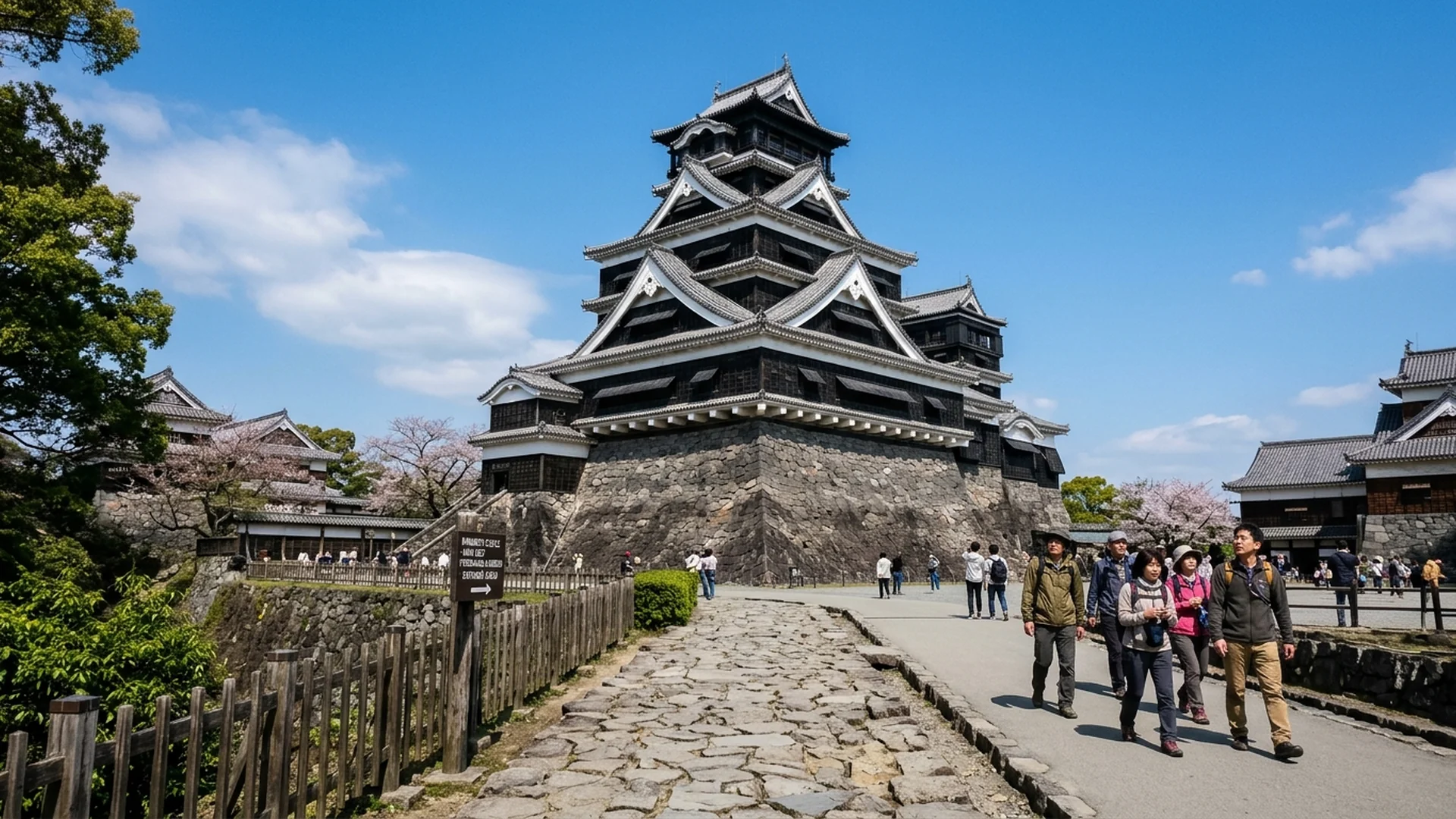
Amidst the verdant landscapes of Kyushu, the striking silhouette of dark-toned architecture contrasting with sweeping granite stonework stands not merely as a relic of feudal warfare, but as an eternal monument to an indomitable spirit untouched by time and disaster. Known in historical annals as the ‘Ginkgo Castle,’ Kumamoto Castle is revered as one of Japan’s three preeminent citadels. Every corner reveals strategic brilliance and a breathtaking resurrection following seismic trials. Here, the stern fortification of the samurai converges with exquisite artistry, echoing across generations with quiet majesty.
The Ingenuity of the Musha-gaeshi Walls and Kato Kiyomasa’s Strategy
Upon stepping into the stone-lined precincts of Kumamoto Castle, the immediate arresting feature is the ingenious, sweeping incline of the protective ramparts. Conceived by Kato Kiyomasa—an astute daimyo of the Azuchi-Momoyama to early Edo periods who excelled equally as a military commander, architect, and hydraulic engineer—these fortifications are celebrated as ‘Musha-gaeshi,’ translating poetically to ‘walls that would turn back even the most seasoned warriors.’ The lower section begins with a gentle slope that steepens progressively until nearly vertical at the summit, effectively confounding any scaling attempts. Furthermore, Kiyomasa prioritized long-term resilience by hoarding provisions and excavating some 120 wells within the citadel. This visionary foresight ensured the fortress remained virtually impregnable throughout centuries of turbulent conflict.
The Tenshukaku Main Keep: Where Past and Present Converge
The twin keeps of Kumamoto Castle, known collectively as the Tenshukaku, command attention with their elegant black-tiled roofs contrasting sharply against pristine white wooden paneling. Meticulously reconstructed using state-of-the-art engineering to guarantee structural integrity while faithfully honoring traditional timber craftsmanship, the interior seamlessly blends heritage with education. The uppermost floor unfurls a panoramic 360-degree vista sweeping across the modern expanse of Kumamoto city toward the jagged peaks of Mount Aso. Galleries within chronicle the castle’s storied past, from the foundational years under the Kato and Hosokawa clans to the profound devastation of the 2016 earthquakes and the painstaking, multi-year restoration efforts that symbolize the unwavering dedication of the local populace.
The Special Viewing Walkway and Traces of Revival
To grant visitors intimate insight into the monumental restoration process without compromising the integrity of the historic site, authorities established a specialized elevated steel walkway winding gracefully through key vantage points. Traversing this path feels akin to moving through the corridors of time itself. One observes scattered stones from the seismic event cataloged and positioned with surgical precision, resembling a vast historical jigsaw puzzle. Master artisans employ a harmonious blend of ancestral wisdom and modern diagnostic technology to return each megalithic block to its exact original placement—a profound testament to deep-rooted cultural reverence for history and extraordinary patience.