When Kumamoto is first mentioned, many conjure the image of its mischievous, rosy-cheeked black bear mascot welcoming travelers across the length of Kyushu. Yet, step beyond this contemporary emblem, and Kumamoto reveals a profound historical dimension—a living tapestry of samurai heritage preserved amidst formidable granite architecture and centuries of refined aesthetic tradition.
This is a destination where the shadows of the past converse effortlessly with the exquisite present. From a castle structure poised like a crane spreading its wings to ancient landscape gardens that miniaturize entire horizons, and high-altitude gastronomy shaped by the volcanic majesty of Mount Aso, Kumamoto transcends a mere stopover. It is a compelling sanctuary that invites discerning travelers to unhurriedly absorb every layered detail.
Kumamoto Castle: Samurai Soul and the Art of the Stone Wall
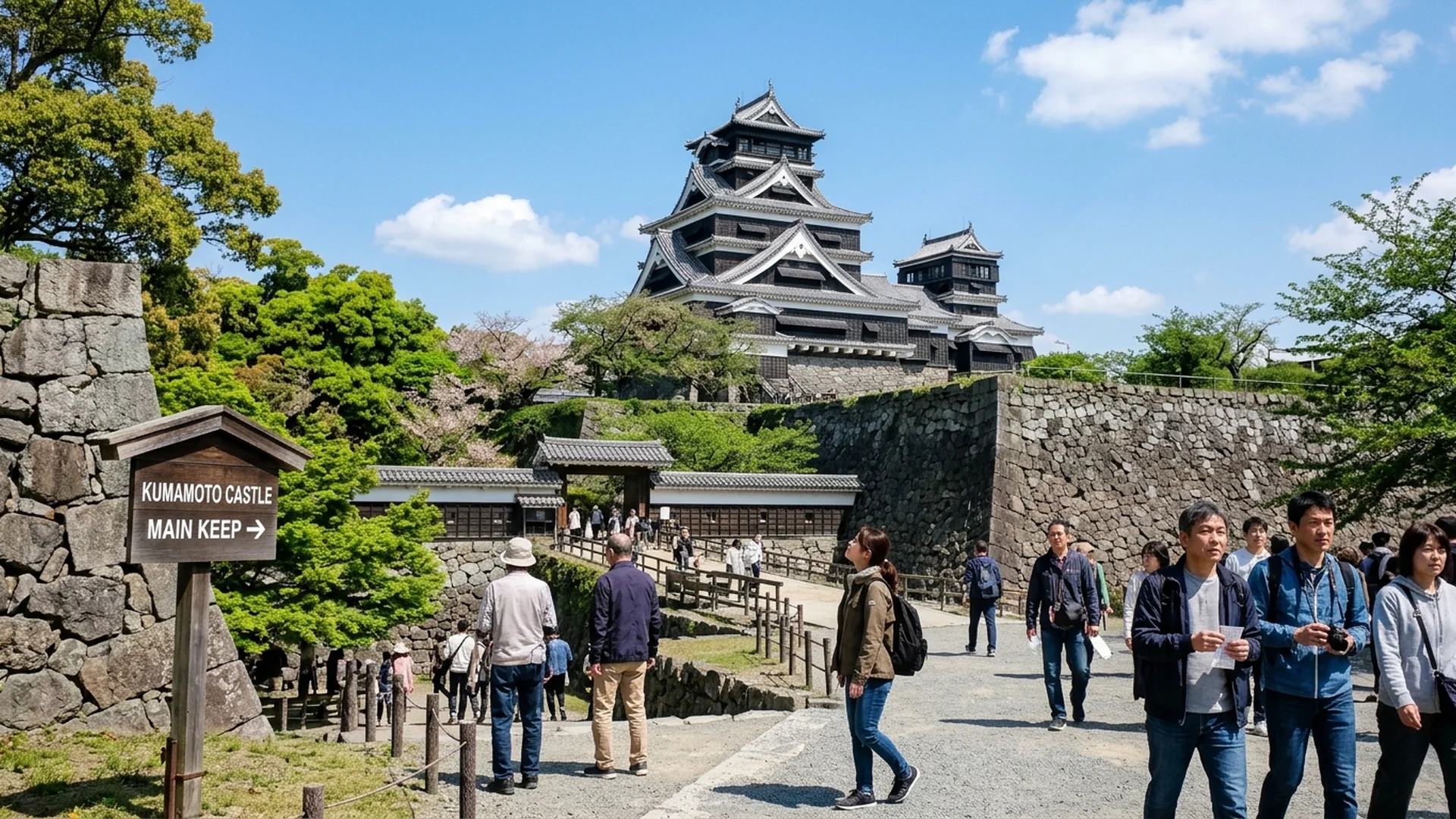
Ranked among the three premier castles of Japan alongside Osaka and Nagoya, Kumamoto Castle was forged by the brilliant Sengoku-era strategist Kiyomasa Kato. Its defining visual signature is the ingenious ‘Musha-gaeshi’ curved stone fortification, designed with a steep upward sweep specifically to deter invaders. Having weathered the tests of centuries and profound seismic trials, the citadel has been restored with an unwavering fidelity to its original engineering. Wandering through the ramparts and the primary keep as golden afternoon light strikes the contrasting dark timber walls and white tiled roofs evokes an uncanny, transporting resonance with the age of the samurai.
Suizenji Jojuen Garden: A Poetic Masterpiece of Scenery
A short distance from the city center lies Suizenji Jojuen, a classical kaiyushiki stroll garden conceived in 1636 by the Hosokawa clan. The profound marvel of this sanctuary lies in its miniature recreation of the historic Tokaido highway connecting Tokyo to Kyoto, complete with an artificial Mount Fuji and pristine spring-fed ponds nourished by subterranean snowmelt from Mount Aso. Sitting quietly within the Shingetsu-tei teahouse—savoring rich matcha paired with heritage confections while watching the glassy water mirror the sky—offers an unhurried stillness vanishingly rare in our contemporary era.
The Flavors of Kyushu: Kumamoto’s Haute Gastronomy
Kumamoto’s deep-rooted culture expresses itself eloquently across the dining table. The culinary journey begins with ‘Akaushi,’ the free-roaming red cattle grazed on the verdant slopes of Mount Aso, celebrated for its delicate fat distribution and exceptionally tender profile. This is accompanied by ‘Basashi,’ traditional horse sashimi with a storied regional heritage, typically savored with fresh ginger and garlic shoyu. Furthermore, Kumamoto ramen distinguishes itself with robust thick noodles suspended in a potent tonkotsu broth elevated by fragrant burnt garlic oil (mayu), delivering a bold aromatic signature that reflects the spirited character of Kyushu.