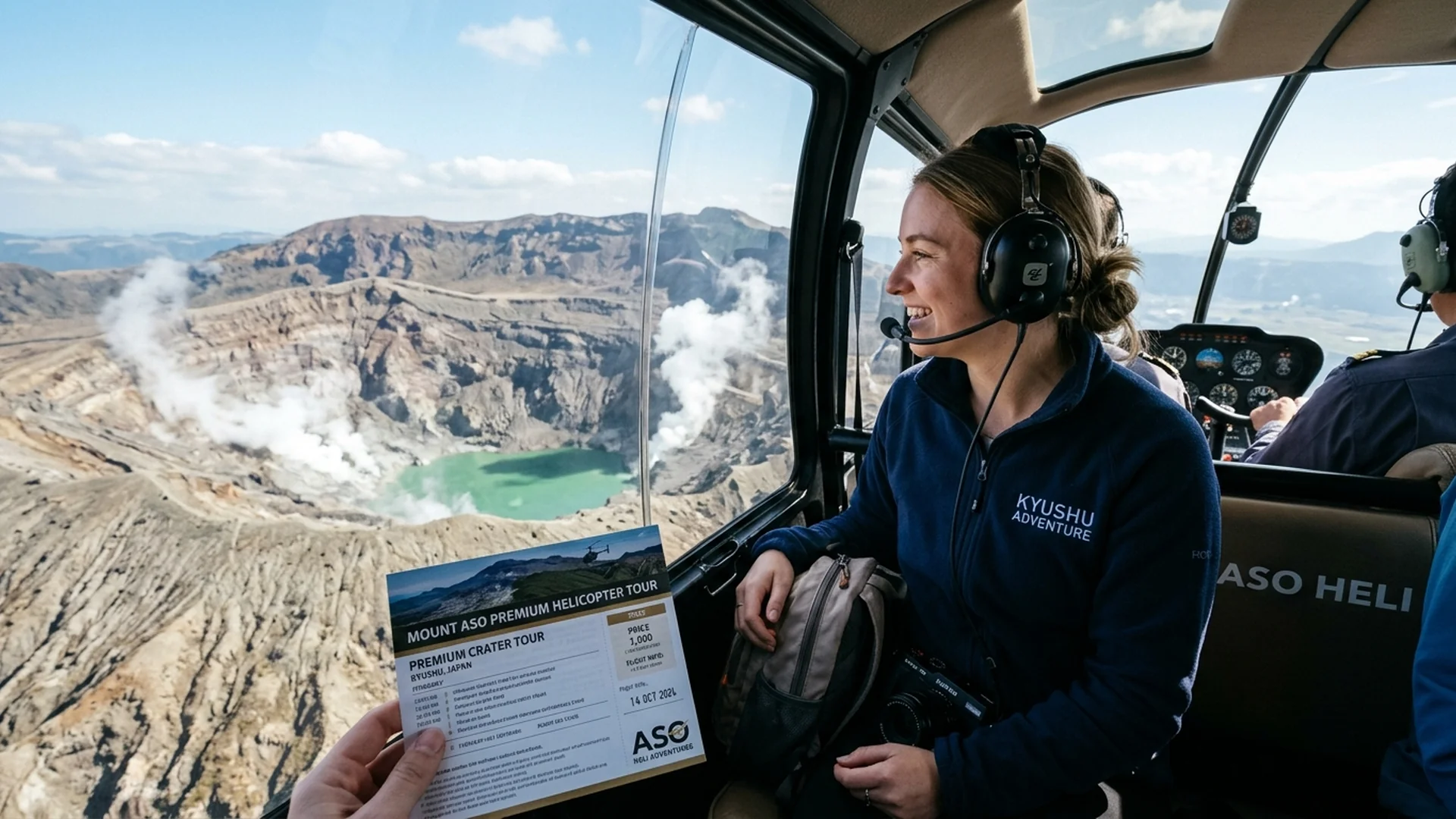
Standing at the precipice of an active crater, where the Earth’s subterranean breath rises in low murmurs and pristine white plumes merge with an emerald caldera lake below, one experiences a silent yet profound dialogue between humanity and elemental force. Mount Aso, situated within Kumamoto Prefecture, is far more than a conventional geographical waypoint; it is the pulsating heart of Kyushu—a colossal, ancient caldera encompassing thriving civilizations, agrarian heritage, and wild, arresting beauty.
To approach Aso with discernment is to step beyond the superficial confines of standard guidebooks and immerse oneself in an exclusive realm of discovery. From soaring effortlessly above the Nakadake crater via private helicopter to charting winding scenic motorways across boundless high-altitude grasslands, this majestic landscape is a masterwork of natural history, waiting to be comprehended by those attuned to the passage of geologic time.
The Heart of the Caldera: Unveiling the Five Peaks and Nakadake Crater
The dramatic geography of Aso was forged by cataclysmic eruptions hundreds of thousands of years ago, collapsing the earth into a vast basin measuring over twenty-five kilometers across. Within this ancient amphitheater, tens of thousands of residents cultivate the fertile soil, living in harmony with the volatile heartbeat of the earth. Mount Aso is not a singular summit, but a majestic constellation of five peaks known collectively as Aso Gogo: Mount Nekodake, Mount Takadake, Mount Nakadake, Mount Kishimadake, and Mount Eboshidake.
Among these, the Nakadake crater commands the primary focus of travelers. As the region’s most active vent, it continuously exhales sulfurous steam and vapor. Gazing down at the contrasting palette of the iridescent emerald crater lake against sheer obsidian rock walls evokes a profound reverence for raw geological power. When weather patterns and safety thresholds align, an aerial helicopter flight over Nakadake unveils the immense scale and stark majesty of the caldera from an unforgettable perspective.
Pastoral Serenity at Kusasenri and the High-Altitude Panorama Roads
Descending from the volcanic heights reveals Kusasenri ga Hama, a sweeping plateau of vibrant green grasses cradling twin reflective ponds. Here, mirroring the boundless sky, grazing horses roam in tranquil contrast to the brooding silhouette of Nakadake towering in the distance. Visitors may wander unhurried along natural walking trails or take in the pristine alpine breeze on horseback.
The journey through these highlands finds its ultimate expression along the Aso Panorama Line and the Milk Road. These legendary driving routes ascend gracefully along the crests of the outer rim, unfurling endless vistas of verdant rolling meadows. The crowning achievement of this journey is Daikanbo, an elevated 360-degree viewpoint that frames the sweeping contours of the northern caldera, often likened to the reclining silhouette of the Buddha, known locally as Aso no Nehanzo. At dawn or dusk, when golden light washes over the expanse, the landscape transforms into a living masterwork that captivates global landscape photographers.
Sacred Heritage and the Culinary Essence of Akaushi
Beyond its striking geography, Aso is anchored by centuries of spiritual tradition and rural craftsmanship. Aso Shrine, one of the oldest sanctuaries in Kyushu, stands as a spiritual anchor for the region, meticulously restored to honor a legacy spanning over two millennia. Encircling the shrine grounds, the Monzenmachi historic quarter features preserved merchant houses, artisan workshops, and crystal-clear spring water channels fed directly from the volcanic aquifer—waters utilized by locals for both daily life and artisanal culinary creations.
Gastronomically, Kumamoto and the Aso highlands are globally celebrated for Akaushi, a native brown wagyu breed raised to graze freely across the rich pastures of the caldera. Akaushi beef is distinguished by delicate marbling and exceptional tenderness, offering a clean, naturally sweet flavor profile. Whether savored as a perfectly seared steak or presented in refined culinary preparations, it provides an unforgettable sensory completion to the highland journey.