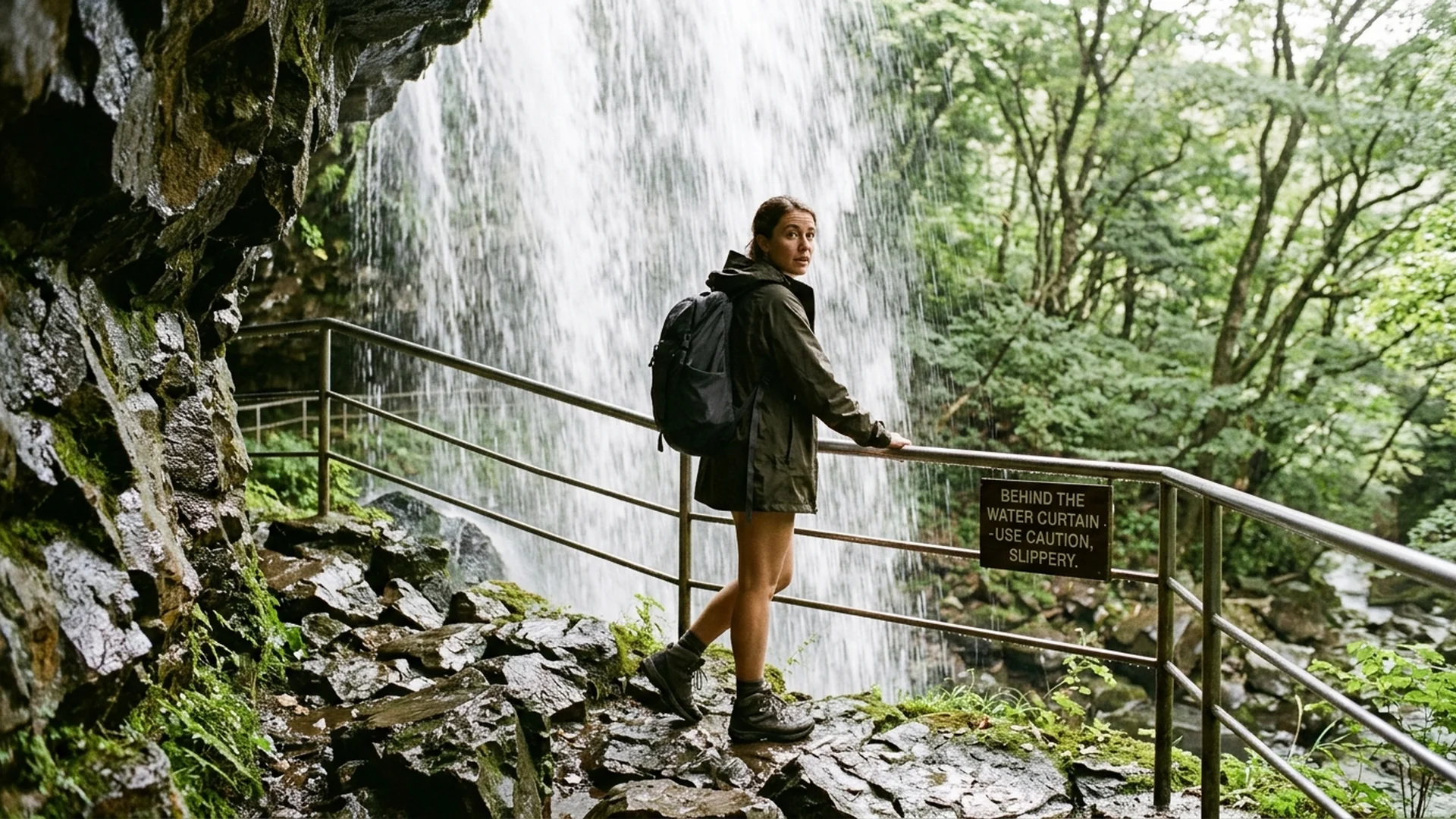
Amidst the tranquil, emerald forests of Oguni-machi in Kumamoto Prefecture lies a masterwork of natural architecture born from a cataclysmic volcanic eruption some 90,000 years ago. The colossal upheaval of Mount Aso not only reshaped the topography of Kyushu but carved out a slate-colored cliff face into what is now known as Nabegataki Falls—a twenty-meter-wide cascade that plunges ten meters down like an unspooling ribbon of pristine silk.
What elevates this waterfall far beyond the ordinary is the rare geological phenomenon known as Urami-no-taki: a subterranean marvel that allows visitors to step clean through the curtain of rushing water and stand within the echoing, crescent-shaped stone hollow behind it. The deep, rhythmic thunder reverberating through the cavern, mingled with cool mist and the fractured glint of morning sunlight through the veil, creates an otherworldly sanctuary rarely found elsewhere in the natural world.
Architecture of Time: The Volcanic Genesis of Aso’s Water Curtain
Beneath the delicate, diaphanous grace of the cascading water lies a turbulent chapter in Kyushu’s geologic past. Ninety millennia ago, the cataclysmic awakening of Mount Aso expelled unimaginable quantities of magma and volcanic ash, blanketing the surrounding terrain. Over millennia, softer strata of sediment yielded to the relentless carving of local streams, slowly undercutting the cliff face and leaving behind the distinctive recessed overhang and sheltered alcove we see today.
This geological anomaly sets Nabegataki apart from conventional cataracts. The water spreads smoothly across a broad, immaculate canvas before dropping seamlessly into the pool below, allowing the play of wind and shifting daylight to constantly reinvent the atmosphere—from the pale amber of early morning to the glittering emerald reflections of the surrounding canopy.
The Art of the Subterranean Walk: The Sensory Poetics of Urami-no-taki
Stepping onto the shaded forest trail that descends toward the falls feels akin to stepping outside of time itself. The clamor of the modern world is wholly supplanted by the rushing percussion of water and the rustle of high-altitude foliage. Approaching the falls reveals a carefully manicured stone pathway leading directly into the hollowed volcanic cavity behind the cascade.
To stand within this natural grotto, peering out through a shimmering, translucent veil of water, is an exercise in pure visual poetry. Sunlight filtering through the tumbling stream casts dancing refractions and a fine, cooling mist across the cavern interior. Surrounded by ancient volcanic rock and the pristine breath of the forest, visitors find a deeply meditative pause—a restorative communion with nature in its most undisturbed state.
Optics and Illumination: Photographic Mastery of Natural Light
For photographers and seekers of aesthetic nuance, capturing Nabegataki Falls offers a rewarding technical challenge. The key lies in mastering Komorebi—the delicate interplay of sunlight piercing through foliage and water spray—and balancing exposures to honor the deep contrasts of the grotto.
Arriving during the late morning hours often yields the most striking beams of natural light hitting the falls. Utilizing a sturdy tripod alongside a Neutral Density (ND) filter allows for prolonged shutter speeds, transforming the cascading torrent into a silky, ethereal brushstroke against the rugged dark stone. Furthermore, during the spring season, local conservation initiatives frequently host special evening illuminations, casting mysterious, jewel-toned hues across the water curtain after dusk.