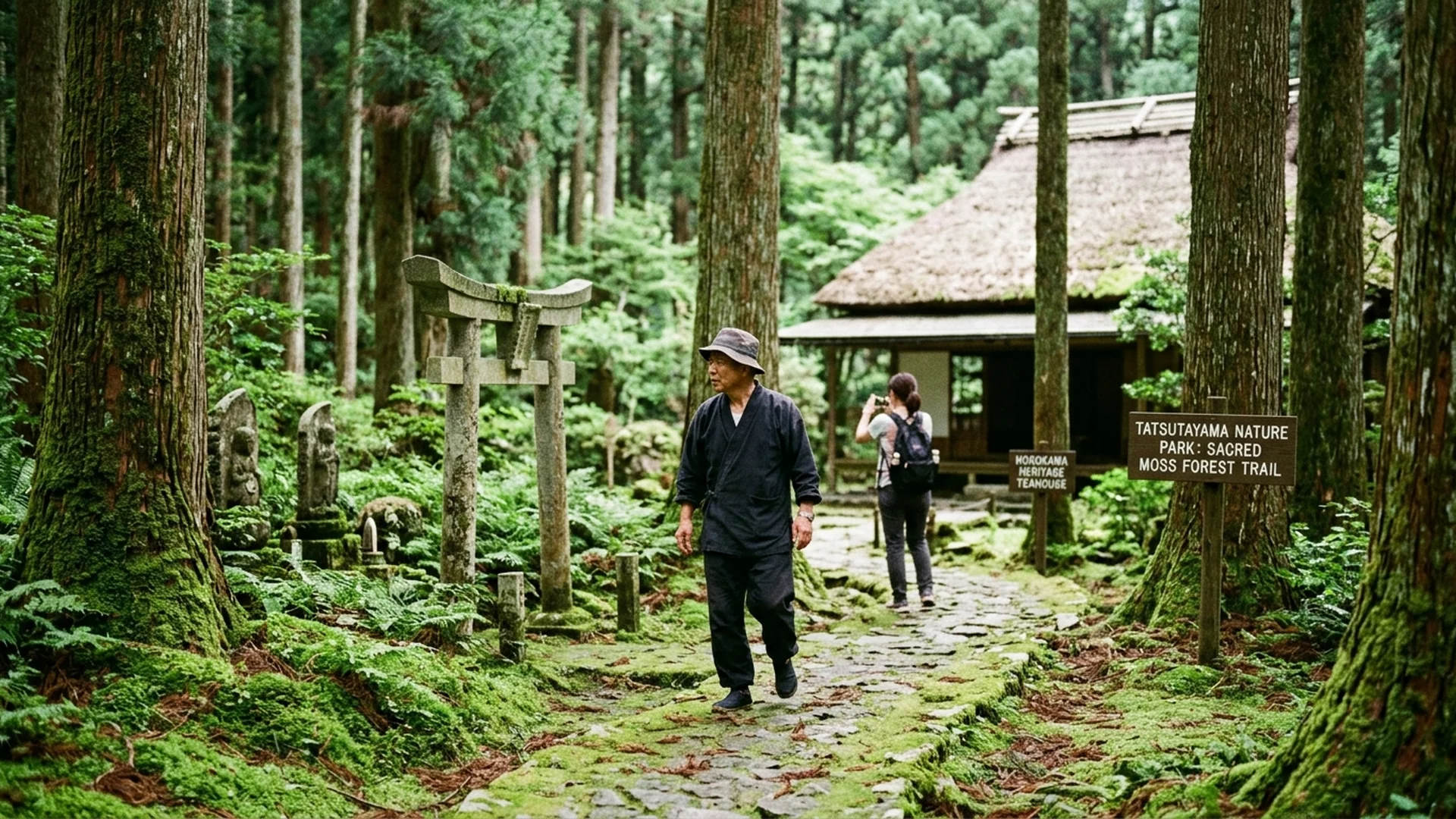
While the contemporary tide of global travel often pulls toward hyper-visible landmarks, a deeply contemplative dimension of Kumamoto remains quietly sheltered beneath ancient canopies at Tatsutayama Nature Park. This is far more than a mere municipal green space; it is a profound cultural landscape where the relentless cadence of time softens, allowing the echoes of the Sengoku and Edo periods to resonate with startling clarity.
From the very first step across the park’s sacred threshold, the damp, fertile fragrance of ancient soil mingles with shafts of sunlight filtering dense upper branches, enveloping the atmosphere in a palpable aura of reverence and solitude. Tatsutayama serves as an immaculate bridge connecting pristine natural wilderness with the prestigious aristocratic heritage of the Hosokawa clan, who once shaped the cultural zenith of Kyushu.
Chronicles of Faith: The Hosokawa Legacy and Yotsu-Gobyo
Beneath the serene canopy of Mount Tatsuta lies the eternal resting place of the Hosokawa lords, the historic rulers of the Higo domain. Known as Yotsu-Gobyo, this cluster of ancient stone mausoleums is discreetly nestled amidst towering Japanese cedars and dense groves of emerald bamboo. Constructed with a stark, austere architectural power, these tombs reflect the quiet authority and cosmological reverence of early modern rulers. Strolling along moss-carpeted pathways flanked by weathered stone monuments evokes a humbling sense of impermanence and solemn introspection.
Furthermore, this sacred precinct is inextricably linked to the poignant history of Lady Hosokawa Gracia, a noblewoman of extraordinary beauty and unwavering Christian faith who chose to perish amidst the fires of the Sengoku civil wars rather than become a political hostage. Her tragic narrative continues to draw historians, seekers, and quiet travelers to offer silent floral tributes to a spirit of unyielding dignity.
The Aesthetic of Wabi-Sabi: Moss Gardens and Gyoshoken Teahouse
Another invaluable treasure within Tatsutayama Nature Park is its living embodiment of Wabi-Sabi philosophy, manifested through sprawling natural moss carpets and the restored Gyoshoken teahouse. This architectural sanctuary has been meticulously reconstructed following the original blueprints of Hosokawa Tadaoki—revered historically by his monastic Dharma name ‘Sonshi,’ an influential daimyo and celebrated tea master within the Zen tradition.
The pavilion and its surrounding landscape are intentionally pared down to their barest essentials, preserving an unbroken harmony between wooden craftsmanship and untamed nature. The gentle cadence of water trickling from a bamboo pipe, the whisper of wind through pine needles, and the cool touch of weathered stepping stones are arranged with masterclass subtlety, designed to detach visitors from worldly anxieties and invite deep communion over a bowl of matcha in an atmosphere where time stands still.
Samurai Shadows and the Resonance of Miyamoto Musashi
Tatsutayama is far more than a landscape of spiritual tranquility; it is hallowed ground interwoven with the legacy of Japan’s most legendary swordsman, Miyamoto Musashi. In his twilight years, Musashi found patronage and sanctuary under the Hosokawa domain in Kumamoto, dedicating his final seasons to refining his martial philosophy and drafting The Book of Five Rings (Gorin no Sho) at the nearby Reigankyo cave.
A journey through Tatsutayama is, in many ways, an unhurried pilgrimage along the metaphorical footprints of Musashi and the elite warriors who sought transcendence through both the Way of the Sword and the Way of Zen. The meditative stillness of this forest once served as an arena for rigorous self-cultivation, where legendary fighters ultimately surrendered their blades to the overwhelming, humbling majesty of nature.