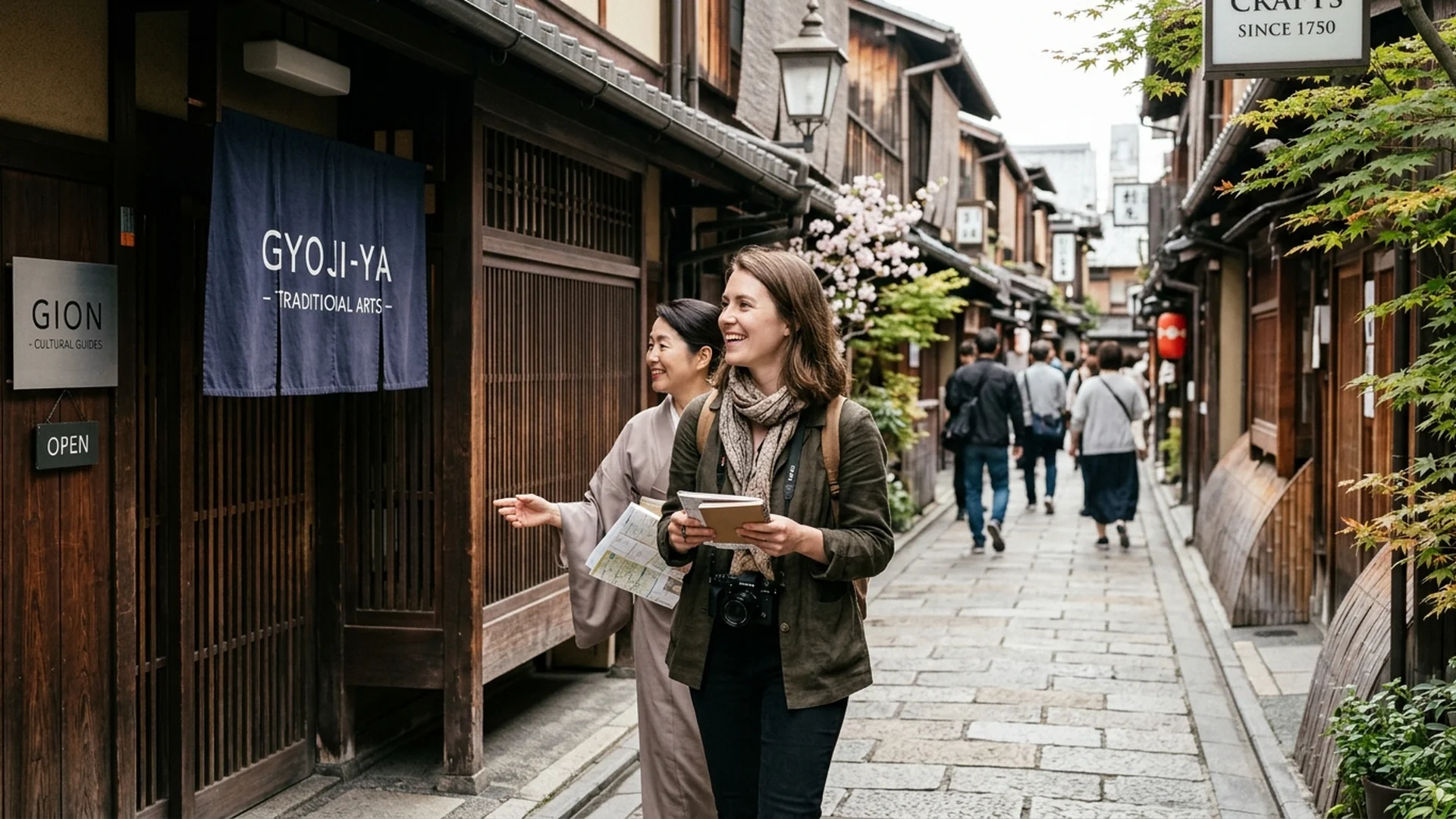
When the morning mists gently blanket the grey-tiled rooftops of Gion and the bronze chime of an ancient temple bell echoes through the crisp mountain air, Kyoto reveals itself as far more than a mere destination on a map. It is a living museum where time appears to stand still. Experiencing Kyoto in a dimension deeper than standard guidebooks demand requires stepping away from the churning currents of mass tourism and descending directly into the beating heart of traditional aesthetics. Here, profound beauty is whispered through silence, wabi-sabi imperfection, and a meticulous devotion to every subtle nuance of daily existence.
For the discerning traveler in search of intellectual enrichment and absolute privacy, Kyoto opens the velvet curtains to an exquisite realm. The sliding wooden doors of venerable ryokan inns slide open to reveal moss-dusted Zen rock gardens, while soft footsteps upon timeworn tatami mats narrate centuries of dynastic history. This transcreation invites you to decode that profound elegance, elevating your journey into an enduring, transcendent memory.
Decoding World Heritage Aesthetics: Beyond the Conventional Frame
True comprehension of Kyoto begins by looking past the physical architecture of its dozens of UNESCO sanctuaries, peering instead into the living spiritual current that animates them. Icons such as Kiyomizu-dera or Kinkaku-ji possess undeniable visual grandeur, yet their most poignant resonance unfurls only when the first morning light strikes the surface of a pond, or as bamboo stalks sway in the twilight of an empty Arashiyama grove. Securing dawn entry before the general gates swing open, or gaining access to private reserves restricted to limited daily quotas, transforms the traveler from a casual observer into an intimate participant in Zen aesthetics. Here, stone, sand, and single boughs are composed with rigorous intention, reflecting an immaculate void and a profound inner calm.
The Artistry of Kaiseki and Chado: Flavors of Season and Time
Kyoto’s culinary heritage, or京料理 (Kyo-ryori), transcends mere sustenance; it operates as an ephemeral philosophy capturing the shifting seasons through rare ingredients and immaculate vessels. Tasting high-altitude kaiseki cuisine within a venerable establishment in Gion or Kiyamachi is akin to reading a delicate poem through the senses. Consider the pristine, umami-rich purity of dashi broths, the meticulously selected heirloom vegetables, and plating that mirrors natural landscapes upon hand-glazed ceramics. Paired alongside a traditional Chanoyu tea ceremony within a centuries-old pavilion—where every gesture of the host embodies Ichigo Ichie (one time, one meeting)—we are quietly schooled in the precious, fleeting nature of the present moment.
The Architecture of Rest: Historic Ryokans and the Philosophy of Hospitality
Selecting your sanctuary in Kyoto is inseparable from the cultural journey itself. Residing within a heritage ryokan boasting a century or more of history—whether nestled in the hills of Higashiyama or resting quietly along the Kamogawa riverbanks—grants an authentic lifestyle bridge between past and present. The faint, comforting scent of aged hinoki cypress and woven rush mats, the distant murmur of water flowing through courtyard gardens, and the intuitive, unspoken grace of omotenashi hospitality combine to make both waking and sleeping profoundly meaningful. Soaking within a private outdoor ofuro mineral bath beneath the starlit canopy of an inner garden washes away urban fatigue, resetting the senses for the dawn to come.