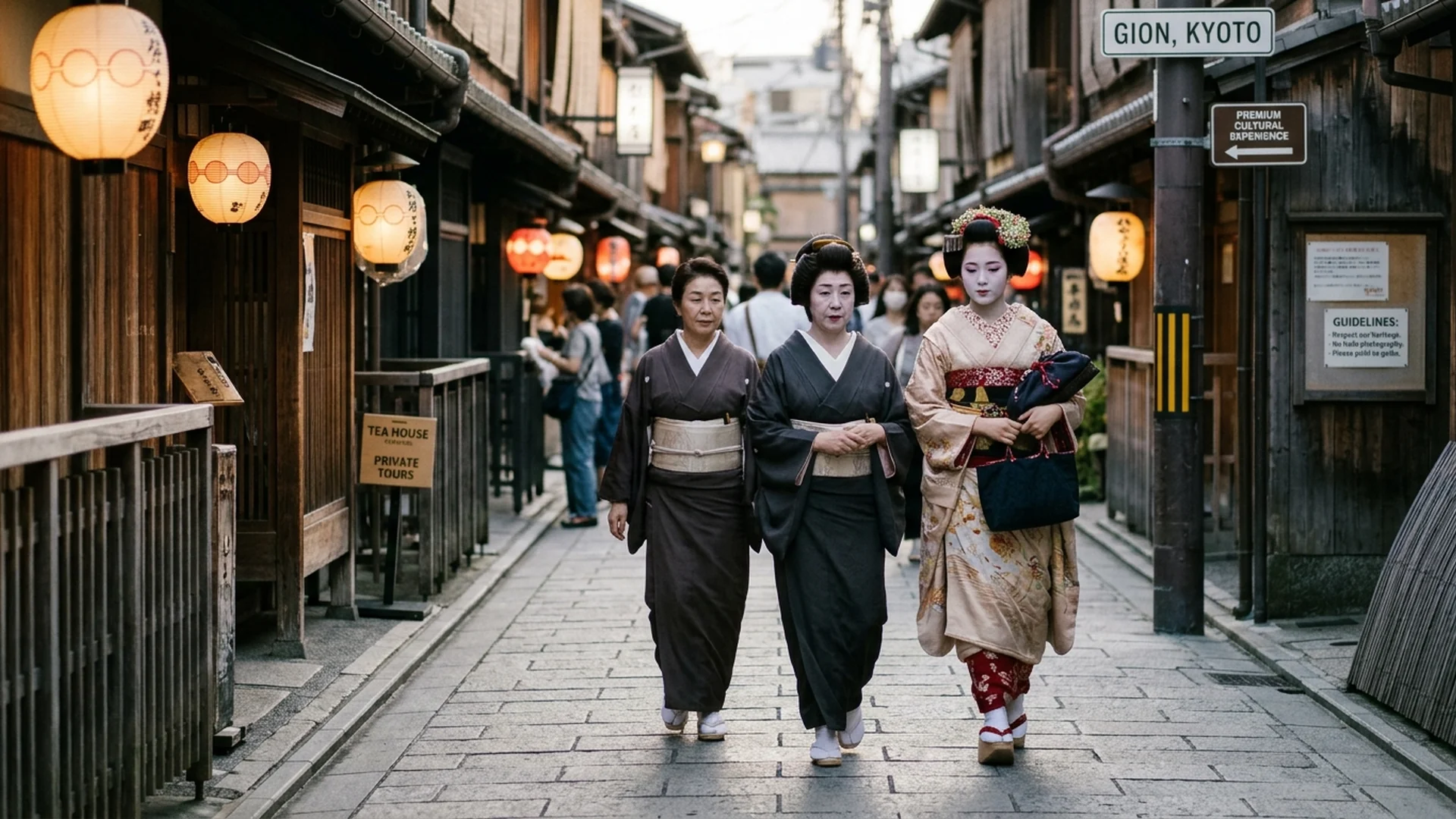
As the final light of day stretches across the orange-red paper lanterns suspended before centuries-old machiya timber residences, Kyoto’s Gion district seems gently enfolded in a reverse current of time. The soft clatter of wooden geta sandals against lava stone pathways, paired with the graceful, hurried silhouettes of apprentices rushing toward evening engagements at exclusive ochaya tea houses, paints a picture of timeless elegance that continues to captivate global travelers.
Yet behind this picturesque facade, Gion is far more than a scenic backdrop for photography. It remains the pulsating heart of the kakai—a traditional community of custodians and performance artists fiercely protective of ancient customs. Stepping into the narrow alleys of Gion today is therefore not merely an exercise in sightseeing; it is an initiation into a sacred cultural landscape that demands profound understanding, delicate appreciation, and uncompromised respect from every guest.
Roots and Breath of the Geiko: A Living Cultural Legacy
The story of Gion unfurled in the 17th century around the precincts of Yasaka Shrine, which brimmed with weary pilgrims and travelers. Teahouses naturally emerged to offer sanctuary, gradually evolving into an elite, uniquely refined entertainment enclave. While Western lexicon popularized the term ‘geisha’, those initiated in Kyoto are addressed with deeper reverence as ‘geiko’ (women of art) and ‘maiko’ for junior apprentices.
Their rigorous artistry extends far beyond simple performance, embodying classical shamisen music, traditional dance, the meditative art of tea ceremony, and ikebana flower arrangement honed over years of disciplined study within okiya training houses. Spotting a maiko gliding past darkened timber doorways at dusk offers a rare testament to resilience and beauty seldom found in the modern world.
Hanamikoji and Shirakawa: Two Contrasting Expressions of Elegance
Exploring Gion reveals a fascinating dialogue between two distinct thoroughfares. The first, Hanamikoji Street, stretches boldly through the district’s spine, lined with grand ryotei restaurants and historic teahouses. Here, vitality meets exquisite kishiku-zukuri architectural craftsmanship, engineered behind understated timber screens to conceal private revelry from the public gaze.
In serene contrast, a short wander toward the Shirakawa Canal transforms the atmosphere into a dreamscape. Lantern light flickers across the gentle current, flanked by weeping willows and the iconic Tatsumi Bridge—a favored spot for morning contemplation before the day’s cadence quickens.
Modern Etiquette and the Imperative of Responsible Tourism
In response to past instances of privacy incursions by large tourist groups, municipal authorities and the Gion District Resident Association enacted rigorous new measures, notably banning photography within private alleys in Gion Minami-gawa. Clear signage and active patrols enforce these regulations, with legal penalties applied to non-compliant visitors.
Navigating modern Gion requires an uncompromising commitment to responsible tourism. Travelers must refrain from staking out doorways, pursuing, photographing, or approaching geiko and maiko. Respecting private thresholds and adhering strictly to local codes are essential to preserving the fragile heartbeat of this ancient community amidst global wanderlust.