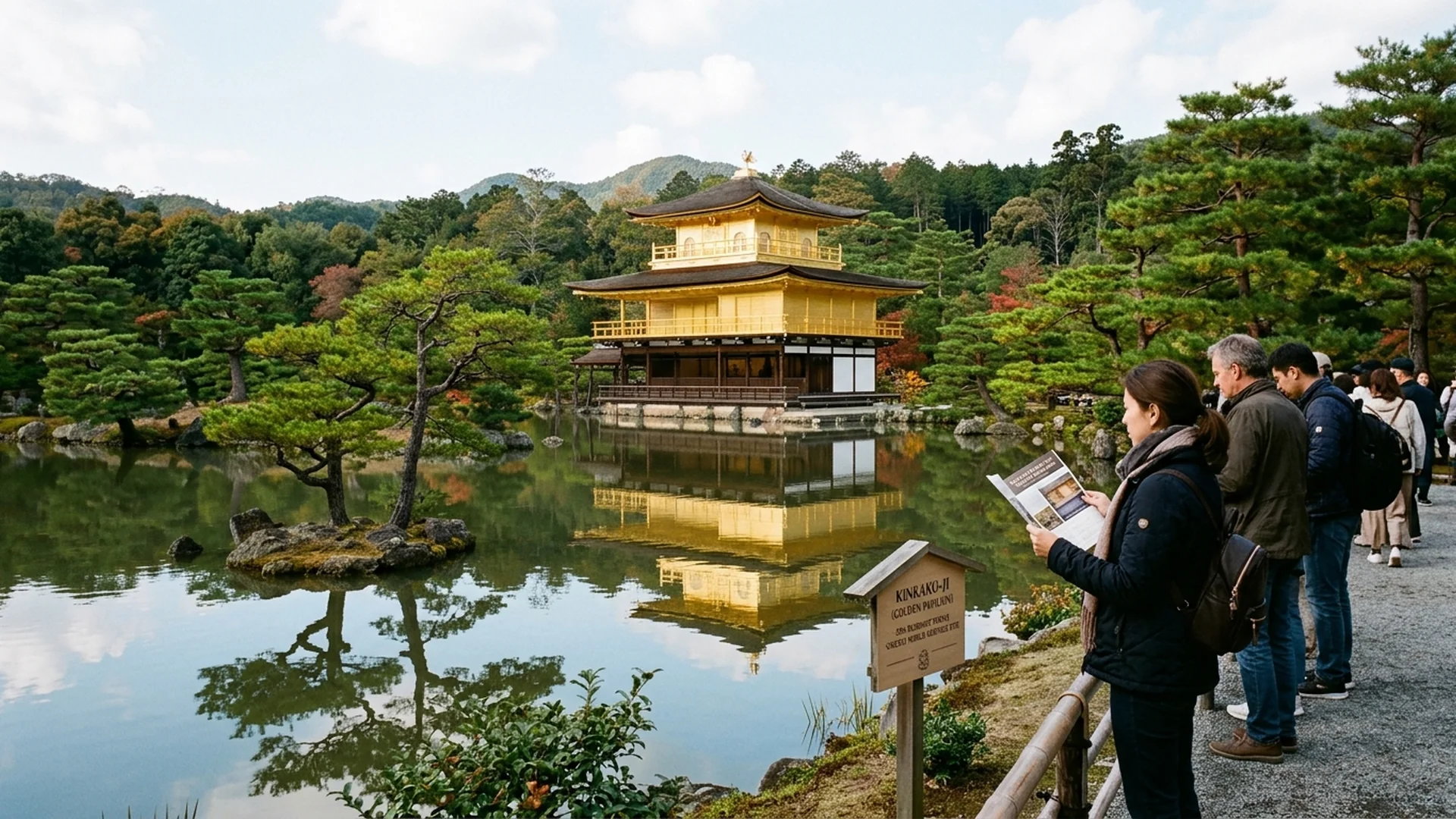
When the first light of dawn kisses the pristine waters of the Kyoko-chi pond, pure gold leaf enveloping ancient wooden architecture begins to glow softly, resembling a canvas brought vividly to life. Kinkaku-ji, universally celebrated as the Golden Pavilion of Kyoto, is far more than a mere visual icon on the global travel map. It stands as an open-air classroom of history, an enduring dialogue between architecture, nature, and Zen philosophy that has resonated across centuries. Stepping into this sacred sanctuary is not merely an exercise in visual appreciation, but an invitation to awaken the senses and perceive the profound refinement of classical Japanese spirituality.
Three Architectural Eras: The Layering of Styles on the Golden Pavilion
Beneath the shimmering brilliance of the three-story structure lies a masterclass in architectural synthesis, seamlessly blending three entirely distinct design traditions. The first floor is constructed in the Shinden-zukuri style, reminiscent of Heian-period aristocratic palaces, distinguished by natural wooden pillars and pristine white plastered walls that radiate understated elegance. The second floor adopts the Bukike-zukuri style, mirroring the aesthetics of elite samurai residences with its opulent exterior sheathed in brilliant gold leaf. Crowning the structure is the upper floor, designed in the Chinese Zen temple style and adorned with a modest bronze bell and a gleaming golden phoenix. This vertical layering symbolizes the unification of political authority, social hierarchy, and spiritual liberation under the overarching shelter of Zen Buddhism.
Kyoko-chi Pond: The Vast Mirror Reflecting Infinity
The beating heart that elevates Kinkaku-ji above ordinary architectural monuments is its masterful landscaping centered around the expansive Kyoko-chi, or Mirror Pond. This body of water serves far more than a decorative purpose; it functions as a living canvas that reflects the celestial pavilion downward, creating multi-dimensional vistas that invite silent contemplation. The pond is punctuated by islets, unusual rock formations gifted by historical daimyos, and meticulously pruned ancient pine trees. Every single element is arranged according to advanced feng shui and Zen aesthetic principles, gently guiding the human spirit back toward internal equilibrium and stillness.
Historical Echoes: From Shogunal Estate to Buddhist Sanctuary
The chronicle of Kinkaku-ji is deeply intertwined with the pivotal turning points of Japanese history. Its origins date to 1397, when the formidable Muromachi-period shogun Ashikaga Yoshimitsu acquired the estate from the Saionji family to transform it into his personal retirement retreat, known as Kitayama-dono. This estate served as the epicentre of the flourishing Kitayama culture, where Noh drama, tea ceremonies, and fine arts reached unprecedented heights. Following Yoshimitsu’s passing, in accordance with his wishes, the magnificent villa was consecrated as a Rinzai Zen temple named Rokuon-ji. Although the main hall famously endured a devastating fire in 1950, it was meticulously reconstructed to mirror the original aesthetic perfection in every detail.