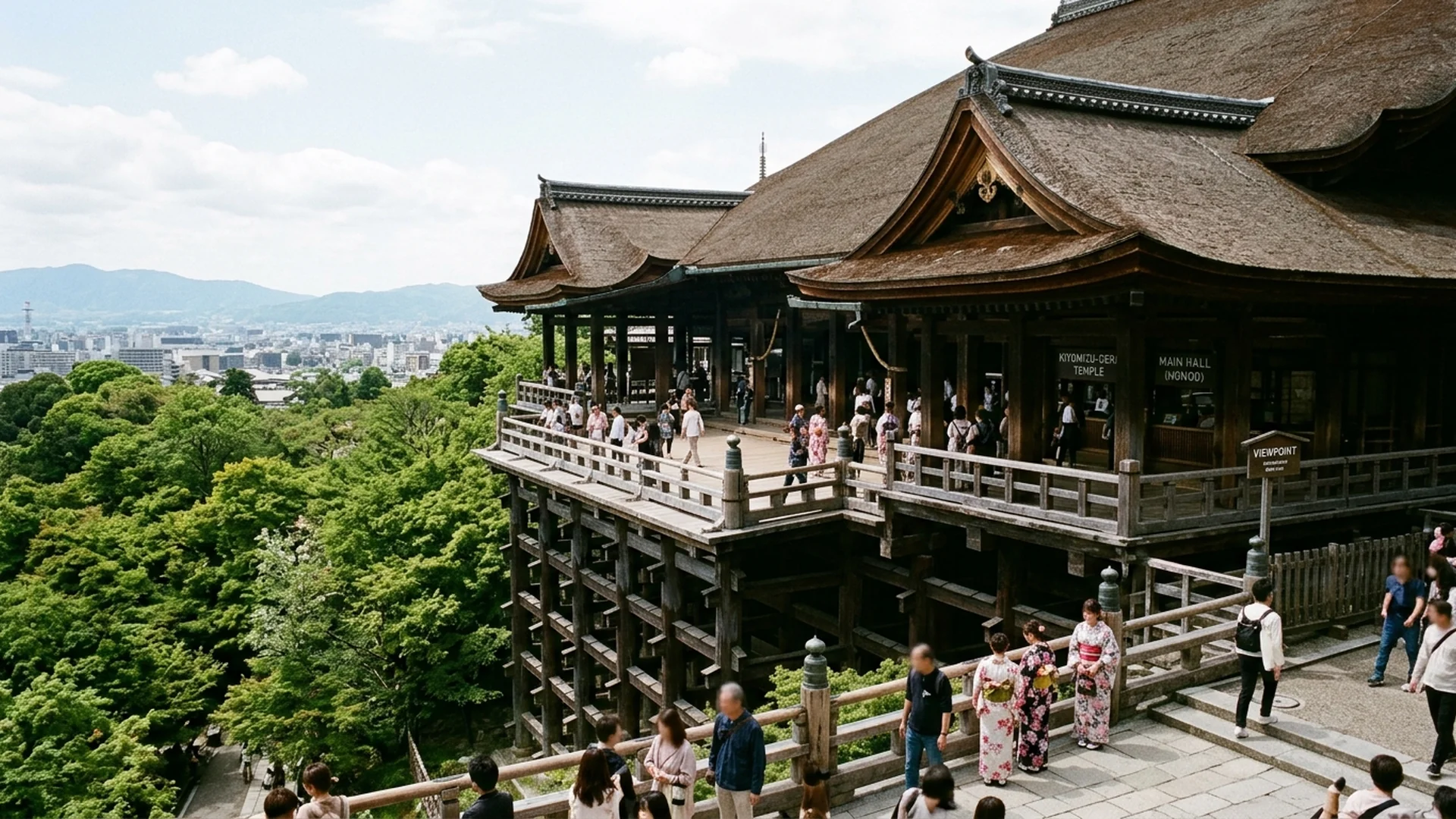
As the morning mist gradually lifts from the contours of the Otowa Mountains, the resonant chime of an ancient bell echoes across the hillside, accentuating the vermilion wooden sanctuary nestled gracefully within emerald canopies. This is Kiyomizu-dera, celebrated globally as the ‘Pure Water Temple.’ A millennium-old monument of profound devotion, it functions not merely as the spiritual heartbeat of Kyoto, but as a living museum chronicling the symbiotic relationship between humanity, nature, and masterful carpentry.
Crossing the threshold into the sacred grounds of Kiyomizu-dera feels akin to stepping across the threshold of time into the Heian period—an era when architecture was conceived not to impose dominance upon the landscape, but to integrate harmoniously with it. The quiet serenity woven through cobblestone pathways and the subtle fragrance of ancient pine draw pilgrims and discerning travelers from across the globe, each seeking to bear witness to this timeless beauty.
Architectural Integrity: The Nail-Free Wooden Stage
The defining marvel that catapulted Kiyomizu-dera to international acclaim is the Kiyomizu-no-Butai, a sprawling veranda cantilevering boldly over the steep wooded ravine. Erected entirely without the use of nails (known as nuki-kozo), it relies on a sophisticated system of interlocking wooden brackets and joints that grant the structure extraordinary flexibility and seismic resilience. Countless colossal zelkova tree trunks support this magnificent viewing platform, allowing it to endure centuries of fires, weathering, and meticulous restorations. Standing upon this historic stage offers not only expansive vistas of Kyoto and the verdant valley below, but a profound appreciation for ancient master carpenters whose reverence for the natural world dictated their engineering.
The Three Streams of Otowa and Their Quiet Significance
At the base of the temple’s soaring veranda flows the Otowa Waterfall, its pristine waters cascading down from the sacred mountain. The stream is channeled into three distinct currents, each traditionally believed to bestow a specific blessing upon those who drink from the long-handled metal ladles. The first stream grants success in academic and professional pursuits; the second brings fortune in romance; and the third ensures robust health and longevity. Even when queues stretch along the stone pathway, the mindful act of waiting and reflecting upon one’s intent—guided by the folk wisdom that drinking from all three dilutes the potency of the blessings—embodies the subtle, philosophical nuances of Mahayana Buddhist heritage.
The Play of Light and Shadow: Seasonal Illumination
Experiencing the legendary autumn foliage of Kyoto from the vantage point of Kiyomizu-dera is an aesthetic masterpiece. During the fall, fiery crimson maples frame the historic wooden veranda against a crisp sapphire sky, while spring introduces the delicate blush of thousands of cherry blossoms. Furthermore, during select evening illumination events, carefully orchestrated lighting casts a dramatic glow over the intricate wooden framework against the pitch-dark forest backdrop, evoking a deeply atmospheric and unforgettable ambiance.