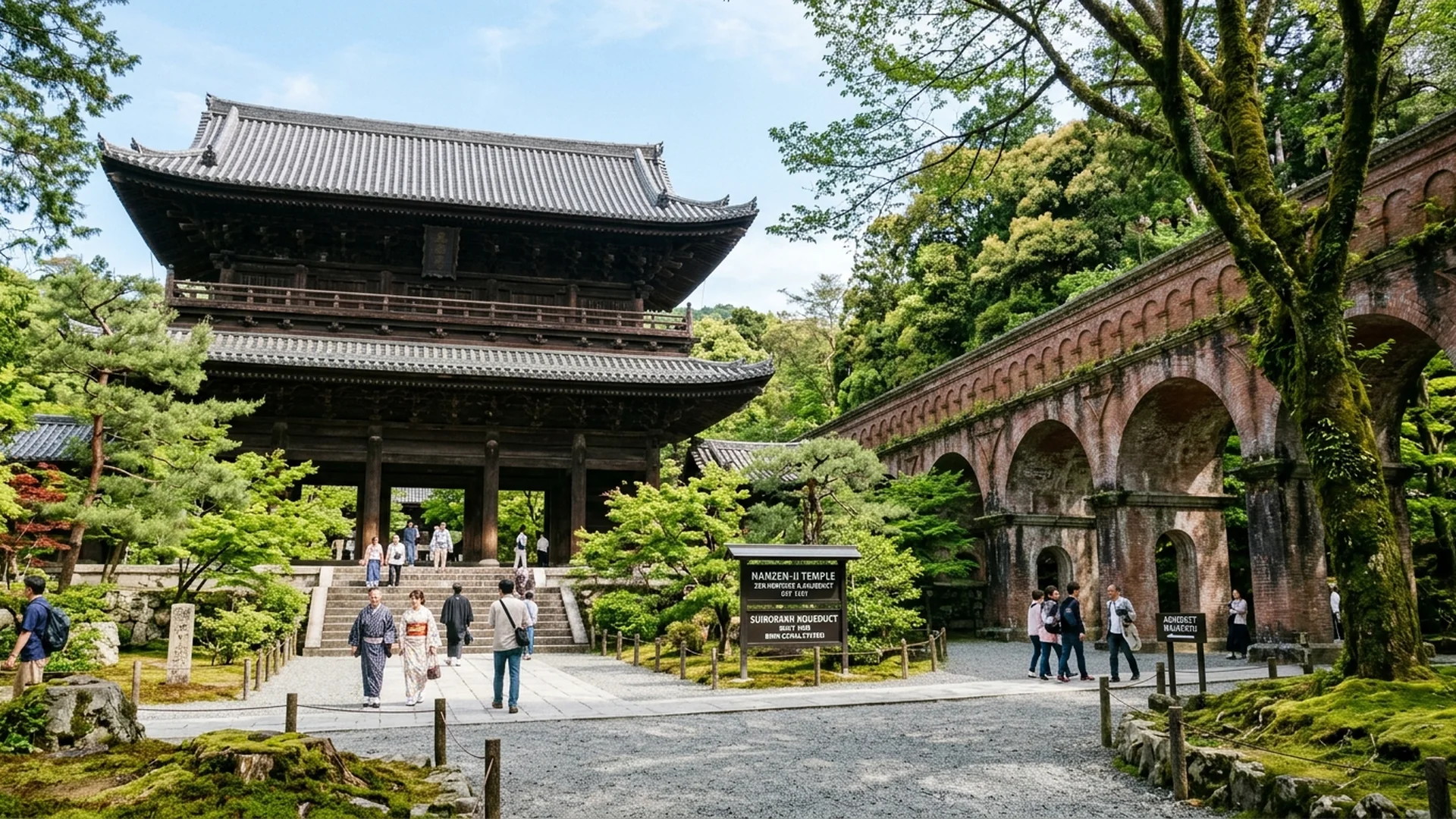
Amidst the tranquil forested slopes of Higashiyama in northeastern Kyoto, a monumental sanctuary stands not merely as a monastic dwelling, but as a living archive of spiritual discipline and architectural mastery. Nanzen-ji traces its origins to an imperial detached palace before rising to the absolute zenith of Japan’s Rinzai Zen temple hierarchy. Here, the quiet air carries the cadence of flowing water and rustling foliage, offering discerning travelers an invitation to step beyond towering gates into a profound, enduring stillness.
Upon entering the sacred precinct, the sheer scale of the Sanmon Gate commands immediate reverence. This historic portal serves as a symbolic threshold between worldly distraction and the realm of enlightenment. Beyond its massive timber frames lie layers of cultural complexity, from meticulously raked Zen rock gardens to the startling architectural grace of the red-brick, Roman-style Suirokaku aqueduct—a striking testament to the harmonious fusion of East and West during the Meiji restoration.
Roots of Zen: The Majesty of the Sanmon Gate and the Philosophy Behind Timber Frames
The history of Nanzen-ji unfurls in the late 13th century when Emperor Kameyama relinquished his imperial villa to establish a sanctuary for Buddhist contemplation, cementing the Rinzai sect’s intellectual foundation. This exalted legacy finds physical expression in the Sanmon Gate, reconstructed in 1628 to honor fallen warriors. Recognized as one of the Three Great Gates of Japan, its colossal timber structure exudes monumental dignity. Ascending to the upper pavilion reveals sweeping vistas of Kyoto framed by aged wooden transoms, inviting a visceral meditation on the Zen principle that true freedom is found within absolute emptiness.
Aesthetics of Silence: The Hojo Rock Garden and Gold-Leaf Masterpieces
Moving deeper into the complex brings one to the Hojo, the former abbot’s residence, where interior chambers are adorned with exquisite paper and gold-leaf sliding screen paintings crafted by the Kano School. Tigers and dragons rendered across luminous golden surfaces symbolize not only artistic mastery, but also the vital alertness required of spiritual practitioners. Yet, the true focal point rests just outside: the dry landscape rock garden (Karesansui) designed by master landscape architect Kobori Enshu. Arranged stones amid immaculate white gravel evoke vast oceans and distant islands, encouraging travelers to sit quietly upon polished wooden verandas and let wandering thoughts dissolve into stillness.
Harmonious Contrasts: The Suirokaku Aqueduct and Meiji-Era Memory
An unexpected architectural wonder within Nanzen-ji is the Suirokaku Aqueduct, a Roman-style red-brick arched conduit constructed in the late 19th century to channel water from Lake Biwa into the expanding city of Kyoto. Initially, introducing Western industrial infrastructure into a centuries-old Zen monastery appeared discordant. Over time, however, deep red bricks softened by ivy and weathered patinas have blended seamlessly with the surrounding woodlands and wooden sanctuaries. The gentle murmur of water flowing overhead enhances a romantic, vintage atmosphere favored by photographers and mindful travelers alike.