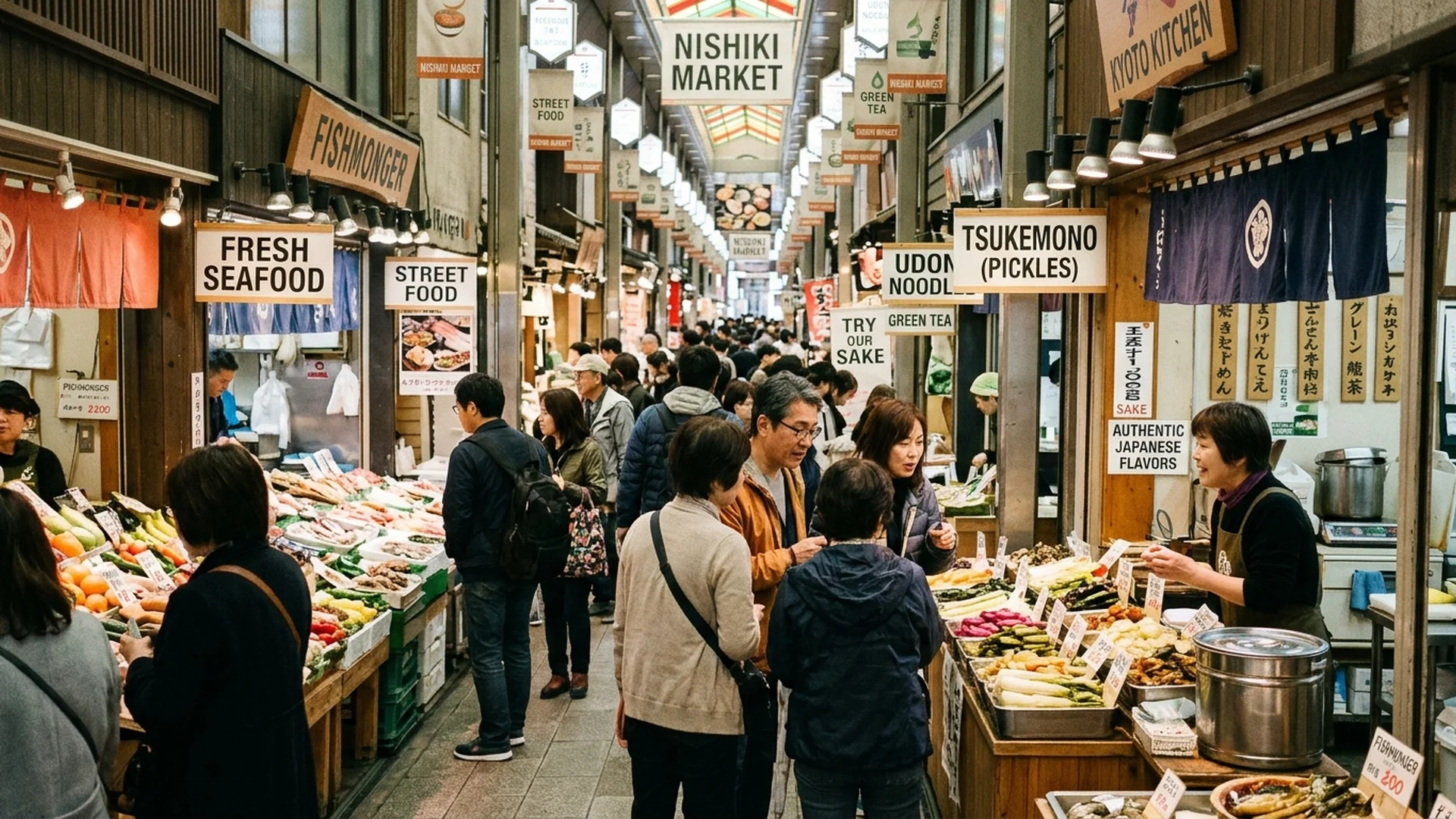
As a gentle breeze sweeps through the narrow alleys of central Kyoto, the delicate fragrance of simmering dashi broth, chilled sashimi, and ancient fermented spices drifts invitingly through the air, beckoning travelers into Nishiki Market, affectionately celebrated as Kyoto’s Kitchen. Spanning roughly four hundred meters, this storied corridor is far more than a municipal provisioning market; it is a living museum preserving four centuries of culinary history, culture, and spiritual devotion.
Beneath the sweeping arched arcade that catches the warm, amber glow of storefront lanterns, over a hundred independent merchants display their wares with the quiet precision characteristic of true Kyoto artisans. From heirloom vegetables cultivated in ancestral soil to pristine seafood hauled fresh from the waters of Maizuru Bay, comprehending Nishiki Market at a profound level requires looking far beyond casual street-food grazing. It demands opening one’s senses to decode a lexicon of flavors passed down through generations, rooted in peerless ingredients that once graced the tables of the imperial court.
Four Centuries of Heritage: From Imperial Fishmongers to Kyoto’s Soul
The chronicle of Nishiki Market began as a specialized wholesale district for fish and seafood during the Edo period, sustained by the merchant class known as Shonin. Blessed by geological fortune, Kyoto sits atop subterranean reservoirs of pristine mineral water. In earlier eras, merchants sank deep wells to maintain the absolute freshness of their catch without relying on manufactured ice. This distinct advantage elevated Nishiki into the preeminent purveyor of exceptional seafood for both the imperial palace and the venerable temples of the ancient capital.
Through centuries of profound transformation in the outer world, Nishiki has tenaciously preserved its intimate Shijo-Nishiki alleyway layout alongside the spirit of omotenashi—the philosophy of selfless hospitality deeply embedded in every facet of the merchant tradition.
The Universe of Kyoyasai and Rare Artisanal Provisions
If French and Italian gastronomy find their pulse in seasonal terroir, Kyoto’s culinary soul is undeniably anchored in Kyoyasai, indigenous heirloom vegetables nurtured by the basin’s distinct microclimate and ancient agricultural wisdom. Within Nishiki, visitors encounter cultivars of striking visual character and profound depth of flavor, ranging from Shogoin radishes to sweet, brilliantly hued Kintoki carrots. Artisanal tsukemono pickles and purveyors of dried bonito flakes—shaved wafer-thin for dashi stock—further illuminate an unbroken lineage of preservation that elevates the quintessential umami of traditional Japanese cooking.
The Art of Tasting and Traveler Responsibility
While Nishiki is celebrated for its dazzling array of artisanal bites, local sensibilities discourage the practice of arukigui, or eating while walking through narrow thoroughfares, as it risks soiling fellow pedestrians and disrupting the cleanliness of the market. Contemporary merchants thoughtfully provide designated tasting spaces directly in front of their stalls, inviting guests to savor each offering before moving onward. Respecting these considerate boundaries safeguards the integrity of this historic corridor against the rushing tides of modern tourism.