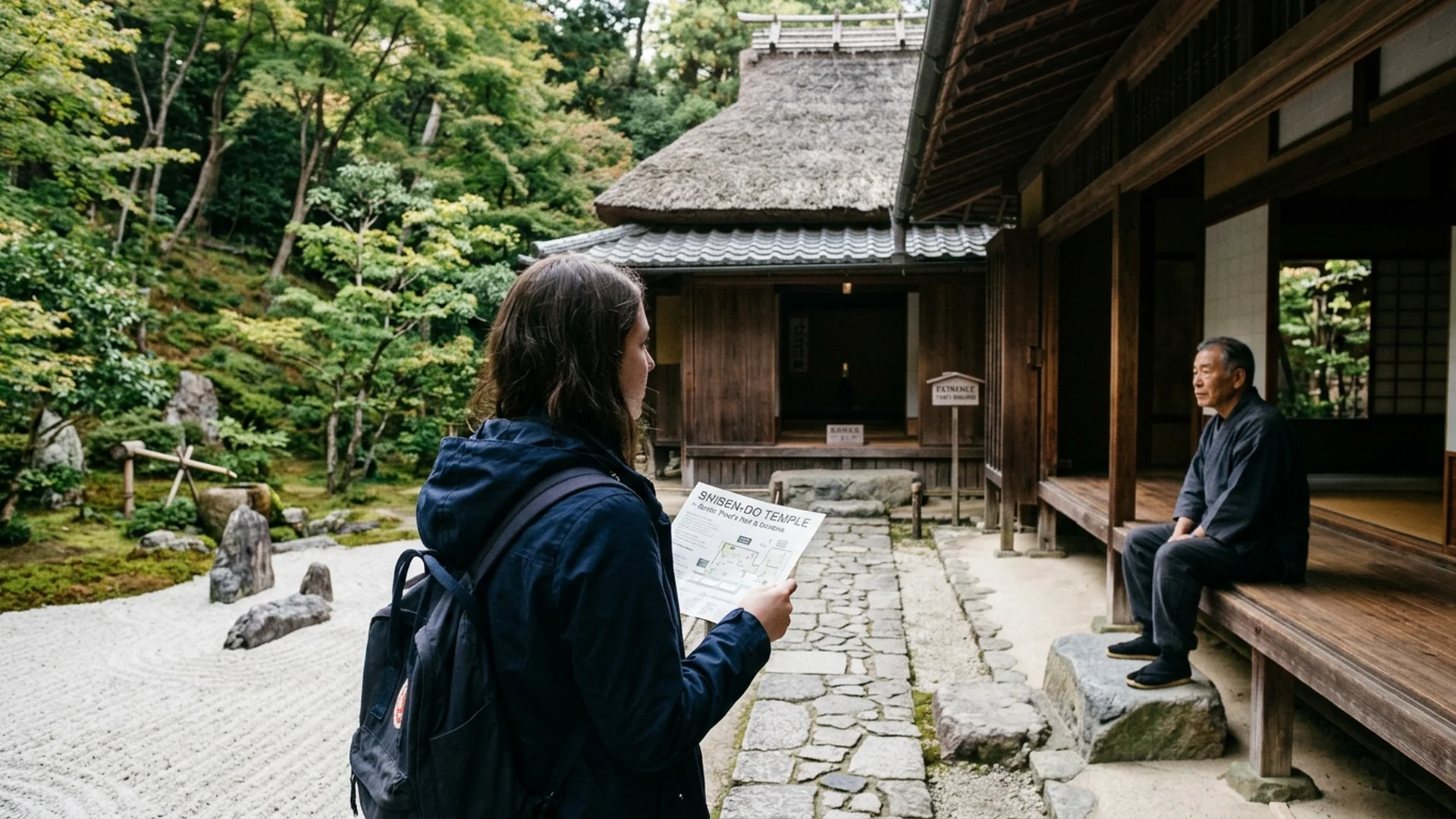
As the autumn wind rustles through the dense pine and bamboo groves of Rakuhoku in northern Kyoto, a low, resonant chime echoes across the stone path like the steady heartbeat of nature itself. This sound is no modern novelty; it is an ancient auditory legacy born within the contemplative precincts of Shisen-do, a sanctuary where time purposefully slows to allow the wandering spirit absolute repose.
Crossing the threshold of Shisen-do is akin to stepping entirely outside the clamor of the mundane world. This poetic domain was conceived, crafted, and nurtured by Ishikawa Jozan, a formidable samurai veteran who served the Tokugawa clan before discarding his armor to embrace the life of a poet, landscape designer, and sage in 1641. Far more than a traditional religious site, this secluded villa stands as a three-dimensional poem composed of raw stone, meticulous gravel, venerable timber, and wandering streams.
From Gleaming Blade to Scholarly Brush: The Samurai Who Built a Hermitage
The life trajectory of Ishikawa Jozan exemplifies the profound philosophical depths of the Japanese hermit tradition. As a seasoned veteran who fought in several major historical campaigns, he ultimately chose to renounce worldly honors and military ambition once the protracted era of bloodshed finally settled. Jozan constructed his retirement retreat in the tranquil suburban neighborhood of Ichijoji on the northeastern fringes of Kyoto, naming the main hall ‘Shisen-do’, which translates roughly as the ‘Hall of the Poetic Immortals’.
The domestic architecture follows the sophisticated shoin-zukuri style, tempered delicately by the rustic aesthetic of wabi-sabi. Jozan built this dwelling not to project social status, but to establish an intimate sanctuary for reading classical texts, composing verse, and engaging in quiet dialogue with contemporary scholars. Following his passing, the estate transitioned into a Soto Zen temple, yet it successfully retained the soulful intimacy of a scholar’s private residence.
The Poetic Mastery of Shisen no Ma and Kano Tanyu’s Legacy
The undisputed architectural heart of Shisen-do is the upper reception hall known as the ‘Shisen no Ma’. Along the upper perimeter of the chamber’s walls hang idealized likenesses of thirty-six esteemed Chinese poets, meticulously curated by Jozan himself and accompanied by elegant calligraphy executed in his own hand. These expressive portraits were brought to visual life by Kano Tanyu, a premier master painter of the Edo period who captured the distinct personalities and lofty spirits of these historical literati.
Kneeling upon the polished tatami mats within this chamber and gazing outward through the wide wooden thresholds toward the manicured gardens beyond is an elite cultural experience sought by discerning travelers. The interplay of shifting light across polished cedar floors, the subtle murmur of mountain air, and the profound, weighted silence imbue visitors with the distinct sensation of sitting quietly in council with the sages of antiquity.
Zen Horticulture, Seasonal Transitions, and the Genesis of the Shishi-odoshi
Directly before the polished veranda unfurls a meticulously curated canvas of dry landscape stone and vibrant botanicals. The garden bridges classical Japanese landscape design with subtle Chinese structural sensibilities. Velvet patches of verdant moss and sculpted shrubbery are shaped with exacting care. In late spring, blossoms of satsuki azalea burst forth to paint the sweeping greenery in shades of magenta and soft violet, while autumn brings incandescent scarlet maples that contrast sharply against whitewashed exterior walls and pristine white gravel.
Beyond its visual harmony, Shisen-do holds the distinction of being the original birthplace of the ‘Shishi-odoshi’ (or sosu). This ingenious agrarian device utilizes a balanced bamboo tube that fills with flowing spring water until it tilts downward, striking a flat stone with a crisp, hollow knock intended originally to deter deer and wild boars. Today, this acoustic accent serves as an organic meditative metronome, soothing the minds of modern visitors into a state of profound internal stillness.