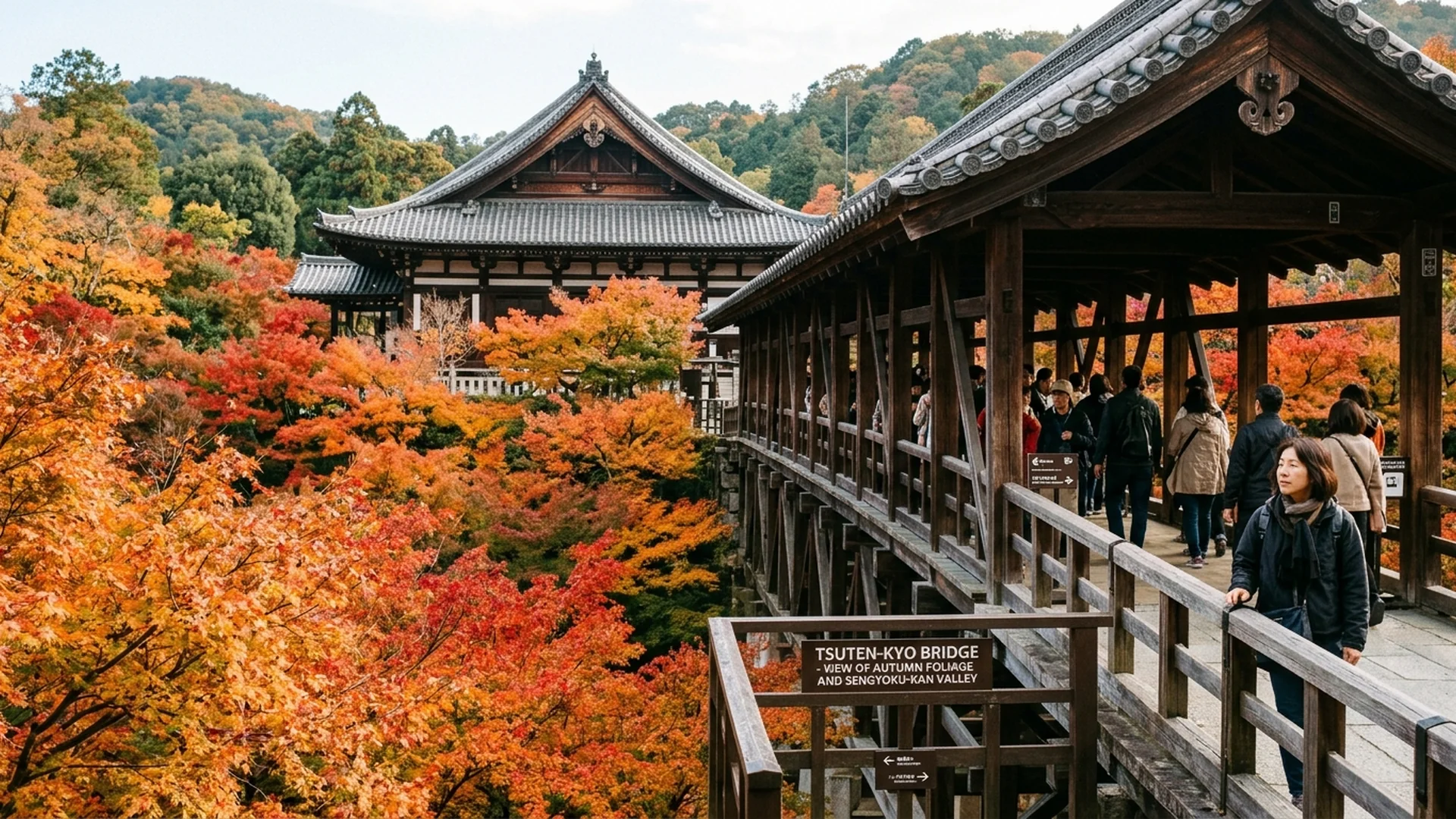
When the autumn gales sweep through the eastern Zen valleys of Kyoto, the sprawling groves of Tofuku-ji transform into a mesmerizing sea of fiery hues. This is far more than a conventional destination for seasonal leaf-peeping; it is a living museum that seamlessly fuses centuries of Rinzai Zen Buddhist architecture with timeless natural beauty.
Amidst the tranquil grandeur of Kyoto’s largest ancient wooden structures, Tofuku-ji—revered by discerning global travelers as a jewel of the prestigious Kyoto Gozan—harbors over seven centuries of history beneath a canopy of scarlet maples. To step onto these sacred temple grounds is to cross a threshold of time, entering an aesthetic realm defined by profound simplicity and deep spiritual resonance.
Roots of Zen and Monumental Wooden Architecture
Founded in 1236 by the powerful Fujiwara clan, Tofuku-ji was envisioned as a monumental center for the study of Rinzai Zen Buddhism. Its very name, synthesized from two prominent temples in Nara, reflected aspirations of surpassing past grandeur. The interior architecture evokes the austere majesty of the Muromachi period, anchored by the Sanmon Gate—the oldest extant Zen temple gate of its kind in Japan. Towering timber pillars and centuries-old crossbeams silently testify to an enduring, profound devotion. Strolling along the weathered wooden corridors invokes a solemn, contemplative atmosphere rarely found elsewhere in Kyoto.
The Tsutenkyo Bridge and Nature’s Autumn Masterpiece
With the arrival of autumn, the Tsutenkyo Bridge becomes the radiant epicenter for photographers and cultural travelers worldwide. Sweeping vistas from the bridge overlook the Senkaikuson valley below, revealing over two thousand maple trees shifting in unison through a palette of golden amber, warm terracotta, and deep crimson fire. The canopy cascading over the crystalline stream, framed against the unwavering symmetry of ancient woodwork, evokes the sensation of standing inside a meticulously brushed classical ink painting.
Philosophy of the Hojo Garden: Modern Zen Mastery
Beyond the seasonal brilliance of its foliage, Tofuku-ji guards profound philosophical depths within the Hojo Garden, which wraps around all four sides of the primary abbot’s hall. Redesigned in 1939 by modern landscape visionary Shigemori Mirei, these gardens brilliantly reinvent traditional dry-landscape principles. The southern garden employs monolithic stones to evoke swirling clouds and mythical islands of immortals, while the northern courtyard showcases an iconic checkerboard pattern of alternating moss and squared paving stones. Far from mere visual decoration, these spaces invite travelers inward for silent meditation and introspection.