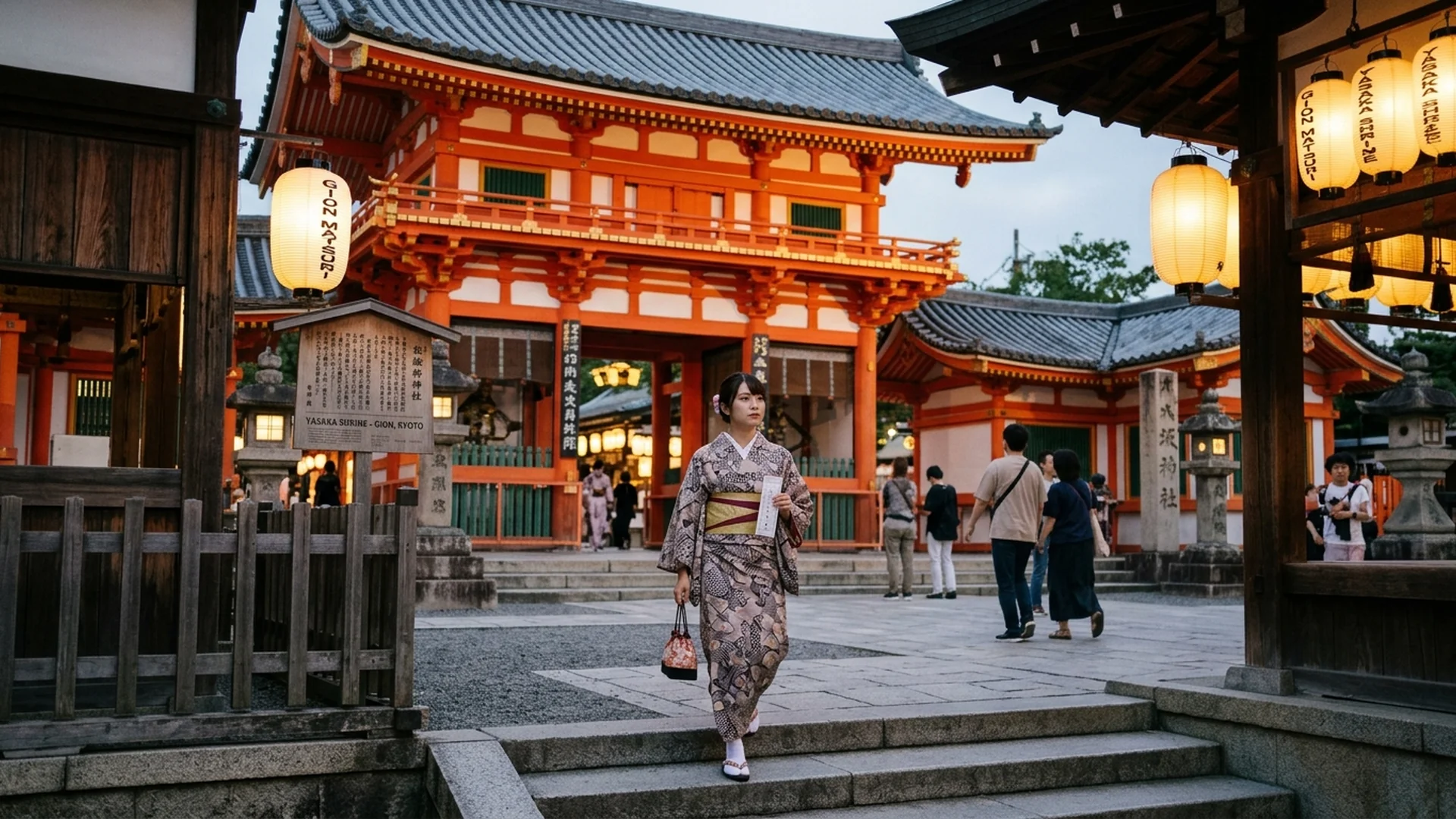
When dusk settles over the preserved wooden machiya facades of Gion and the final amber light fades from the Kyoto basin, a quiet transformation overtakes Yasaka Shrine. Hundreds of traditional paper lanterns drift into a warm, amber glow, casting long, meditative shadows across centuries-old stone pathways. The hurried footsteps of daytime pilgrims give way to an unhurried stillness, leaving only the quiet pulse of thirteen centuries of history whispering through vermilion torii gates and intricately joined timber structures. This is far more than a conventional sanctuary; it is the beating spiritual heart and sacred power place of the ancient capital, where myth, artistry, and quiet devotion converge.
Stepping through the imposing Naimon gate into the shrine precincts after dark offers an experience profoundly removed from the diurnal rhythm of tourism. The crisp Kyoto night air sharpens the resinous scent of ancient cypress and cedar, while the iconic dance stage—hung dense with the crimson-stenciled lanterns of local merchant donors—stands as a luminous monument to enduring faith. Known affectionately by locals as the Gion-sha, Yasaka Shrine acts as the eternal anchor of this historic geisha district, bridging bygone eras with the living present in seamless harmony.
A Millennial Legacy and the Genesis of Gion Matsuri
Since its foundational establishment in the seventh century, Yasaka Shrine has stood as an unwavering spiritual sentinel for the people of Kyoto. Dedicated primarily to Susanoo-no-Mikoto, the mercurial deity of storms and seas, alongside his consort and divine offspring, the shrine was originally invoked to ward off pestilence and natural calamities. The architectural grandeur of the compound exemplifies the rare Gion-zukuri style, distinguished by sweeping roofs thatched with carefully layered Japanese cypress bark.
The defining pillar of Yasaka’s global renown is its role as the catalyst and heartland of the Gion Matsuri, held throughout the month of July. When the resonant bronze bells, stirring taiko drums, and haunting flutes of the Gion Bayashi orchestra echo through the summer night during the Yamaboko float processions, they articulate an unbroken lineage of community devotion and reverence for the protective kami.
The Nocturnal Spell: Lantern Light and the Sacred Dance Stage
Yasaka Shrine reveals its most spellbinding persona once complete darkness envelops the Higashiyama hills. Hundreds of cream-and-black paper lanterns, suspended in neat tiers around the central dance stage, flicker to life simultaneously. Each lantern bears the brushed calligraphy of a local merchant house, traditional teahouse, or patron family from Gion and beyond, functioning as an ongoing tribute and a prayer for shared prosperity.
To wander this lantern-lit expanse after hours is to step backward into historical Kyoto. The clamor of tour groups evaporates, replaced by the soft crunch of gravel underfoot and the comforting aroma of weathered timber. For the discerning traveler seeking genuine contemplation, this nocturnal hour offers an unfiltered communion with the city’s sacred architecture, untethered from the demands of the modern itinerary.
Sanctuary of Grace: The Power Spot of Beauty and Harmony
Tucked away within the sprawling precincts lies a cluster of diminutive auxiliary shrines, none more revered among cultural insiders than Utsukushi Gozen Shrine. Dedicated to three goddesses of transcendent beauty, this secluded sanctuary has long drawn geisha, maiko, and performers seeking refinement of craft, clear skin, and grace of spirit.
Just before the altar flows the legendary Biwaku water spring. According to local lore, patting a mere two or three droplets of this mineral-rich spring onto one’s skin bestows purification and physical grace from within. Nearby, visitors write wishes on delicate, teardrop-shaped ema votive plaques, illustrating the nuanced Japanese aesthetic that seamlessly intertwines spiritual aspiration with the refined art of living.