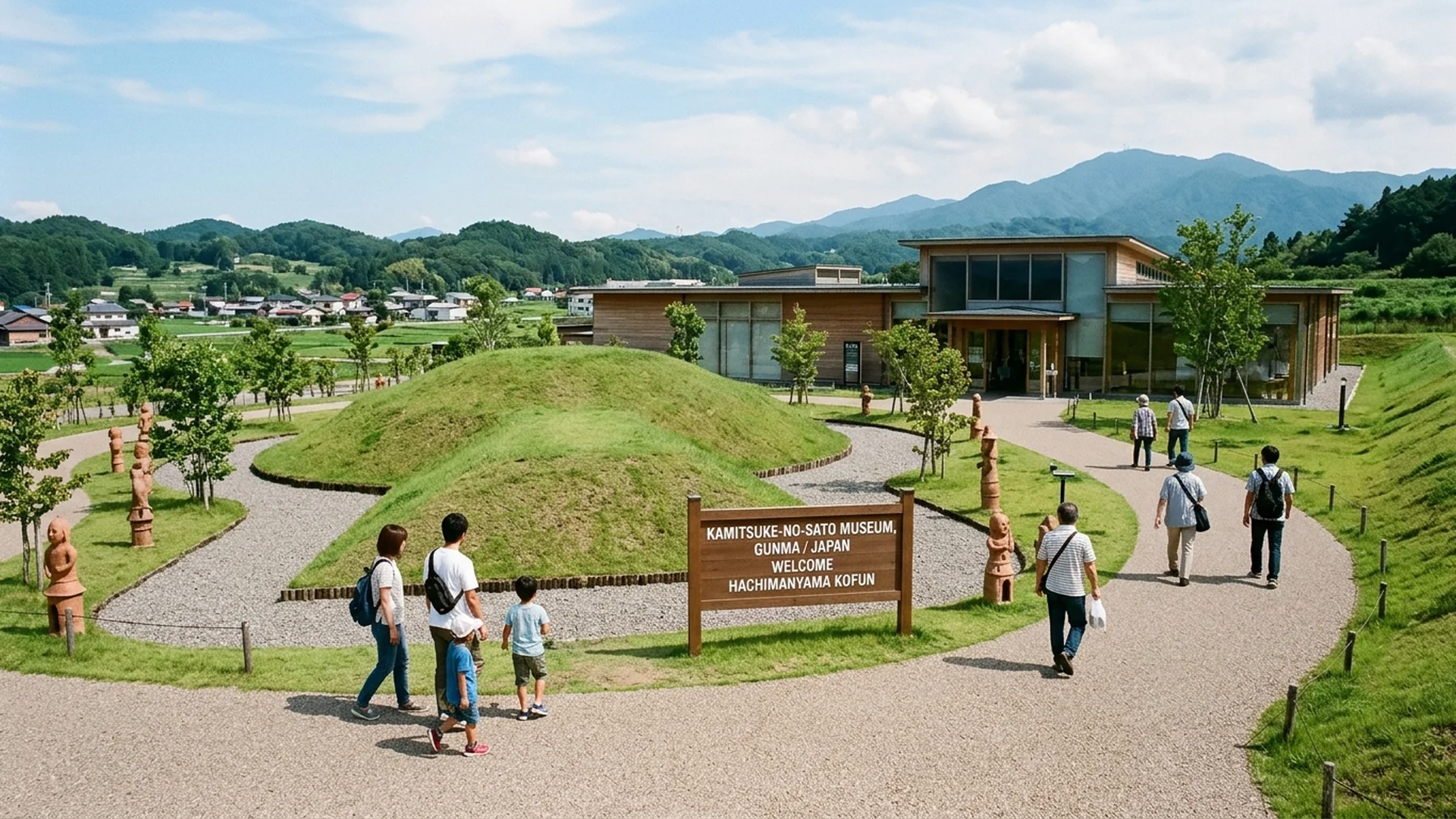
Amidst the ceaseless momentum of modern Tokyo, a quiet pocket in Gunma Prefecture functions as a tangible portal to an era more than fifteen centuries past. Surrounded by verdant landscapes and the quiet majesty of northern landscapes, the Kamitsuke-no-Sato Museum awaits travelers attuned to the quiet mysteries of antiquity. This is far more than a conventional repository of antiquities; it is celebrated as the ‘Pompeii of Japan,’ where the vibrant, sophisticated life of the Kofun period was miraculously preserved beneath a shroud of volcanic ash.
Walking these grounds feels less like a traditional museum visit and more like turning the pages of an epic historical manuscript written directly upon the landscape. The synthesis of ancient heritage and serene nature offers discerning cultural travelers an unhurried, contemplative encounter with Japan’s foundational epochs, far removed from the hurried itineraries of mass tourism.
Decoding Kofun Civilization at Kamitsuke-no-Sato
Situated in Takasaki City, Gunma Prefecture, the Kamitsuke-no-Sato Museum serves as an intellectual and aesthetic anchor for understanding the 5th century—a transformative crucible during which early Japanese statecraft coalesced. The architectural design of the exhibition spaces is intentionally understated, allowing the surrounding natural topography to frame the experience. The permanent collection highlights archaeological treasures unearthed from the Sajikuto and Sannoshima sites, offering profound insights into the daily routines, sacred rituals, and cosmological worldviews of early elites. Sophisticated curation seamlessly integrates subtle modern interpretation with peerless physical preservation, enabling visitors to visualize an elaborate society through exquisitely wrought jewelry, ceremonial weapons, and domestic implements.
Japan’s Pompeii: The Legacy of Mount Haruna’s Eruption
The most compelling narrative woven into this landscape is one of sudden natural cataclysm and inadvertent preservation. Toward the end of the 5th century, Mount Haruna experienced a catastrophic eruption, blanketing surrounding settlements and agrarian fields in thick layers of pumice and volcanic ash. Paradoxically, this violent geological event acted as a geological preservative, sealing domestic structures, irrigation channels, paddies, and even the fleeting footprints of people and animals in pristine suspension. Modern archaeologists uncovered settlement layouts so complete they appear arrested mid-breath. The moniker ‘Japan’s Pompeii’ is entirely merited, testifying to a fragile world captured perpetually in time.
The Hodota Kofun Cluster and the Silent Haniwa Guardians
The museum grounds merge seamlessly with the Hodota Kofun Cluster, an expansive collection of monumental keyhole-shaped burial mounds (Zenpokoenfun) designated as significant historic landmarks. These monumental earthworks were constructed as the eternal resting places of paramount regional chieftains. For the contemplative visitor, the most striking aspect is the orderly arrangement of unglazed terracotta figures—known as Haniwa—depicting humans, animals, and ritual objects, meticulously reconstructed atop the grassy tumuli. Traversing the walking paths that wind through these wooded mounds allows history enthusiasts to commune directly with the ancestral aesthetic and spiritual reverence for the afterlife that defined early Japanese society.