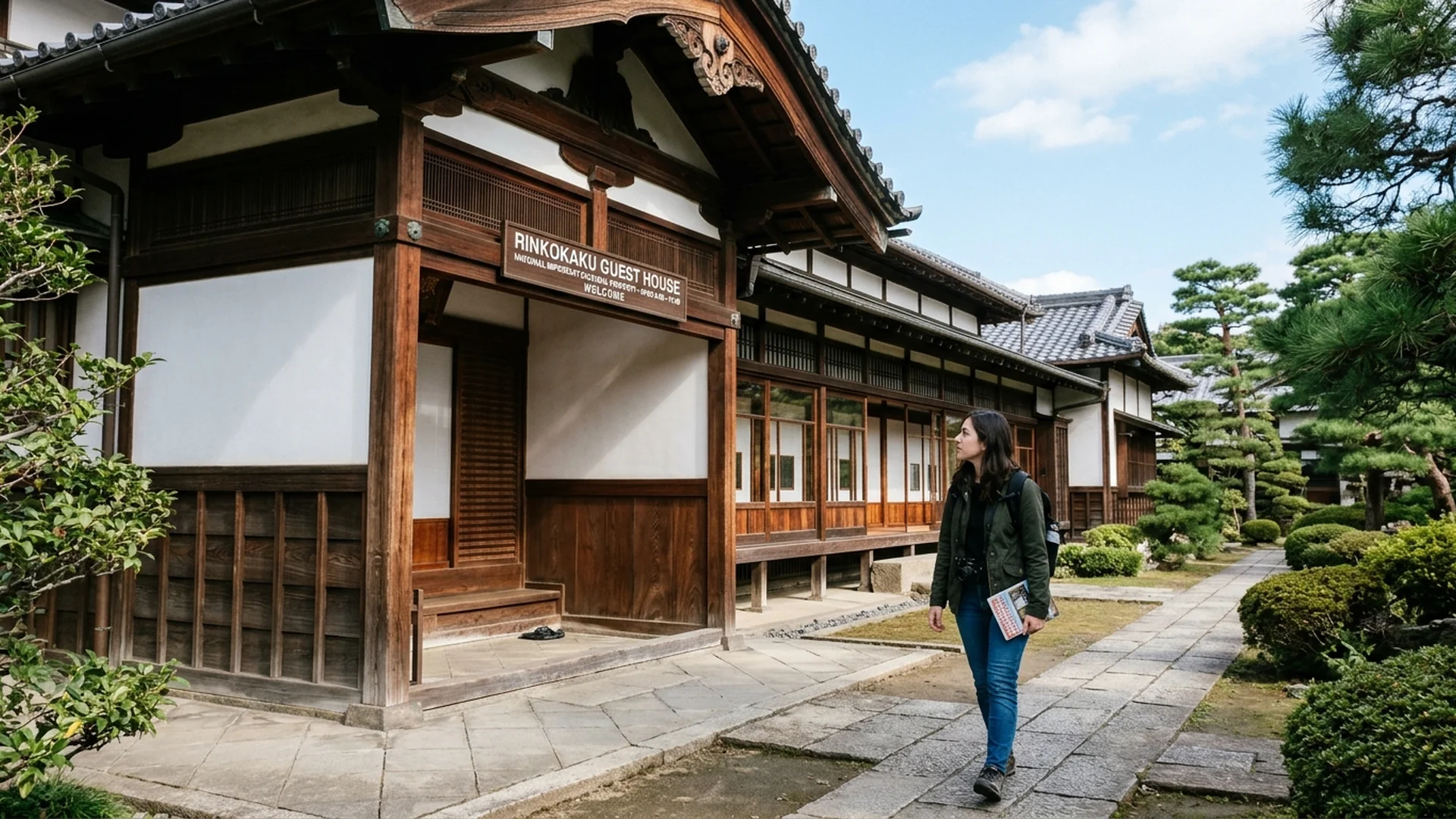
Crossing the threshold of the Rinkokaku Guest House in the heart of Maebashi, Gunma, one is immediately struck not merely by a profound stillness, but by an atmosphere richly steeped in the patina of time. This historic compound is far more than a preserved relic of the past; it stands as an enduring emblem of cultural transition during the Meiji era, having once served as an esteemed residence for visiting royalty and dignitaries.
Amidst the relentless current of modernity, Rinkokaku endures like a classical poem inscribed in meticulously joined timber. It testifies to the genius of master traditional carpenters who harmonized natural topography with refined architectural craft. For the discerning traveler, it offers a rare sanctuary to step outside of time and commune with an aesthetic heritage vanishingly rare in the twenty-first century.
Sukiya Architecture and the Legacy of the Meiji Era
Erected in 1884 through the collaborative patronage of local nobility and the citizens of Gunma, Rinkokaku was originally built to welcome Emperor Meiji during his regional progress. The compound comprises three seamlessly linked structures: the Main Building, the Tea House (Cha-shitsu), and the Annex (Bekkan). Together, they exemplify the Sukiya style, which translates the austere refinement of Zen aesthetics into domestic architecture. Delicate woodwork carvings, coffered ceilings, and painstakingly woven tatami mats define the interiors. Every creak of the aged wooden floorboards serves as a subtle whisper from an era when Japan eagerly embraced Western influences while tenaciously preserving its own cultural core.
The Grandeur of the 180-Tatami Hall and Chisen Gardens
The undisputed architectural crown jewel of Rinkokaku is the two-story Annex, dominated by an astonishing second-floor hall spanning over 180 tatami mats—roughly 300 square meters of uninterrupted wooden flooring. Free of interior supporting pillars, this expansive space showcases the remarkable engineering advancements of Meiji-era carpentry, offering sweeping panoramic perspectives of the surrounding grounds. Below, a classic Chisen-kaiyushiki stroll garden unfolds around a placid pond, mirroring the aged timber facades and seasonal foliage. Whether framed by delicate spring sakura or the fiery hues of autumn momiji, every vista is composed with deliberate adherence to classical Japanese landscape design.
The Poetic Resonance of Meiji-Tone Evening Illuminations
As daylight fades from the horizon, Rinkokaku assumes an entirely different, ethereal persona through its heritage night illumination programs. Rather than relying on garish contemporary lighting, the presentation employs a sophisticated palette historically resonant with the Meiji period. Shades such as Shinbashi Blue—a teal hue favored by the intelligentsia during the nation’s modernization—and Nasu-kon, a deep, dignified indigo, wash across the venerable timber and reflective waters. This curated interplay of shadow and historical color creates a deeply contemplative atmosphere, allowing visitors to feel as though bygone eras have briefly returned to life in the quiet of night.