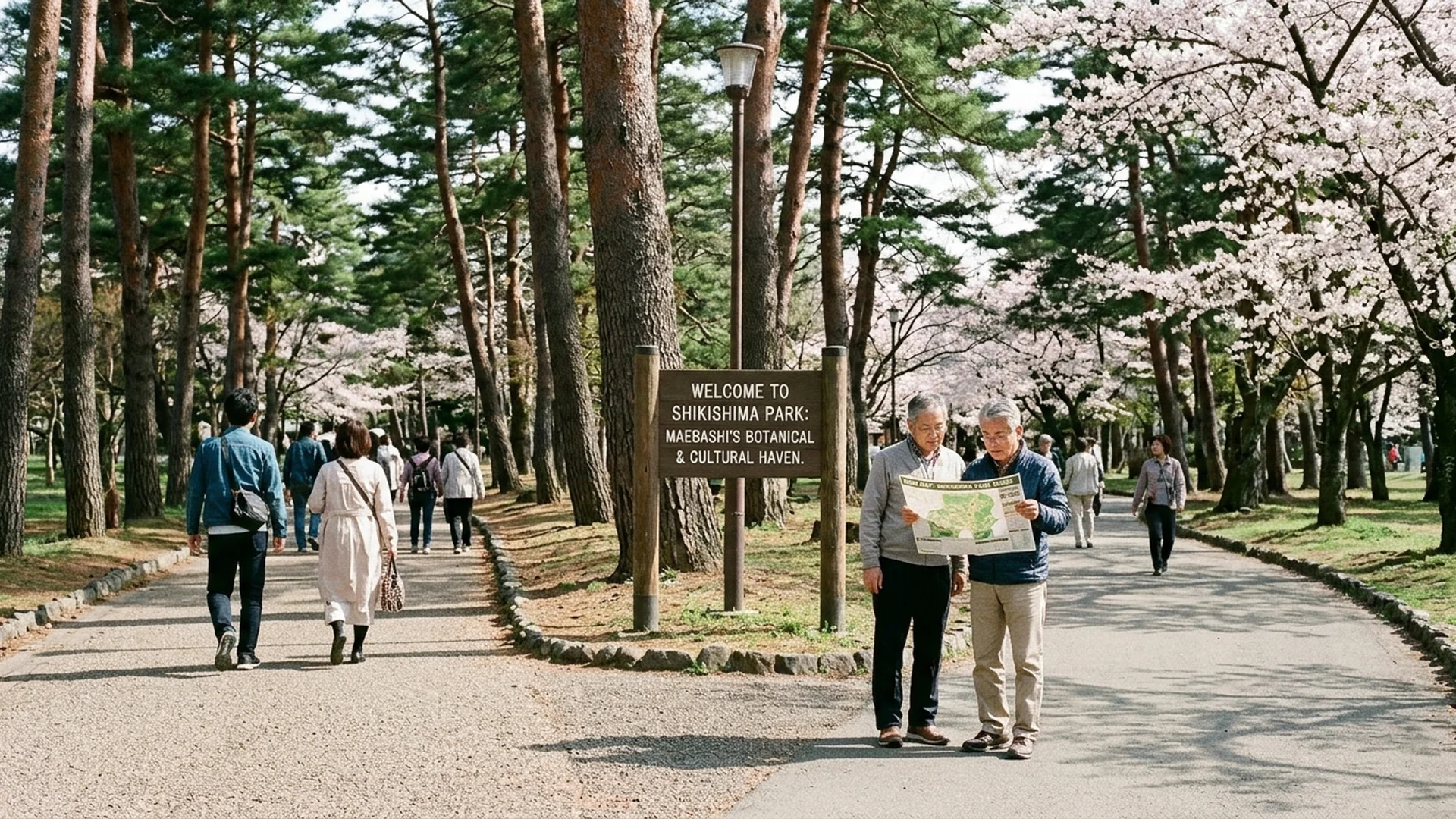
Step beyond conventional travel routes to the city of Maebashi in Gunma Prefecture, and discover Shikishima Park—a sanctuary of profound stillness where more than 2,700 ancient pine trees commune with a sweeping European-style rose garden numbering over 7,000 blooms. Here, the art of slow living unfolds against a backdrop of refined Japanese horticultural mastery.
As the seasonal winds sweep across the Kanto plain north of Tokyo, a quiet refuge reveals itself along the banks of the Tone River, where time appears to slow its relentless pace. Shikishima Park serves as the verdant heart and lungs of Maebashi. Far more than a historic public garden, it is a living canvas where pristine nature, subtle architecture, and an unwavering Japanese devotion to detail harmonize completely.
For the discerning traveler seeking profound beauty far from the metropolis’s frantic pulse, Shikishima Park offers a multi-sensory pilgrimage. The subtle fragrance of blossoms drifting on the breeze, the gentle susurrus of wind through ancient pine needles, and the immaculate reflections upon glass-calm waters welcome visitors with quiet grace in every season.
The Realm of Ten Thousand Roses: Horticultural Masterpieces at Kadokura Techno Rose Garden
The beating heart that draws beauty-seekers from afar to Shikishima Park is the Kadokura Techno Rose Garden, a meticulously curated classical rose sanctuary maintained with the reverence of fine art. Within this expansive domain, the air is perpetually kissed by the sweet fragrance of more than 600 varieties, totaling over 7,000 individual plants. The layout marries classic Western landscape design with immaculate Japanese order, transforming every stone pathway and iron-scrolled archway into a promenade reminiscent of classic literature. The garden reaches its aesthetic zenith during two primary windows: late May through June, when spring brings a riot of vibrant, freshly opened petals, and October through November, when autumn’s crisper air coaxes out deeper, more saturated hues and intensely profound fragrances.
Dimensions of Nature: From Ancient Pine Groves to the Timeless Tone River
Beyond its celebrated rose collections, Shikishima Park’s broader landscape unfolds with breathtaking ecological diversity. Towering, venerable pine trees—numbering over 2,700—stretch their noble branches toward the sky, casting cool, dignified shadows across the grounds. In spring, the margins of the tranquil ponds and winding pathways blush with the pale pinks of weeping Shidarezakura cherry blossoms, their delicate boughs dipping gracefully toward the water’s surface to create compositions worthy of traditional ink-wash paintings. As autumn arrives, the foliage transitions into rich ambers and coppery golds against the crisp blue canvas of the season’s sky. Here, local residents stroll, cycle, and paddle traditional swan boats, embodying the unhurried ethos of Japanese slow living.
Architectural Echoes and Historical Roots: Cultural Heritage in the Heart of Gunma
Shikishima Park is far more than a recreational green space; it is an intrinsic chapter in Maebashi’s long history of urban and cultural evolution, tracing back to the region’s prosperity as a silk-trading and cultural hub. The park’s architectural planning demonstrates a graceful synthesis of Western garden philosophy and the wild topography of the Tone River basin. In the immediate vicinity, historic structures and contemporary galleries reflect the city’s modern identity as an aspiring Art City. A journey here offers travelers the rare opportunity to absorb botanical wonder and regional heritage in a single, cohesive experience.