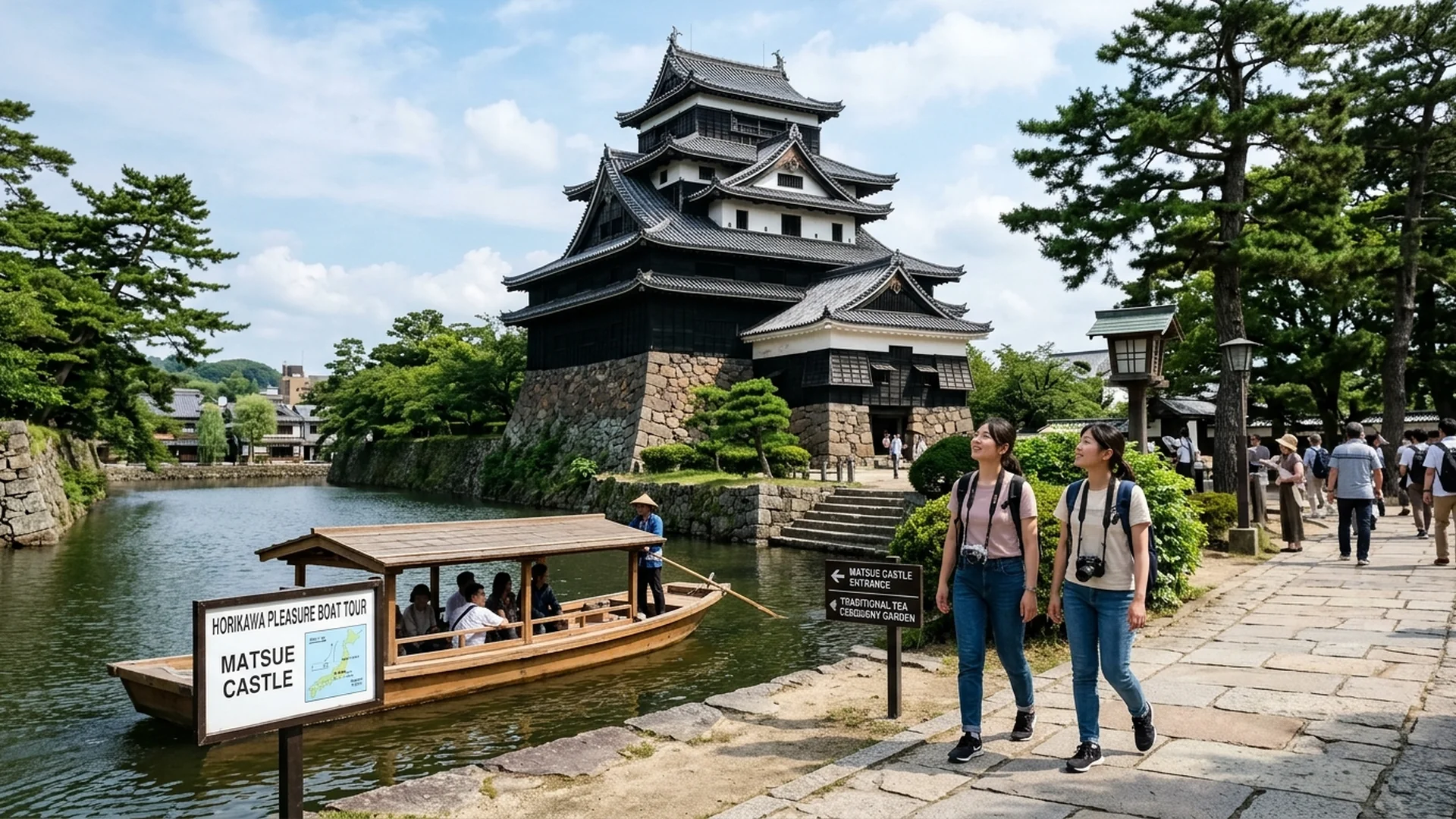
As the delicate morning mist lifts from the expansive waters of Lake Shinji, the silhouette of an ancient city gradually materializes like a classical ink painting. Matsue, reverently known as the City of Water, rests in tranquil seclusion within Japan’s Sanin region, far removed from the frantic pace of the megalopolises. Here, time does not merely halt; it flows with a gentle, unhurried grace past ancient moats, a pristine wooden castle that has weathered the vicissitudes of history, and a way of life intrinsically bound to the fine arts of tea and confections for centuries.
Journeying to Matsue transcends the conventional act of checking off tourist landmarks. It is an immersion into a profound cultural dimension where the lingering aura of the samurai still permeates quiet historic alleys, inviting the discerning traveler to step backward in time and experience the authentic soul of traditional Japan, preserved through generations with exquisite care.
Matsue Castle: Ancient Timber Heritage and Samurai Footsteps
The beating heart of Matsue is fiercely guarded by the proud architectural legacy of the Edo period. Matsue Castle, affectionately dubbed the Plover Castle due to the graceful, sweeping expanse of its layered roofs, stands as a rare testament to structural integrity. Constructed in 1611, it remains one of the handful of surviving original castles in Japan that retains its authentic interior wooden framework. Stepping across the threshold, the scent of aged pine and the imposing presence of colossal structural pillars eloquently narrate the triumphs of ancient engineering. The uppermost tier unveils a sweeping 360-degree panorama of the surrounding urban expanse and shimmering lake. Encircling the fortress is the Shiominawate samurai district, where black-walled historic residences have been immaculately preserved, effortlessly evoking the refined lifestyle of the retainers who once served the local daimyo.
Horikawa Cruising: Navigating the Lifeline of History
Another dimension through which to comprehend Matsue’s quiet charm is from the water’s edge. The diminutive Horikawa Sightseeing Boat carries travelers gently along the ancient moats that encircle the fortress grounds. Beyond the lush canopy of weeping willows and seasonal flora lining the banks, the true highlight of the voyage is navigating beneath sixteen remarkably low stone and wooden bridges. At specific points where water levels peak or clearances narrow, the vessel’s canopy slowly descends automatically, prompting passengers to bow their heads in unison with the movement of the boat—a delightful ritual accompanied by the warm, informative narration of a seasoned boatman.
The Aesthetics of Tea and Wagashi: A Legacy of the Artistic Daimyo
Matsue holds a prestigious standing as one of Japan’s preeminent hubs of tea culture, standing shoulder-to-shoulder with Kyoto and Kanazawa. This enduring devotion to the tea ceremony originated in the 18th century under the patronage of Lord Matsudaira Fumai, an enlightened daimyo who fervently championed both chanoyu and the fine art of Japanese confectionary (wagashi), shaping them into distinct local traditions. Matsue’s wagashi are renowned as miniature masterpieces, meticulously conceptualized to balance the rich, bittersweet notes of frothy matcha green tea. Sipping warm tea within a historic tearoom while gazing out upon a minimalist Zen garden offers an intellectual and sensory sanctuary that effortlessly washes away the weariness of travel.
The Twilight of Lake Shinji: Nature’s Poetic Crescendo
As evening descends, Lake Shinji—the seventh-largest lake in the country—transforms into a transcendent canvas of shifting hues. The sky above the water transitions masterfully from luminous gold and tangerine to deep, velvety violet. Tiny Yogashima Island, with its striking cluster of pine trees silhouetted against the horizon, provides an idyllic compositional anchor. Vantage points along the shore, particularly the promenade adjacent to the Shimane Art Museum, quietly gather those who await this diurnal alchemy, eager to witness the magnificent, unscripted artistry that nature performs anew each evening.