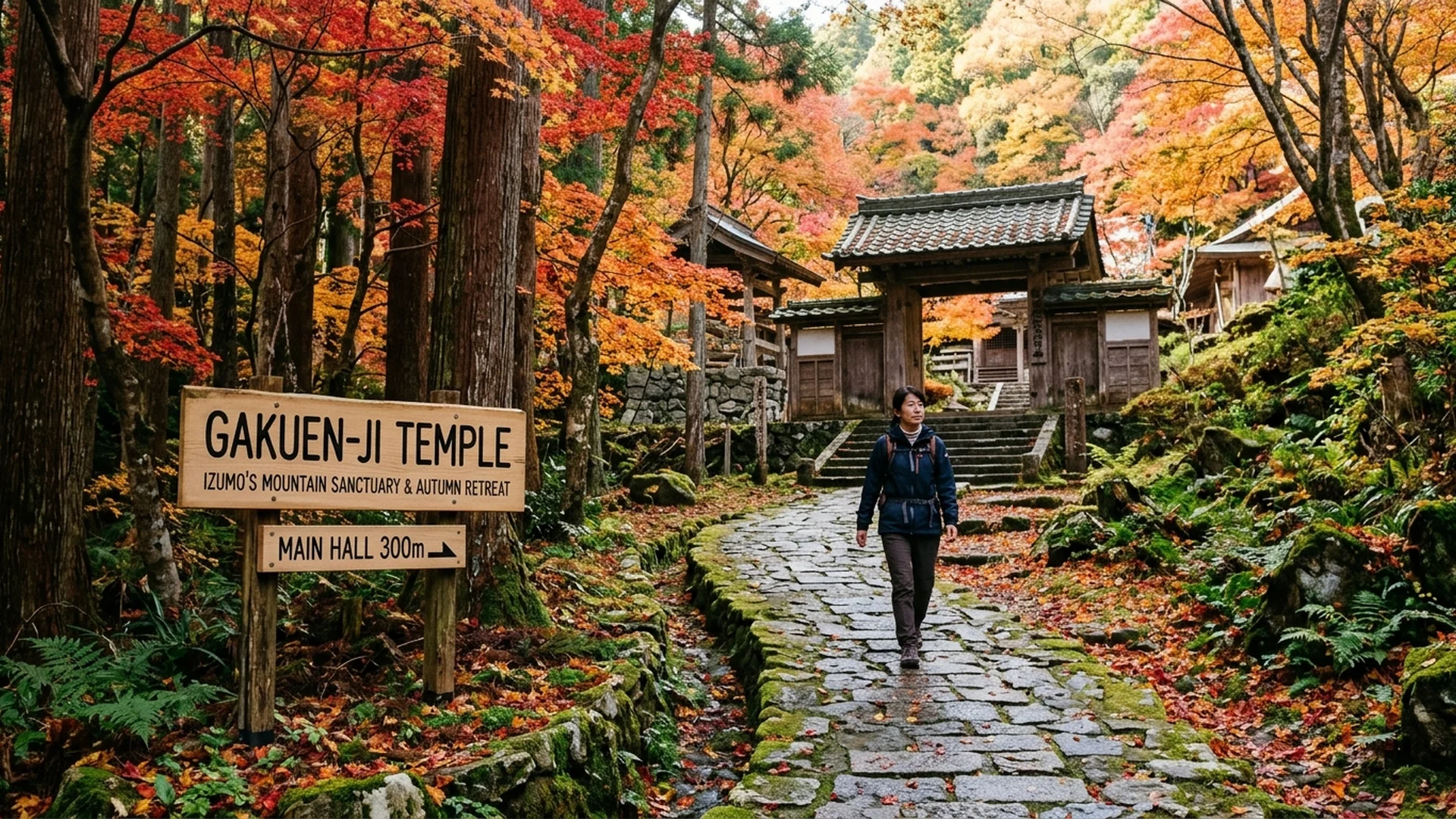
As the morning mist delicately brushes the peaks of Mount Kitayama in the Sanin region, the resonant hum of ancient woodlands and rustling canopies sounds remarkably like whispers from antiquity. This is the domain of Gakuen-ji Temple, a spiritual sanctuary dating back over 1,400 years, tucked in tranquil seclusion within Shimane Prefecture and far removed from the clamor of commercial tourism. Far more than a mere historical monument, this sacred enclave is a mountain hermitage steeped in miracles dating to the Asuka period, echoing with the footsteps of legendary warriors and defined by a quiet, powerful seasonal metamorphosis.
Approaching Gakuen-ji feels akin to crossing a temporal threshold. Passing through venerable gates leads travelers into a realm where nature and devotion exist as one, surrounded by diverse flora that transforms the deep forest into a living oil painting as the year draws to a close. The crimson canopy of maple tunnels draping along moss-warmed stone pathways is celebrated by discerning travelers as one of the purest and most breathtaking autumn foliage displays in the entire Sanin region.
Millennial Devotion and the Legend of Furo Waterfall
The history of Gakuen-ji reaches deep into antiquity, mirroring the expansion of Buddhism into the ancient provinces of Inaba and Izumo. According to enduring chronicles, the temple shares a profound affinity with the ancient imperial court. Legend tells of a venerable monk named Shishun who harnessed the power of profound faith and sacred waters from the temple’s Furo Waterfall to perform rituals that successfully cured the ocular afflictions of Empress Suiko. This miraculous healing earned the temple imperial patronage, allowing Gakuen-ji to flourish into one of the most influential spiritual epicenters in the Sanin region.
Beyond its imperial heritage, Gakuen-ji served as a crucial crucible for Shugendo, the syncretic folk religion blending Tendai esoteric Buddhism with indigenous Shinto beliefs. The rugged, tangled wilderness of the Kitayama range once provided austere proving grounds for yamabushi—mountain ascetics pursuing enlightenment through the profound trials of nature. Even Musashibo Benkei, the legendary warrior monk renowned for his formidable strength and loyalty to Minamoto no Yoshitsune, is recorded in local lore to have trained within these very grounds, lending an indelible layer of heroic mystique to every step of the journey.
The Crimson Maple Tunnels: Shimane’s Seasonal Masterpiece
When autumn arrives, the woodlands embracing Gakuen-ji transform into an expansive canvas of shifting hues. From mid to late November, the maples and surrounding deciduous trees shed their verdant coats in favor of brilliant crimsons, burnt oranges, and amber golds, creating a striking contrast against the dark needles of ancient pines and moss-covered stone lanterns.
The crowning visual feature—captivating photographers and contemplative wanderers alike—is the historic stone approach framed by densely interwoven maple tunnels. When morning light filters through the upper branches, casting gentle patterns upon stone steps carpeted in fallen crimson leaves, the atmosphere hushes into a stillness so profound that time appears to stand still. The only sounds are the gentle crunch of leaves beneathfoot and the distant murmur of mountain streams—a beauty shaped not by human artifice, but by the patient perfection of nature and time.
Architecture Woven into the Wilderness and Spatial Harmony
The architectural layout and spatial design of Gakuen-ji embody the core Zen and esoteric philosophy of harmony with the natural world. Sacred structures, such as the principal Nemoto-do hall and the Niki-o-mon gate, are crafted from timber with the meticulous precision of traditional Japanese architecture. Though weathering centuries and enduring necessary restorations over successive eras, these structures retain an austere dignity and a palpable sense of the sacred.
A deliberate exploration of the temple grounds reveals auxiliary shrines and weathered stone Buddhist statues half-concealed by mossy crags and ferns. Every vantage point whispers of a lineage of devotion passed down through generations. The silence here is dense and immersive, inviting visitors to untether their minds from worldly anxieties and anchor their consciousness in the enduring tranquility of the surrounding forest.