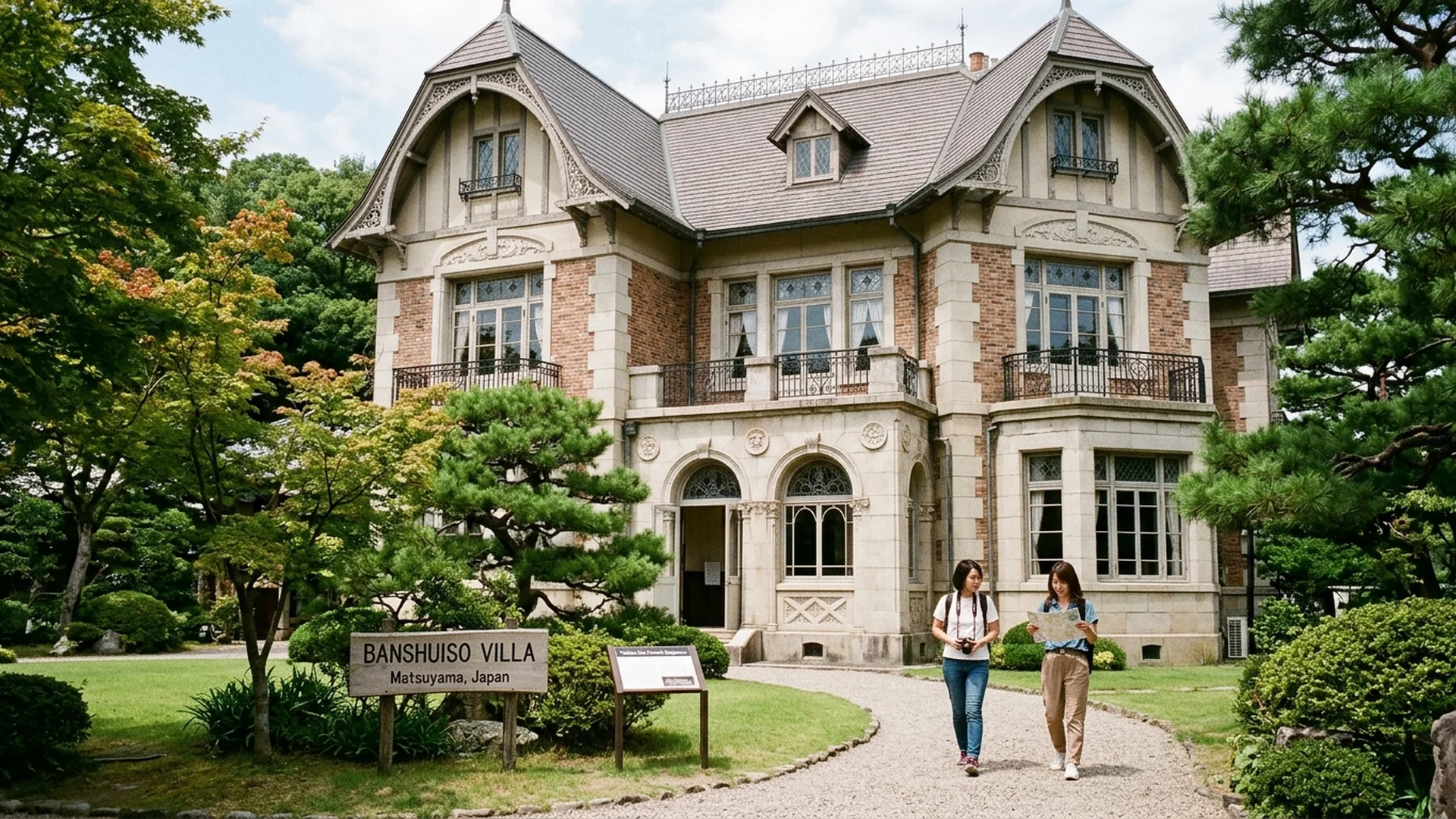
Amidst the sweeping currents of modern Japanese history, an architectural sanctuary lingers quietly in the shadow of Matsuyama Castle. Built in 1922, Banshuiso Villa is far more than a striking French Neo-Renaissance structure seemingly transported straight from Paris. It stands as an enduring monument to the Western aesthetic devotion of Count Sadakoto Hisamatsu, a former feudal lord who once lived as a diplomat in the French capital.
Crossing the threshold into the estate grounds is akin to stepping backward into the exquisite cadence of the Taisho era—a golden juncture where Eastern sensibilities and Western artistry converged in harmonious balance. Once reserved for receiving imperial royalty and distinguished dignitaries, the villa preserves an uncompromising standard of taste and meticulous craftsmanship in every square inch.
The Allure of Neo-Renaissance Architecture in Central Matsuyama
Banshuiso was conceived by master architects to emulate the opulent grandeur of 19th-century French design. The two-and-a-half-story structure, featuring a timber frame clad in refined stucco, was brought to life with meticulous attention to detail, bridging Western majesty with traditional Japanese master carpentry. The exterior commands attention with ornate plaster reliefs and expansive verandas designed to capture natural light. Within, the interiors breathe with the heritage of imported European furnishings. Every measured space tells a deliberate story of importing global architectural prestige directly to the island of Shikoku.
Master Craftsmanship and Historic Salons
A centerpiece of the interior journey is the grand hall and its sweeping oak staircase, ascending toward the upper level with European symmetry. Yet, the undeniable visual anchor is the luminous stained-glass window depicting an intricate sailing vessel, casting chromatic prisms across polished hardwood floors whenever the afternoon sun pierces through. Complementing this are carved marble fireplaces and Corinthian columns in the reception salon, preserved in pristine stillness. These spaces serve as quiet testaments to an era when Japan’s high society gathered to host international cultural exchanges.
Imperial Echoes and Quiet Contemplation
In its earliest chapters, Banshuiso functioned not merely as a private retreat, but as an official imperial guest house. The gracious visits of various imperial family members imbued the estate with an air of dignified memory, transforming it into a living museum. Surrounding the residence, tranquil gardens sheltered by mature trees invite discerning travelers to step away from the brisk pace of modern tourism, offering an encounter with aesthetics and solitude rarely found in contemporary destinations.