As the morning mist lingers lazily over the proud peaks of Ehime Prefecture, the crisp, clear whistle of a vintage steam locomotive echoes across the valley, harmonizing with the gentle, rising steam of ancient subterranean mineral springs. Matsuyama is far more than the largest urban heart of Shikoku; it is an antique treasure chest preserving over three millennia of unbroken Japanese memory. Here, the weathered wooden architecture of legendary bathhouses rests in profound tranquility, and world-renowned literary echoes fuse seamlessly with the aesthetics of contemporary luxury.
To journey to Matsuyama is to step willingly into a dimension where time moves with deliberate grace. It invites every sense to awaken to the purity of thermal mists, the rustic fragrance of aged tatami straw, and the sun-drenched shimmer of the Seto Inland Sea. In this storied sanctuary, luxury is redefined not by ostentation, but by exquisite simplicity, meticulously preserved heritage, and a warmth of spirit passed down through generations.
Dogo Onsen: The Breathing Heart of Three Millennia of Mineral Waters
At the pulsing heart of the Dogo district stands the Dogo Onsen Honkan, an imposing yet intricate three-story wooden architectural masterpiece reminiscent of a Meiji-era labyrinth. This venerable structure has stood the test of time as a spiritual sanctuary for the purification of both body and mind. Ancient legends whisper of divine footprints and the sacred constancy of thermal springs that have flowed uninterrupted since antiquity. Colorless, odorless, and richly endowed with therapeutic minerals, the water offers a silky touch upon the skin, akin to the gentle embrace of nature itself. Walking across polished wooden floors into ancient bathing halls adorned with glazed ceramic tiles and delicate wood carvings represents the pinnacle of aesthetic refinement for the discerning traveler—an experience whose mystique is heightened by its legacy as a key inspiration for the master animator’s cinematic masterpiece, Spirited Away.
Matsuyama Castle: The Mountain Crown and Timeless Fortress
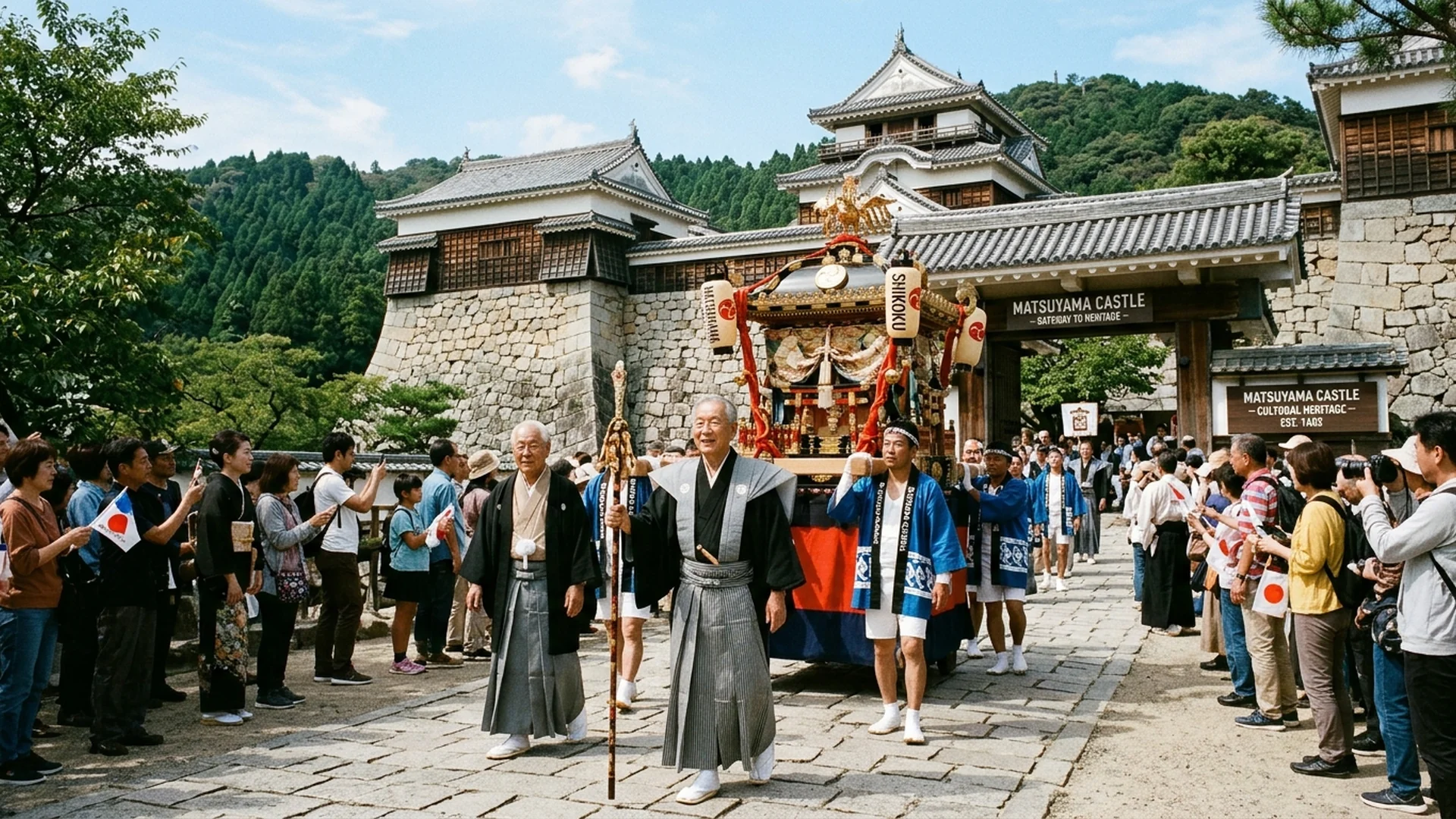
Viewed from the city’s highest vantage points, a pristine white fortress stands proudly atop Mount Katsuyama. Constructed in the early 17th century by Kato Yoshiaki, Matsuyama Castle is one of Japan’s most complete and strategically sophisticated hirayamajyo—castles built upon elevated plains or hills. Ascending to the summit via cable car or open-air single chairlift offers an intimate encounter with crisp alpine breezes and sweeping panoramas of the urban sprawl below. Upon reaching the citadel, original timber frameworks, arrow slits, and robust load-bearing beams articulate a turbulent martial history. Gazing outward through defensive apertures, the scattering of emerald islands across the vast Seto Inland Sea unfolds like an imperial ink wash painting.
The Botchan Train and Craft Lifestyle Along Cultural Thoroughfares
An entirely different facet of Matsuyama’s charm lies in its seamless blending of modern convenience with literary nostalgia. Natsume Soseki, the late master novelist, immortalized the city as a warm, evocative backdrop in his timeless work ‘Botchan.’ The jet-black replica steam locomotive known as the Botchan Train shuttles passengers between central stations and the onsen district, functioning as a living time machine that carries travelers past street art installations, artisan ceramic workshops, organic matcha tea houses, and vintage cafes tucked quietly away in narrow alleys. Every footstep in this district resonates with authentic Japanese craftsmanship, devoid of haste and harmonized entirely with the smiles and hospitality of local residents.
Flavors of the Seto Inland Sea: Maritime Treasures and Citrus Groves
A pilgrimage to Ehime Prefecture remains incomplete without indulging in its signature culinary artistry. Foremost among local delicacies is Taimeshi, or sea bream rice. Matsuyama boasts a distinctive preparation wherein an entire sea bream is simmered with rice in an earthenware pot using a deeply savory dashi broth, fragrant with the essence of fish and ginger. Alternatively, the Uwajima style features freshly sliced raw fish tossed with a raw egg and specialized sauce, served warmly over rice for a velvety palate experience. Furthermore, Matsuyama is celebrated as a domain of superior Mikan citrus. Here, visitors encounter flowing fresh orange juice taps alongside meticulously crafted citrus preserves, reflecting an abundant terroir blessed by the year-round warmth of the Seto sun.